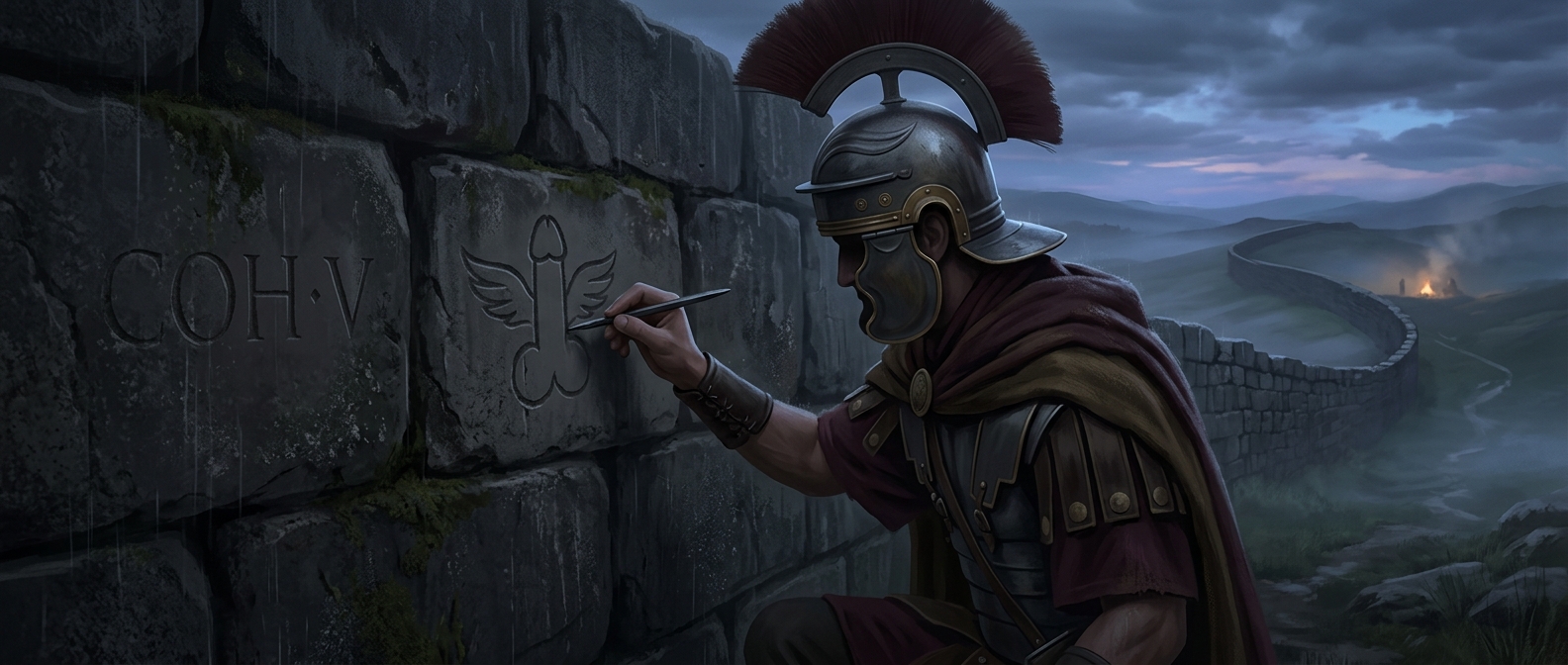
A carved phallus could mean more than a joke
A phallus scratched into Hadrian’s Wall looks like an ancient version of barracks graffiti, but Roman viewers could read it in more than one way. The image was sexual, yet it also served as a protective symbol: Romans used phallic images to ward off misfortune and attract good luck. Its presence on a military frontier need not have been a private joke alone.
Stone made a lasting canvas
The wall was both a defensive barrier and a place where soldiers spent long periods stationed far from home. Carving into its stone left a mark that outlasted the moment—unlike a drawing on a wooden surface or a quick scrawl in dust. A crude image could be irreverent, protective, or both; the surviving carving cannot tell us exactly what its maker intended.
That ambiguity is part of what makes the graffiti revealing. The wall’s official purpose was to organize and control movement along Rome’s northern frontier. Its informal marks show soldiers using the same monumental structure for personal expression, bringing everyday humor and familiar symbols into a landscape built around military discipline.