A crowded festival turned an insult into a stampede
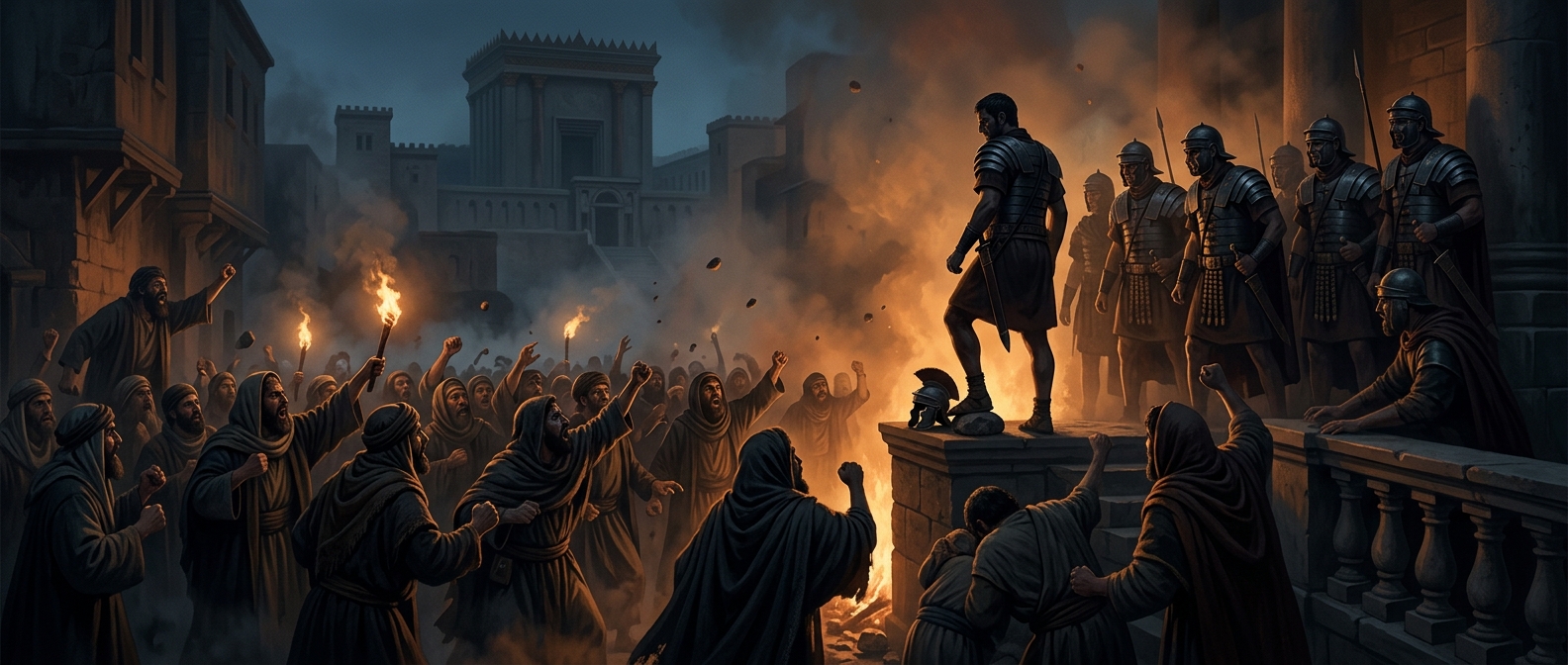
Josephus places the episode during Passover under the Roman governor Cumanus, in the mid-first century—not around 20 CE. His account describes a Roman soldier near the Temple exposing himself and making a crude noise. The act was small; its setting was not. Passover drew huge crowds of Jewish pilgrims to Jerusalem, and the Temple precinct was both a sacred place and a focal point of public life under Roman rule.
Why the response became dangerous
The insult provoked anger among worshippers, and people called on Cumanus to punish the soldier. When the governor did not satisfy the crowd, the confrontation escalated: people began throwing stones, and Roman troops moved in. In a packed gathering, a show of force could turn a furious crowd into a fleeing one. Those at the rear had little room to move, while people ahead were pushed into narrow exits.
Josephus says the resulting crush killed thousands. His account makes the disaster a chain of causes, not simply a riot: a deliberate provocation, a perceived failure to deliver justice, a crowd already compressed by the festival, and troops whose intervention sent people surging toward limited escape routes.
A small act, amplified by power and place
The story is also about the strain of Roman rule. A soldier’s contemptuous gesture at a Jewish holy site could feel like more than personal vulgarity; it signaled how little regard Roman authority might show for local dignity. Josephus presents the episode as an example of how quickly that tension could become lethal. In a tightly packed crowd, the decisive danger was not only what people were angry about, but what happened when thousands tried to move at once.