How a waste product became a pigment
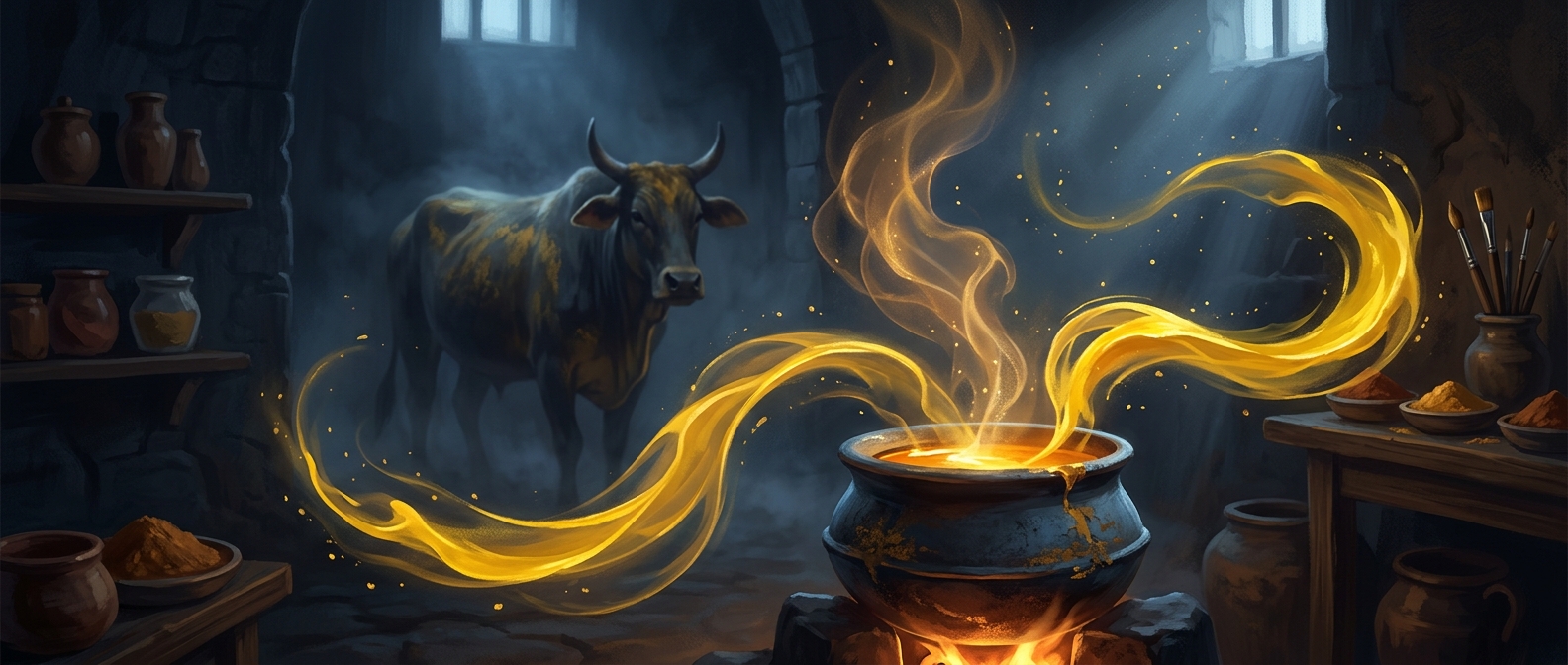
Historical accounts describe Indian Yellow as a pigment made from the urine of cows fed mango leaves. The reported process turned a farm by-product into a concentrated yellow material: urine was collected, processed to separate the coloring matter, and dried into pigment. The finished product was prized for its strong, clear golden hue, though accounts also describe it as intensely unpleasant to handle because of its smell.
The precise production story is not fully secure. Historical descriptions vary, and the familiar account of a special mango-leaf diet should be treated as a report about the pigment’s alleged manufacture, not as a recipe documented beyond doubt. What is clear is that Indian Yellow entered artists’ palettes as a distinctive pigment associated with South Asia.
Why artists wanted it
A pigment’s value depends on more than its color: it must also mix with a binder, such as oil or watercolor medium, and behave predictably on a surface. Indian Yellow offered artists a vivid, warm yellow that could be used for luminous passages and glazes—thin layers that let light reflect through the paint. That made it difficult to replace with a duller or less transparent yellow.
Its unusual origin also links the color to the conditions of its production. The same processing that concentrated a vivid pigment could leave a pungent material, and the reported reliance on animals made the manufacturing story ethically troubling. Indian Yellow is a reminder that a color on a painting may carry the traces of a supply chain as well as the decisions of the artist.