How a balloon became an ambulance
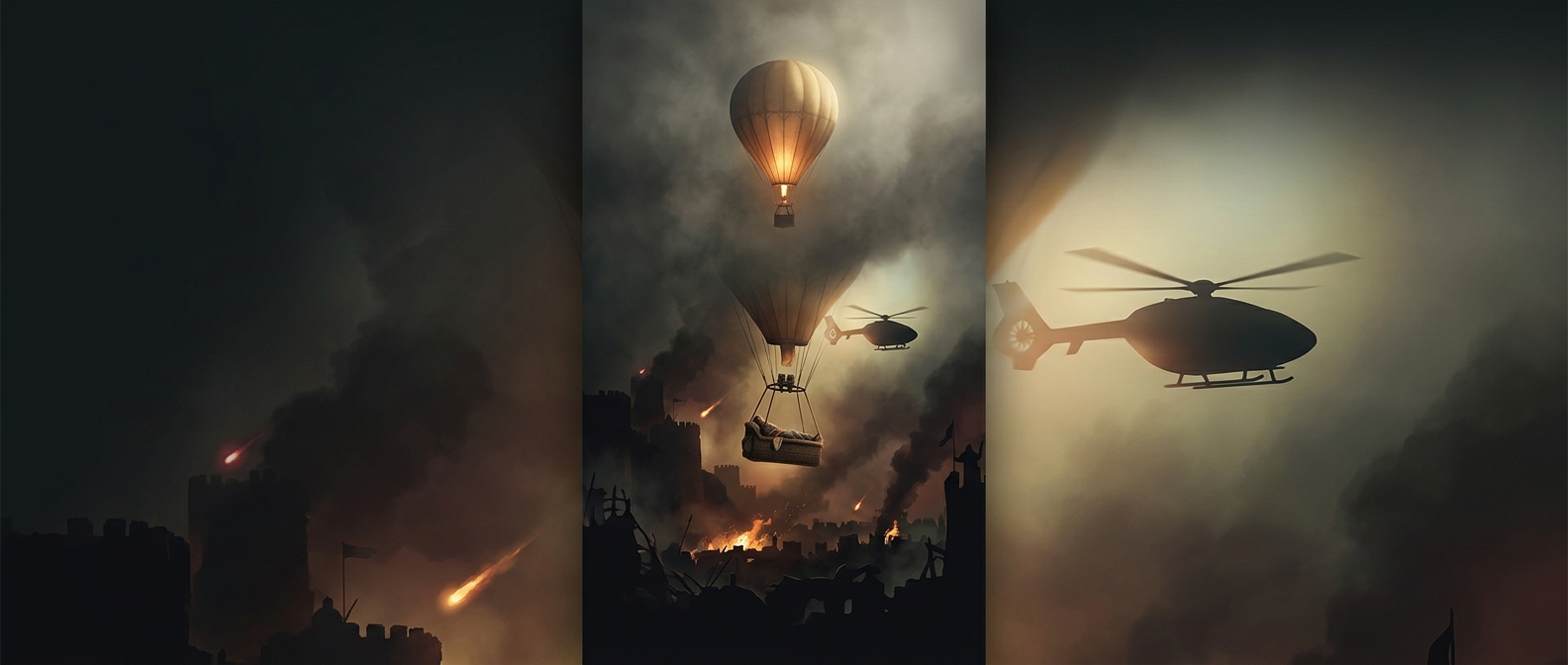
During the 1870–71 Siege of Paris, French forces and civilians were trapped inside the city as Prussian troops surrounded it. With roads and railways cut off, balloons offered a way to carry people and messages beyond the siege lines. Some accounts describe injured people among those who escaped by balloon, making these flights an early form of medical evacuation by air.
A hot-air balloon could rise above barriers that stopped wagons, but it was not a flying vehicle in the modern sense. The heated air lifted the balloon; wind largely determined where it went. A crew could steer only modestly, by choosing an altitude where winds might be moving in a different direction. That made a balloon escape possible, but not a reliable ambulance service with scheduled routes or controlled landings.
Evacuation under siege
The practical challenge was getting a patient from a crowded, besieged city into a basket that could carry people and supplies, then finding a safe place to land beyond enemy positions. Balloons were vulnerable to weather, and a descent in the wrong location could leave passengers exposed or stranded. They could also carry only a limited load, so they were no substitute for moving large numbers of wounded people by road or rail.
Even with those limits, the idea mattered: air evacuation did not begin with engines or helicopters. In Paris, the same basic advantage later used by aircraft—moving above blocked ground—offered a narrow escape route when ordinary transport had failed. A balloon could not promise where a patient would land, but it could carry them out of a city that had become difficult to leave any other way.