The ambulance’s first engine solved a problem of readiness
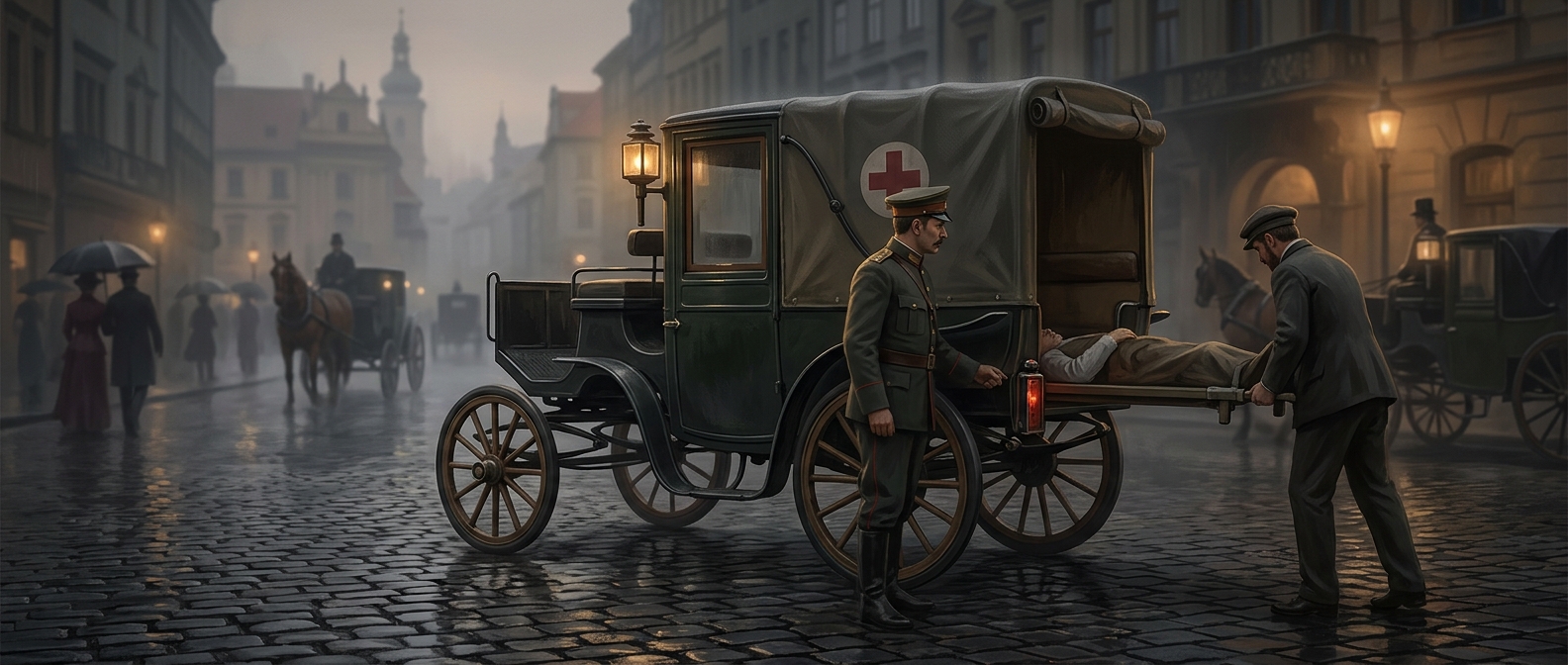
An ambulance drawn by horses depended on more than a vehicle being available. A team had to be kept, fed, harnessed and ready to move; after a hard journey, tired horses could limit the next response. A motorized ambulance replaced that living power source with an engine, changing what a hospital or emergency service had to prepare before a call.
That did not make early emergency transport fast in the modern sense. These vehicles traveled at roughly 10 miles per hour, and their practical pace also depended on the condition of the roads and the vehicle itself. The important change was that they no longer needed horses to pull them. The gain was a different kind of readiness, not simply greater speed.
A new set of limits
Engines brought their own demands: fuel, mechanical upkeep and a vehicle capable of handling rough travel. Early motor ambulances were not a plug-in replacement for every horse-drawn one. Services had to operate machinery in an era when motor vehicles were still developing, while continuing to get patients to care.
Even so, removing the horse team altered the logistics of a response. Dispatch no longer depended on keeping animals rested and ready, and a motor vehicle could make repeated trips without a team becoming physically exhausted. That mattered because an ambulance’s usefulness is measured not only by how quickly it moves, but also by whether it can be sent out when needed.
From transport to emergency system
The shift also tied patient transport to the wider development of motor vehicles and their maintenance. It was an incremental change, not an instant arrival of today’s ambulance service: a slow vehicle could still carry someone toward medical care, but it could not erase distance, poor roads or the limits of the equipment.
The striking consequence is that the first motor ambulances were valuable even at a modest pace. They changed the source of power—and, with it, the demands placed on an emergency service—before engines could make the journey truly quick.