A future built as a grotesque joke
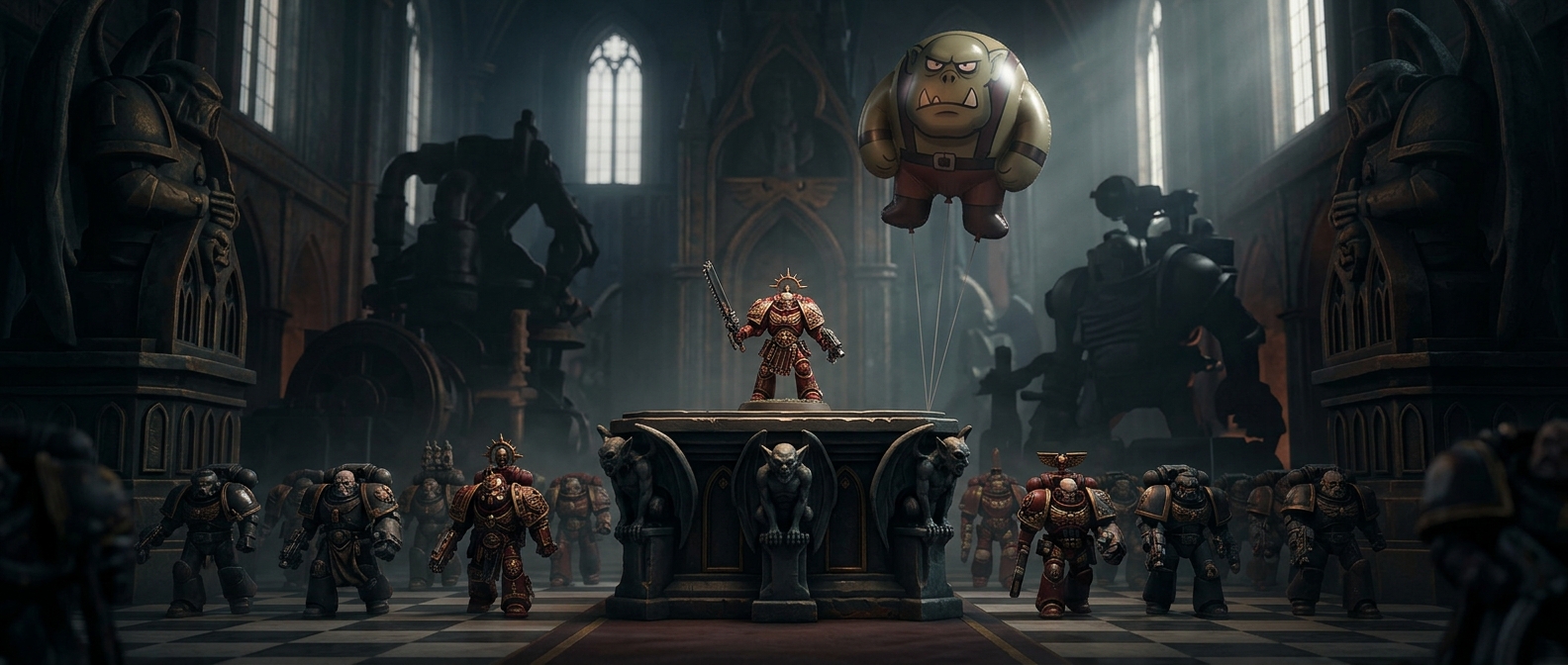
When Warhammer 40,000 appeared in 1987, it presented a far-future humanity that had survived by becoming monstrous: an empire ruled by fear, suffocating bureaucracy, religious dogma, and permanent war. Its scale and solemn language made the setting feel grand, but the underlying picture was deliberately absurd. The Imperium’s immense power could not make it humane—or even efficient.
That contrast gave the game its satirical edge. Its bleak future echoed contemporary anxieties about authoritarian politics and militarism, including the politics of Thatcher-era Britain, while turning them up until they became grotesque. The joke was not that war looked harmless; it was that a society could glorify violence and obedience while treating its own cruelty and dysfunction as virtues.
Why the irony can disappear
The setting’s satire is delivered through the same material that makes it compelling: imposing armies, elaborate uniforms, ritual, and dramatic battles. Players encounter the Imperium not only as an object of criticism but as a world to inhabit—painting its soldiers, learning its lore, and imagining its victories. The fiction’s grave tone can also make its absurdities feel like straightforward heroism if the reader sets the exaggeration aside.
That tension is part of the setting’s durability. The Imperium can be both a thrilling faction to play and a warning about what happens when a culture makes war and obedience sacred. The satire depends on noticing that its most powerful society is also one of its most broken.