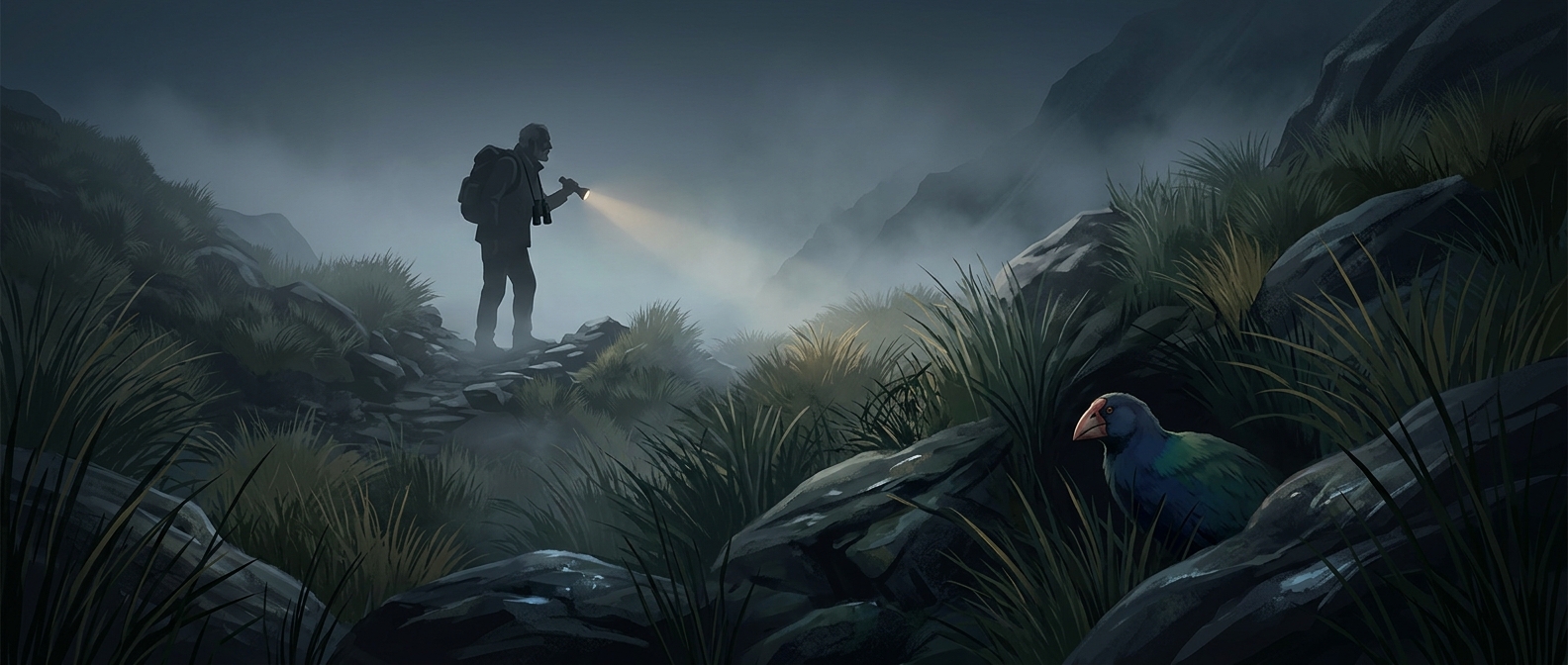
A bird can disappear without leaving the mountains
The takahē was long believed extinct after it vanished from view in the late 19th century. Its rediscovery in New Zealand’s Murchison Mountains in 1948 showed how a species can survive beyond the reach of routine observation: the bird’s remote alpine habitat was difficult to search, and its populations were sparse.
That mattered especially for a flightless bird. Takahē cannot escape by taking to the air, but they are built to move on the ground, with strong legs and a stout bill. In the mountain grasslands, they feed on plants such as tussock, using the bill to pull apart tough vegetation. Their lives are tied to habitat that can be hard for people to reach and survey.
Finding them changed the problem
The rediscovery did not mean the takahē was safe. A small, isolated population can remain vulnerable even when it has survived unnoticed. Ground-nesting birds are also exposed to introduced predators, which New Zealand’s native wildlife evolved without. Protecting the species therefore required more than knowing where it lived: conservationists had to safeguard habitat and reduce the pressures that could wipe out a small population.
The takahē’s story is a reminder that “not seen” and “gone” are not the same—particularly in rugged country. Its survival depended not on flying away, but on a mountain refuge so difficult to reach that people mistook absence from sight for extinction.