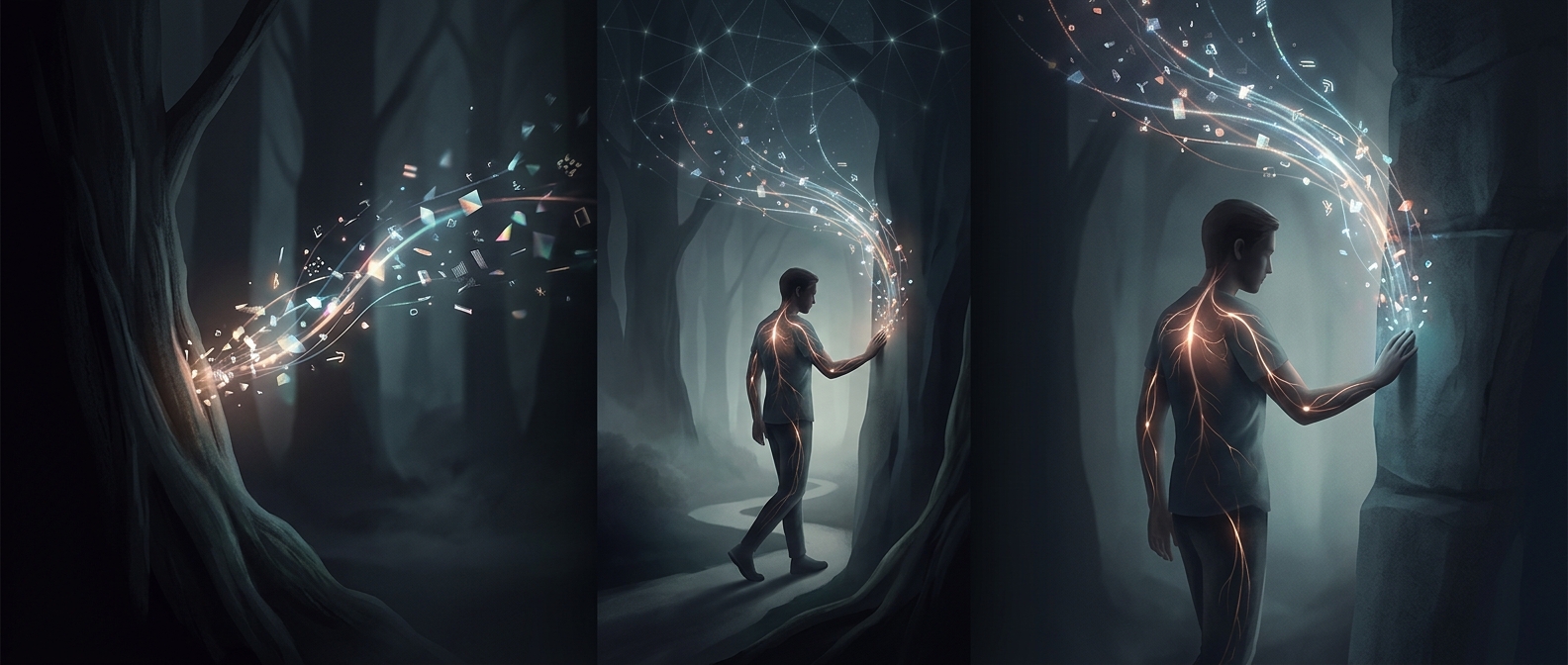
How a smell becomes a pattern
A scent begins as airborne molecules that enter the nose and dissolve in the moist lining high inside it. There, they meet olfactory receptor cells—nerve cells equipped to respond to particular chemical features. A single odor usually activates several kinds of receptors, and each receptor can respond to more than one molecule. The brain identifies the resulting combination of activity as a smell, much as it recognizes a familiar pattern from multiple clues rather than one signal alone.
The receptor cells send signals to the olfactory bulb, a structure at the front of the brain that begins sorting odor information. From there, signals reach areas involved in identifying smells and connect with regions that help process emotion and form memories, including the amygdala and hippocampus.
Why a scent can bring back a scene
Smell does not retrieve a memory by itself like a recording. Instead, an odor can become linked to a particular experience while the brain is learning what was happening around it: where you were, how you felt, and what you saw. Later, a similar odor can cue that stored association. Because odor processing has close connections to emotion and memory systems, the recollection may feel unusually immediate or vivid.
That is why sunscreen can do more than remind someone of its own texture or purpose. If its scent was present during a childhood trip, catching it years later may bring back the beach, the heat, or the feeling of being there—before the person has consciously worked out why.