When winter birds seemed to disappear
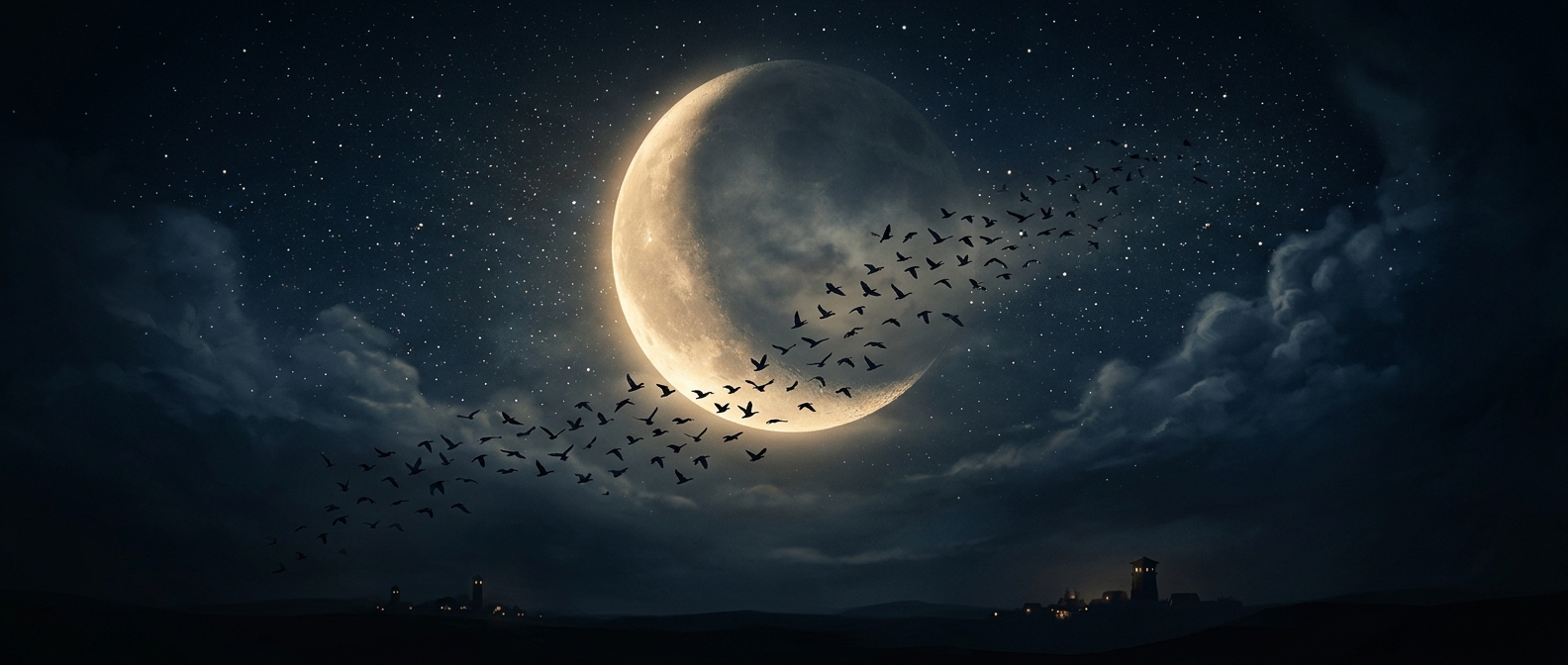
Before people could track migration across continents, a bird’s departure posed a simple but difficult question: where did it go? Flocks vanished from familiar fields and woods as the weather changed, while other birds appeared in their place. A 17th-century scholar offered an extraordinary answer: some birds flew to the Moon, struck its airless surface, and remained there for two months.
The proposal was not a spaceflight experiment. It was an attempt to explain an absence that observers could see but could not follow. Without ways to tag birds or map their routes over long distances, a journey beyond the horizon was hard to distinguish from disappearance altogether.
A destination for an unseen journey
The Moon offered a striking endpoint for a flight whose real destination was unknown. But the idea also exposed a gap in the explanation: reaching a distant place was not enough. The birds had to survive there, then return on a seasonal schedule. The story supplied a destination and a timetable without evidence of a route or a way to live on the Moon.
The actual answer is less cosmic but more revealing. Many birds travel to regions where food is more available in winter, then return when conditions improve. Their seasonal movements can span immense distances, and the birds may travel at night or through places that people rarely watch. What looked like disappearance was a journey happening beyond the observer’s view.
That contrast is what makes the old claim worth remembering: a mystery about ordinary wildlife once invited an explanation on the scale of the Moon.