Why a Turtle Can Stop a Train
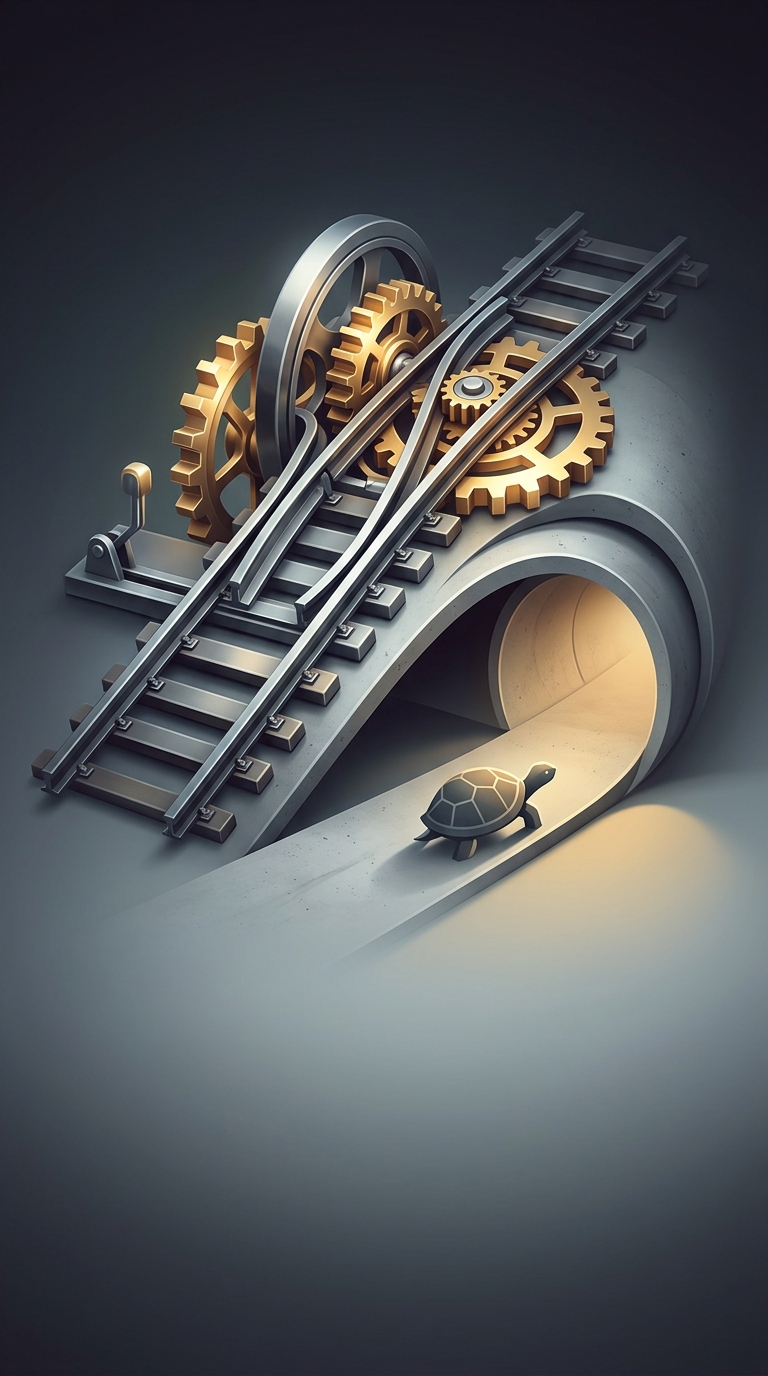
A railway switch is the moving section of track that directs a train from one line to another. To change a train’s route, the switch’s rails move tightly against one rail or the other. A small animal caught in that mechanism can prevent the rails from closing properly, so the switch may not register as safe for a train to pass.
That creates a problem larger than the animal itself. Railway systems are designed to hold trains when a track component does not appear to be in its correct position. Staff may need to inspect the switch and clear the obstruction before service can resume, delaying trains even when the original cause is a turtle.
A Safer Route Beneath the Rails
JR West’s solution was to give turtles a way across without sending them through the switches. Small tunnels beneath the tracks let the animals pass from one side to the other while keeping them out of the moving rail parts above.
The design addresses both sides of the problem: turtles can continue their journey, and the switch remains free to do its job. It is a modest piece of infrastructure with an unusually specific purpose—helping a slow-moving animal cross a fast-moving transport corridor without turning the crossing into a service interruption.