A River Provides Motion, Not Direction
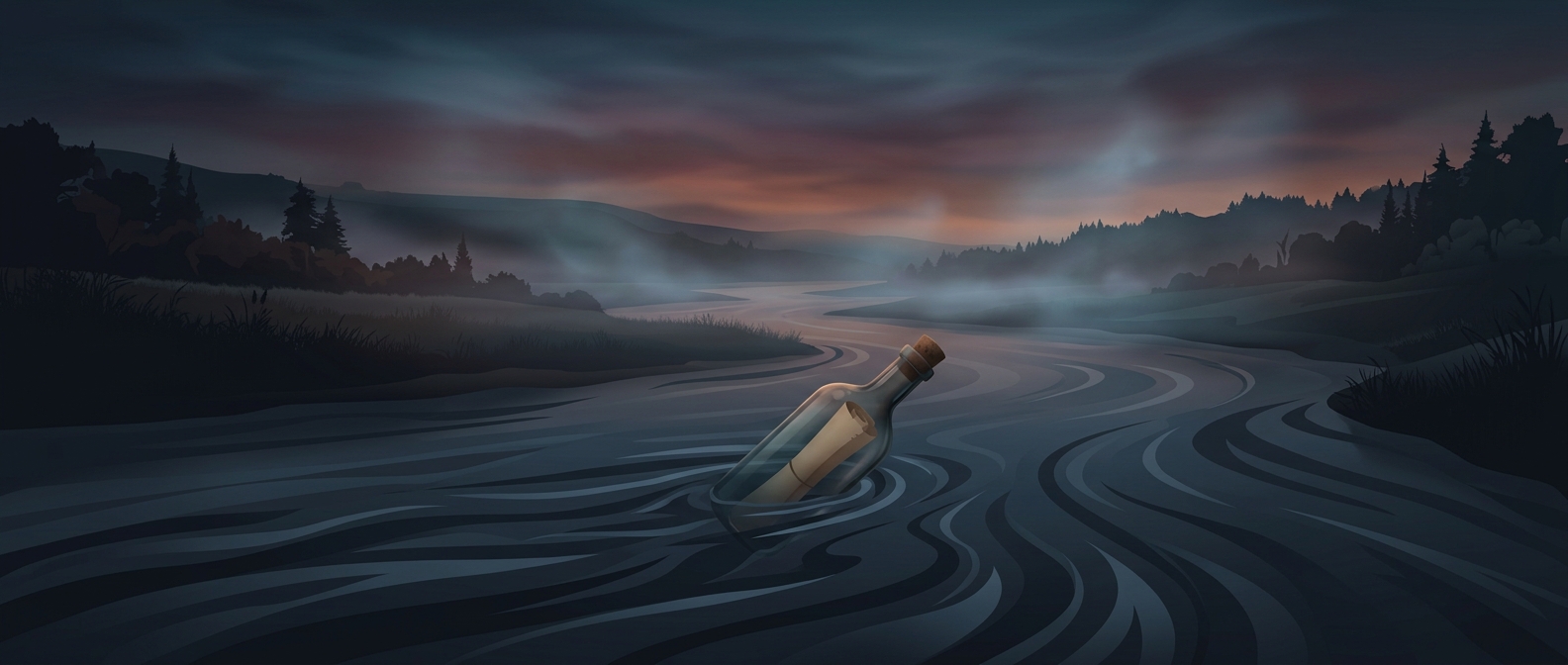
A message in a bottle has no way to choose a destination. Once released, it moves with the water around it—sometimes floating near the surface, sometimes caught in slower eddies along a bank. The route depends on the river’s bends, obstacles, and changing flow, not on where the sender hopes the letter will go.
That makes “downstream” less an address than a gamble. A bottle might travel past a town, lodge among reeds, wash onto a shore, or keep moving until the river meets a larger body of water. Even a strong current cannot guarantee that it will reach a person: it may be trapped, broken, or carried somewhere uninhabited.
Why the Journey Had No Schedule
River flow changes with rainfall, drought, and the shape of the channel. A bottle can speed through a narrow, fast stretch, then slow in a pool or circle in an eddy—a patch of water that swirls instead of moving steadily downstream. Debris and vegetation can stop it altogether. Because these conditions vary from place to place and over time, there is no dependable travel time or predictable route.
The method offered one advantage: the water did the carrying without roads, a boat, or a known recipient. But that convenience came at the cost of control. The river could transport a message, but it could not deliver it on purpose. A bottle found on a distant bank was not proof of a working postal route; it was the visible result of currents, chance, and someone happening to notice it.