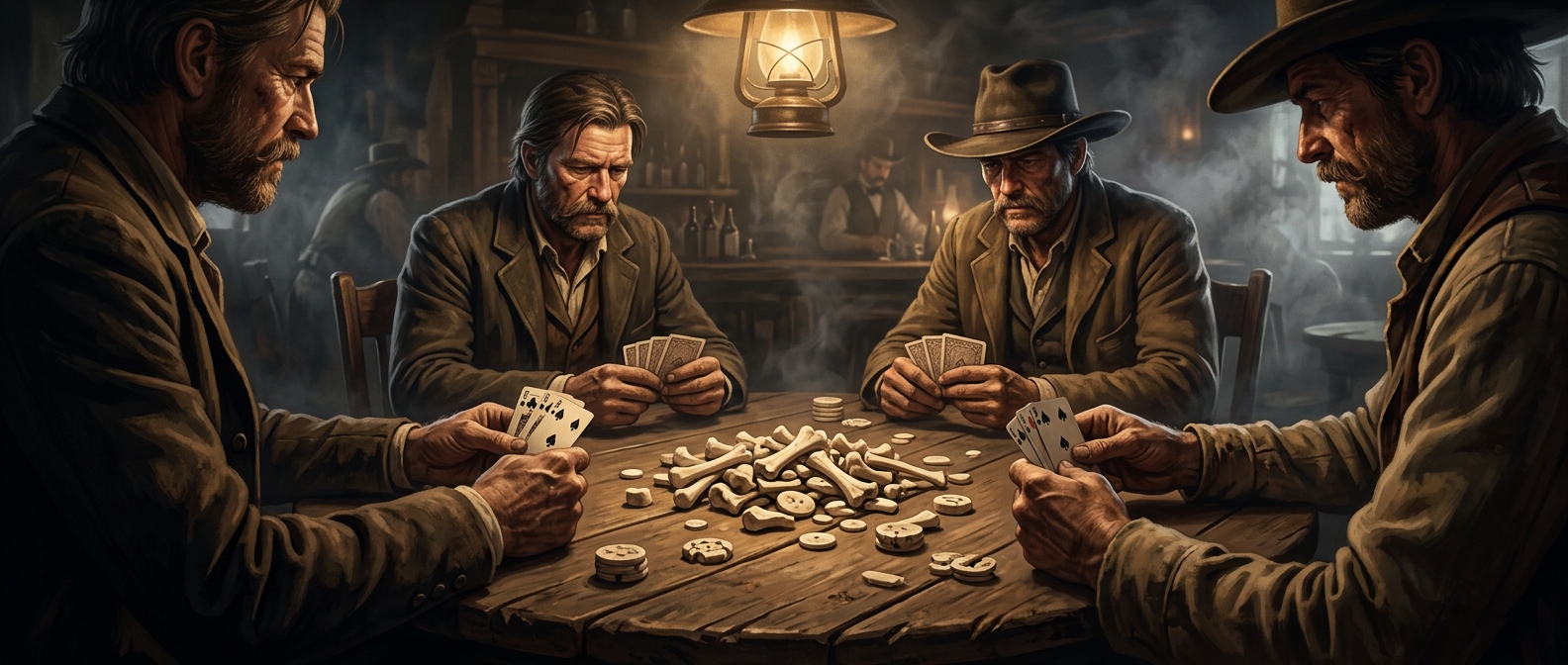
How a Shuffle Turns Cards Into Hidden Information
Before a hand begins, the deck has an order. Shuffling scrambles that order, and dealing gives each player only a small part of it. The result is not simply a different set of cards: it is a different map of what each player knows. You can see your own hand, but must infer what others hold from their choices and from the cards that appear.
That uncertainty is what makes a fixed deck useful for strategy. Players make decisions with incomplete information—whether to risk a play, save a strong card, or try to persuade an opponent that their hand is better or worse than it is. A card’s value can depend on what has already been played and what might still be held elsewhere.
The Rules Give the Same Cards Different Jobs
A deck does not dictate one kind of game. Rules determine how cards rank, how they can be played, and what counts as winning. In one game, players may compete to take particular combinations; in another, they may avoid taking them. Those choices reshape the value of the same card and reward different skills, from planning ahead to reading opponents.
The physical routine is simple—mix, deal, play—but each new deal rearranges the hidden information. That is why familiar cards can keep producing unfamiliar decisions: the deck stays the same, while the players’ knowledge and the possibilities in front of them change.