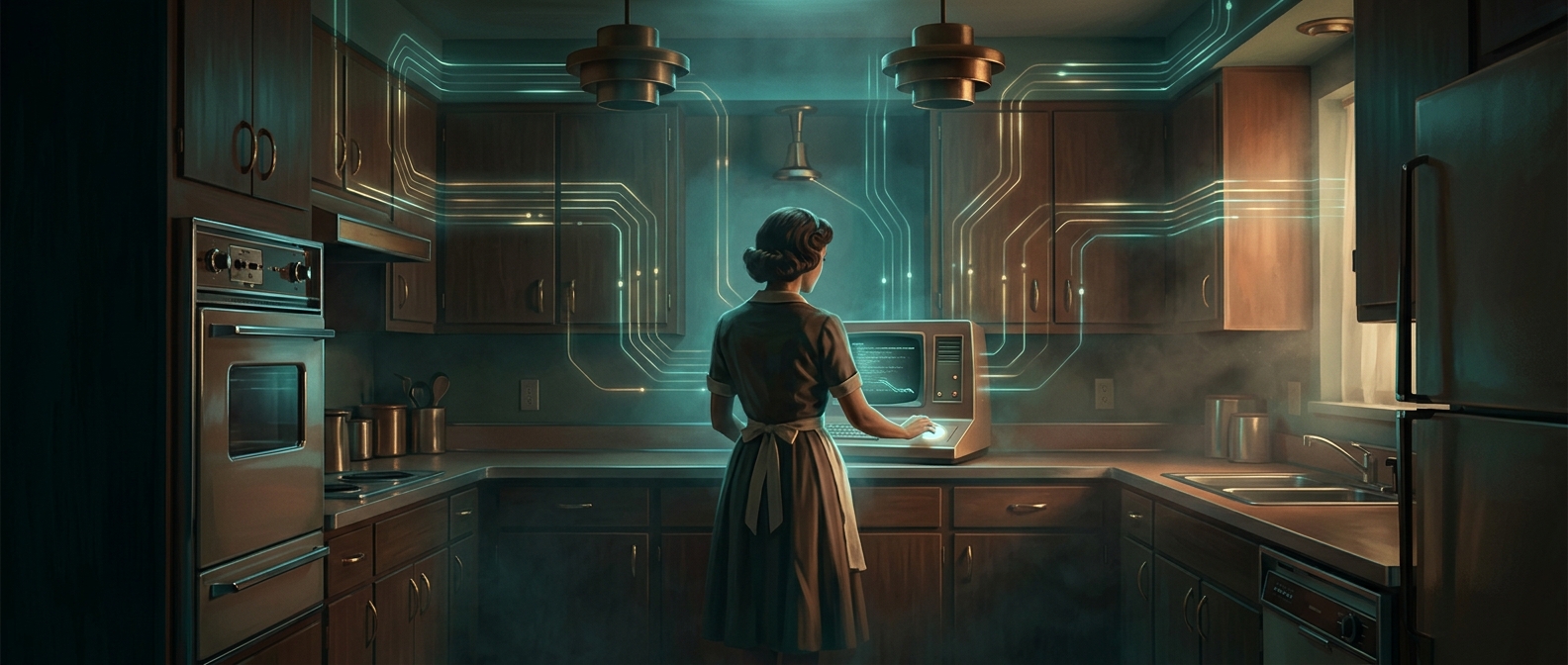
A household computer before computers fit on a desk
ECHO IV was an attempt to make a computer part of everyday domestic life decades before compact personal computers became practical. Its name stood for Electronic Computing Home Operator. In 1966, engineer James Sutherland built the system at home, where its 800-pound hardware occupied multiple rooms. The scale reflects the era: computing required substantial physical equipment, not a small processor tucked inside a household appliance.
From household records to shopping lists
ECHO IV could help make shopping lists by keeping track of what the household needed. That task depended on turning ordinary domestic information—what was used or running low—into data the computer could process. The machine did not understand a pantry the way a person does; it could work with information entered in a form it was designed to handle.
It also controlled temperature and switched appliances on and off. In effect, it connected computation to the home’s physical systems: the computer made a decision, and control equipment carried that decision out. That is the basic idea behind home automation today, though modern devices can be far smaller and easier to install.
The cost of bringing computing home
ECHO IV’s promise came with an unmistakable tradeoff. Its bulk made it difficult to accommodate, and its reported deafening noise made its presence hard to ignore. A system meant to simplify domestic routines could itself become a source of household irritation.
That contrast is what makes the project memorable: before home computing became quiet, compact, and commonplace, one engineer made the home itself the computer’s test bed—and the machine’s size and sound were part of daily life, too.