Why Restoring an Old Car Starts With Taking It Apart
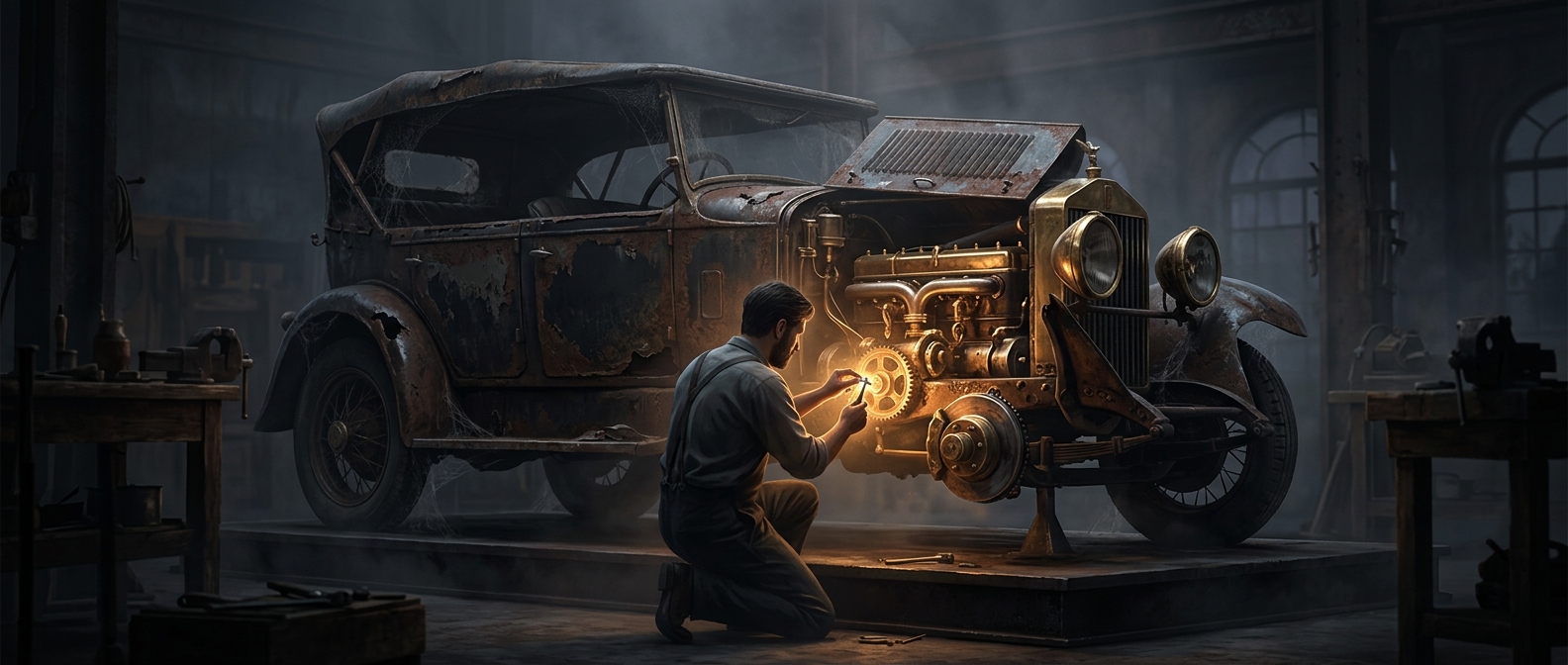
A vintage car can look nearly complete while hiding damage that changes how it runs—or whether it is safe to drive. Restorers begin by inspecting and often disassembling the vehicle, recording how parts fit together before corrosion, worn fasteners, or earlier repairs complicate the picture. That record matters because older cars may lack the standardized replacement parts and service information available for modern vehicles.
Rust is more than a surface blemish. When it eats into a body panel or frame, simply covering it can conceal weakening metal. A repair may require cutting away the damaged section and fitting sound metal in its place. The challenge is to restore strength and shape without erasing original details that help identify how the car was built.
The Choice Between Original and Usable
Mechanical parts pose a related tradeoff. A restorer may repair an original component, find a period-correct replacement, or use a newer part that works more reliably. Each choice affects the car differently: keeping original equipment preserves more of its history, while a discreet update can make the vehicle more practical to operate. The right approach depends on the car’s condition and the owner’s goal, whether that is display, occasional driving, or a faithful working restoration.
This is why restoration is not simply a matter of making an old car look new. Paint and polished trim are the visible finish; underneath, careful fitting and testing determine whether the engine, brakes, steering, and other systems function together. The finished car is also a record of those decisions: what could be saved, what had to be remade, and how much of its original character remains in motion.