The shop window moved selling out to the street
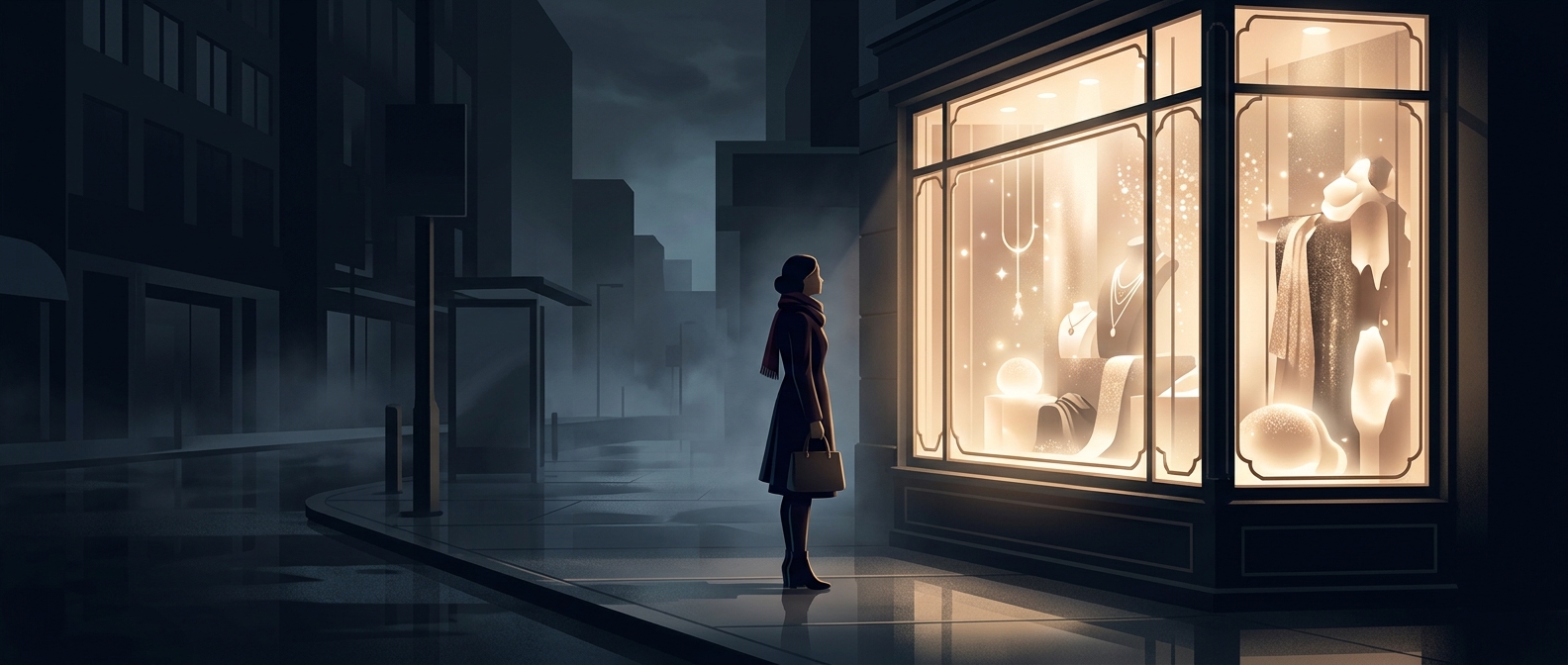
Before a shopper crossed the threshold, a display could already do its first job: make the goods seem worth wanting. Large panes of glass let retailers present merchandise to passersby without exposing it to weather or handling. Arranged at eye level and lit to stand out, the objects became a small, carefully composed scene—not simply a view into the shop.
A display turned attention into a possible purchase
The tactic worked by lowering the cost of looking. A pedestrian did not need a plan, money in hand, or even an intention to shop. A glance could become a pause; a pause could reveal a price, a new style, or an item the viewer had not known to seek. The window thus served as an advertisement and a kind of invitation, while the shop interior remained the place where browsing might turn into a sale.
That mattered to retailers because street traffic was useful only if some of it came inside. A compelling display could compete for attention with the walker's destination and give a store a reason to be noticed even by people who had never entered before.
Browsing became part of shopping
Window-shopping also gave people a way to take part in consumer life without buying anything. They could compare styles, imagine ownership, or simply enjoy looking. The commercial advantage was that desire could be cultivated before a customer made a purchase decision. The sidewalk became the first stage of the shop’s selling process, and the passerby became a potential customer before reaching the door.