Why the deck sits below the trucks
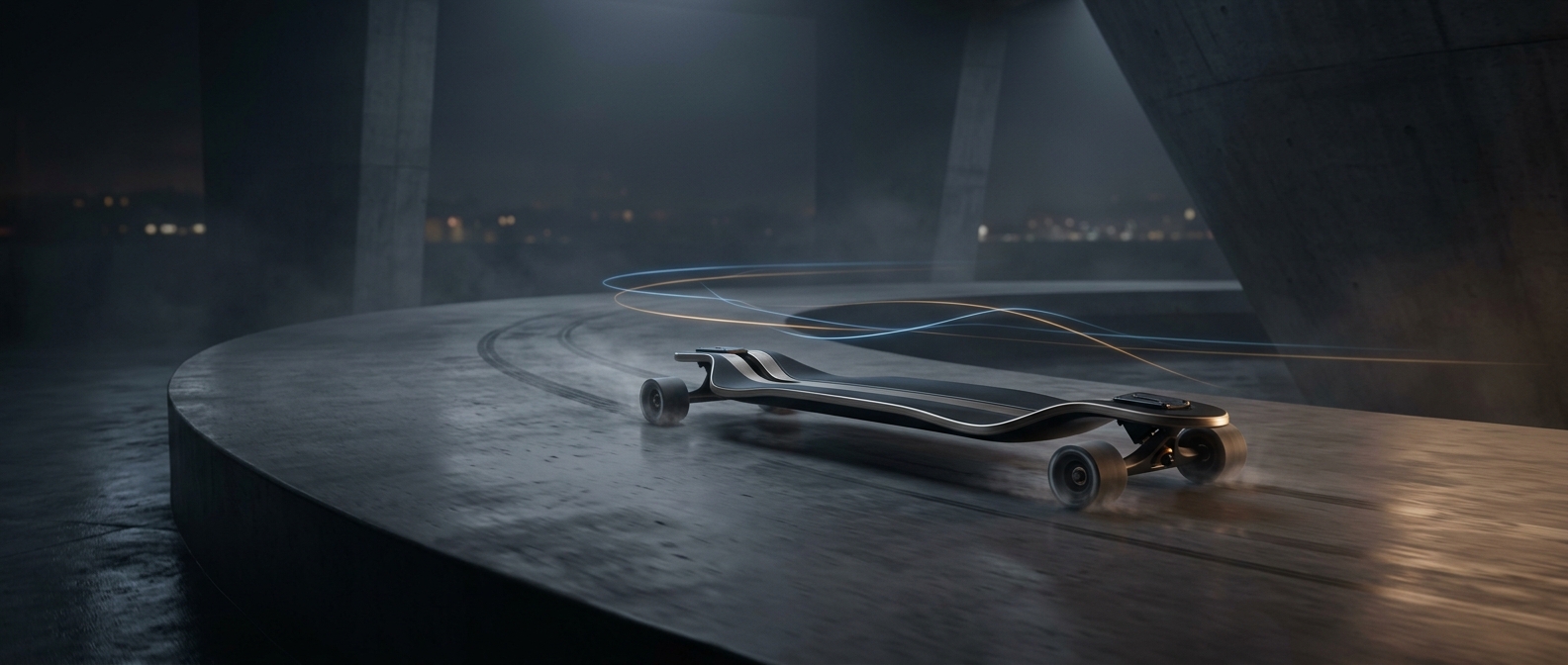
On a dropped longboard, the foot platform dips between the places where the trucks—the axle assemblies that hold the wheels—attach. The wheels and trucks can remain at a useful height while the rider stands lower, closer to the pavement. That geometry changes how the board feels without requiring a radically different stance.
A lower stance means less leverage for a wobble
When a board starts to tilt, the rider’s weight acts through the point where the rider’s mass is concentrated. Put that point lower and a small sideways movement has less leverage to build into a larger lean. At speed, that can make the deck feel calmer and easier to manage, especially when the rider is making small corrections.
The low platform also changes the effort of pushing. A rider’s foot has less distance to travel down to the ground and back onto the deck, so repeated pushes can feel less like stepping off a tall platform. That matters on a long ride, when the motion is repeated many times.
Stability comes with a clearance tradeoff
The deck’s closeness to the ground is useful, but it leaves less room beneath it. A dropped board is therefore not simply a higher board made steadier: its low shape also limits how much space is available for obstacles or deep turns, depending on the board’s design and setup. The defining compromise is practical—a lower place to stand can make balancing and pushing feel easier, while demanding more attention to what lies beneath the deck.