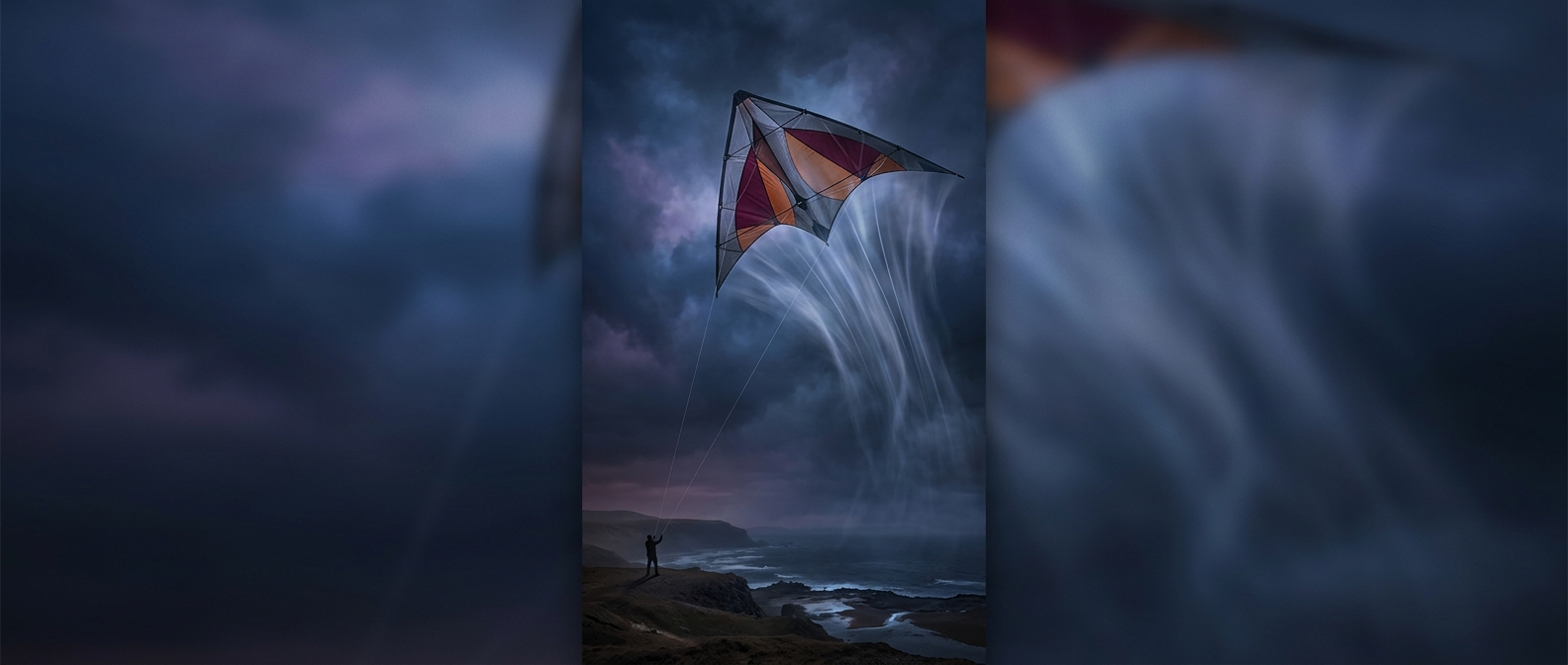
The wind turns the kite into a lifting surface
A kite works much like a small wing. As air flows around its tilted surface, the airflow changes direction and pressure becomes uneven across the kite. The resulting aerodynamic force has an upward component that can oppose gravity. The kite does not need an engine: the breeze supplies the energy, while the line keeps the kite oriented in the airflow.
The line is part of the balance
The pull of the wind also pushes the kite downwind. The taut line resists that pull, and its direction helps set the kite’s angle to the breeze. In steady flight, lift, gravity, and the combined pulls of the wind and line balance closely enough that the kite holds roughly the same position. If the angle is wrong, the wind is too weak, or the line goes slack, that balance can fail and the kite may dip or tumble.
The line therefore does more than keep the kite from drifting away: it lets the flyer adjust the kite’s position and angle, changing how the wind acts on it. That is why a kite can climb when its line is let out into a steady breeze, yet fall when the airflow or its orientation changes.