The Latch That Lets Toast Go
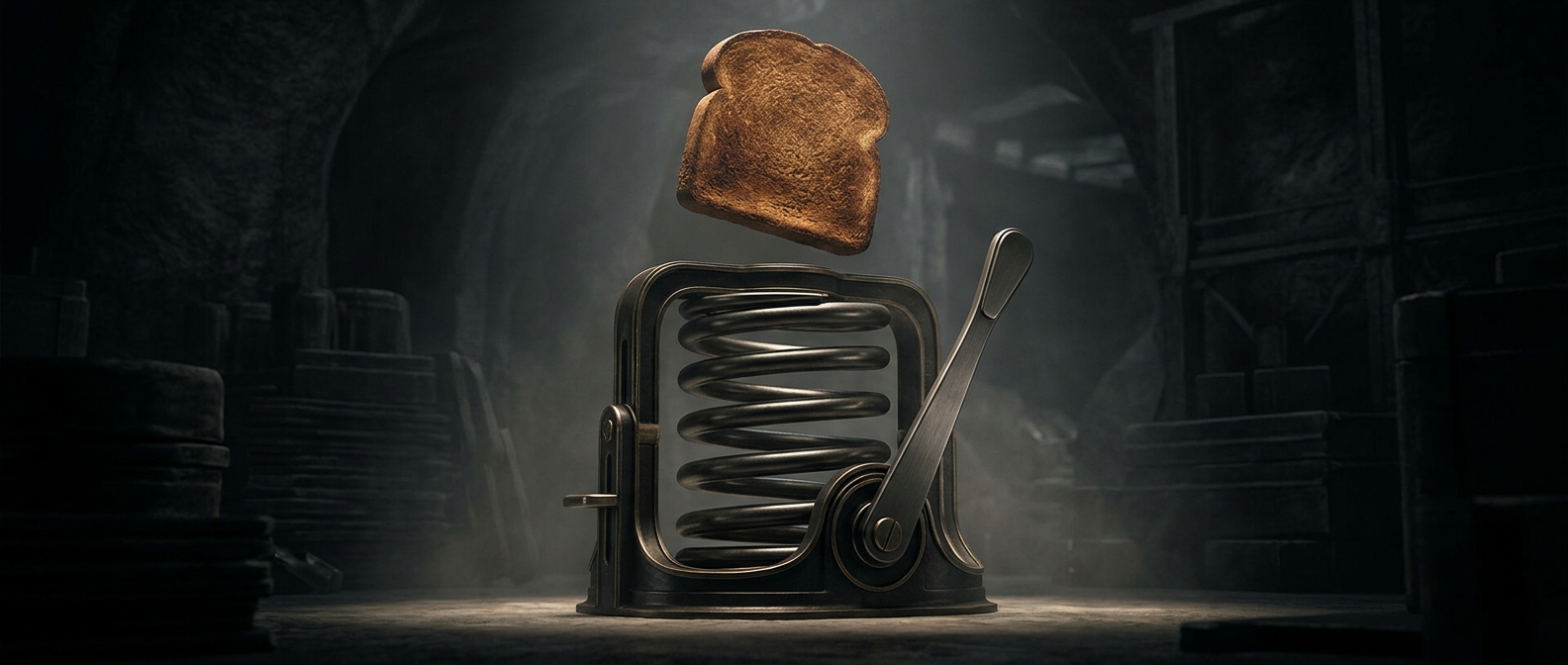
In a pop-up toaster, pushing the lever down does more than lower the bread. It also compresses a spring beneath the bread carriage and engages a latch, holding the bread near the heating elements. The spring is ready to lift the carriage, but the latch keeps it there while the toast browns.
A control circuit determines when to release that latch. In many toasters, heat bends a bimetal strip—two bonded metals that expand at different rates. As it bends, the strip eventually trips the latch. Other designs use electronic controls to end the cycle. In either case, the release, rather than the spring itself, sets the toasting time.
Why the Spring Matters
Once the latch lets go, the compressed spring raises the carriage and moves the bread away from the hottest part of the toaster. That quick separation limits further browning and makes the toast accessible without reaching into the slots.
The spring also makes the mechanism ready for another cycle: lifting the carriage resets the lever, while lowering it again stores energy for the next pop. The visible jump is the simple final step in a chain of heating, timing, release, and motion—one that turns an electrical cycle into a clear physical signal that the toast is ready.