A sailboat has to read the river
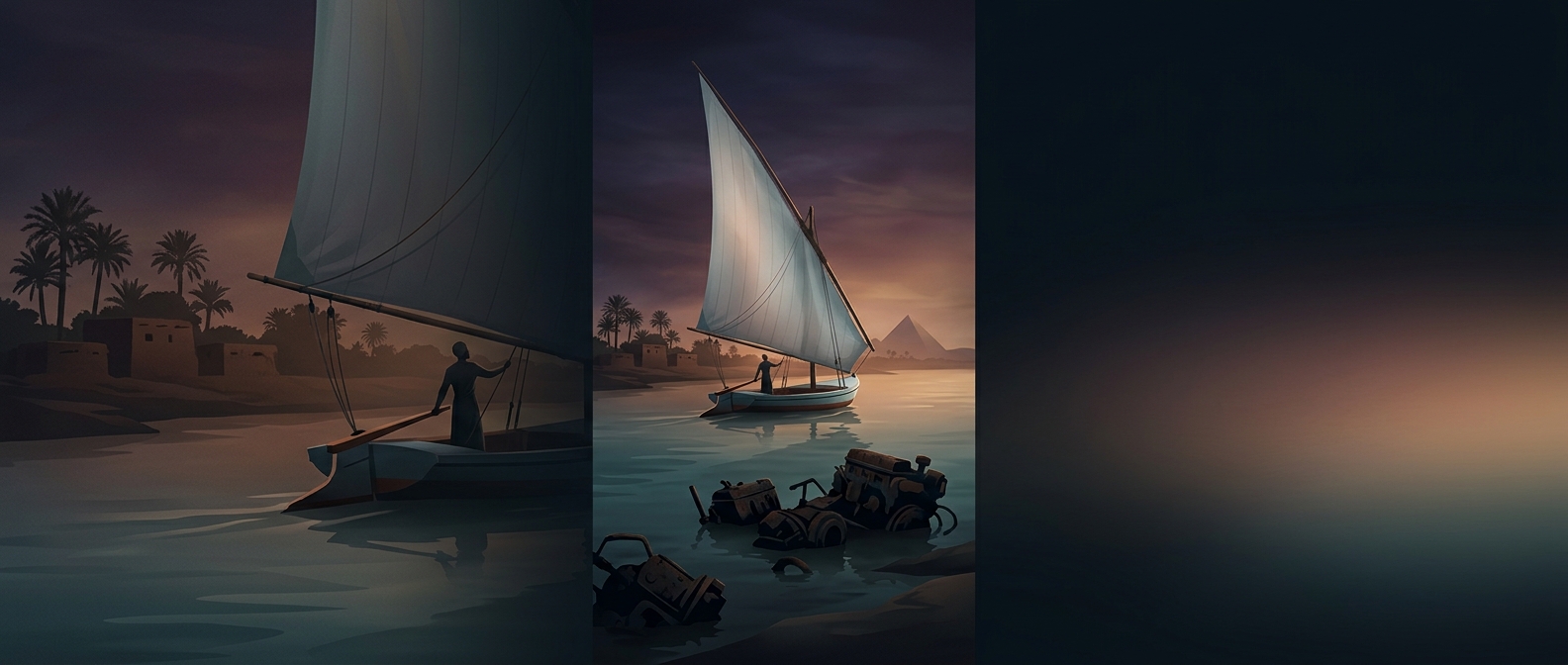
Many traditional Nile riverboats are feluccas: open boats driven by a large triangular sail rather than an engine. The sail does not simply catch wind from behind. The crew angles it so moving air pushes the boat forward, then adjusts its position as the breeze shifts. That makes the helmsman’s choices part of the journey: a gust, a bend in the river, or a crowded stretch of water can change the boat’s pace and direction.
The Nile adds another force. Its current generally carries water north, toward the Mediterranean, while winds along parts of the river often blow from the north. A sailor heading south must work against both the current and the wind; going north, the current helps, though the wind may not. The balance depends on local conditions, so a sailing trip cannot keep the same timetable as a powered ride.
The tradeoff is part of the experience
A motor can deliver predictable speed regardless of whether the breeze is useful. A felucca gives up that control: the crew may wait for wind, tack—zigzag across the wind to make progress—or change plans. In return, the boat moves without the steady engine noise and vibration of a motor launch.
That dependence makes a Nile sail less like a shuttle and more like a small negotiation with the river. The breeze is not background scenery; it helps decide how far the boat goes and when.