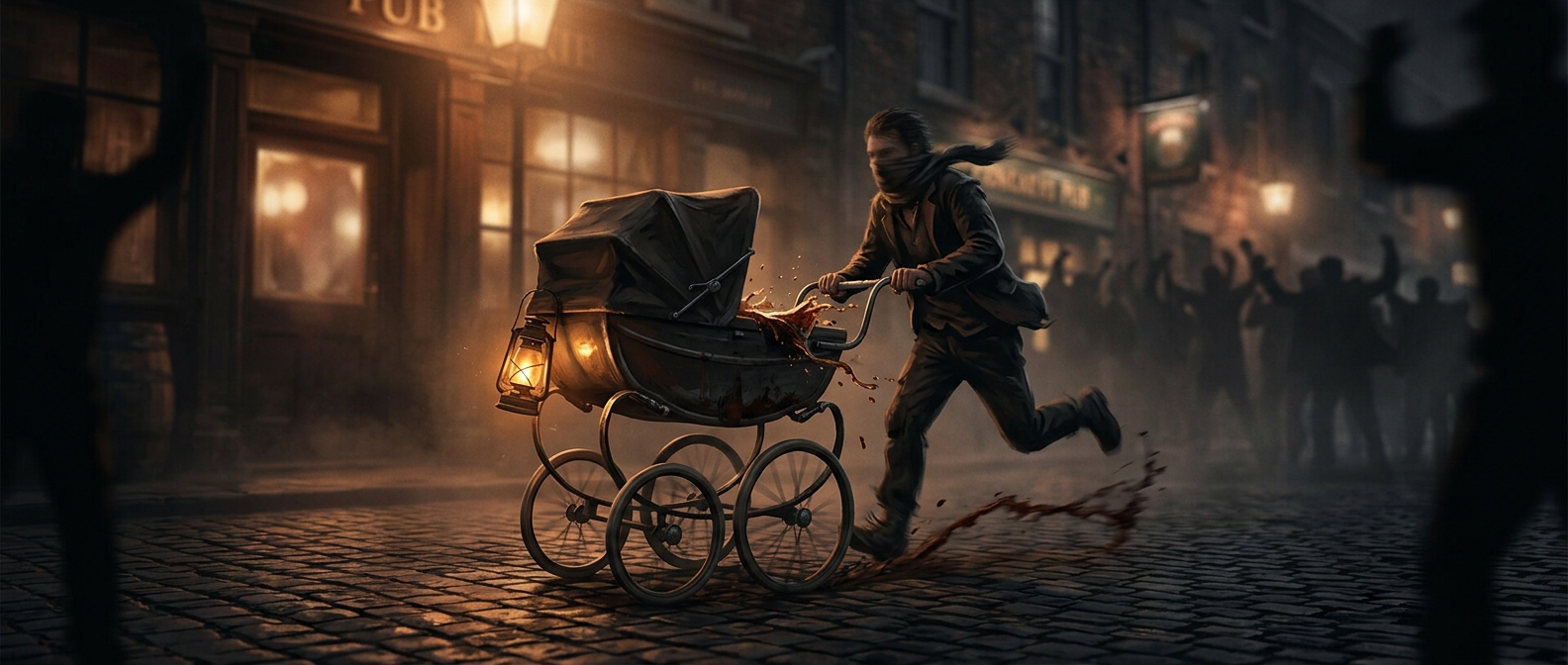
A carriage built for a different kind of passenger
A baby carriage is designed to carry a relatively light passenger at walking pace, with an adult guiding it from behind. Put an adult racer in the seat and the job changes: the frame and wheels must cope with a much heavier load, while the rider has to steer from a position the designers never intended for fast turns.
The low seat makes the ride feel unusually close to the ground, but it also limits the rider’s leverage. Steering depends on the carriage’s handle and front-wheel arrangement, so quick corrections can feel awkward when the rider is seated rather than walking behind it.
Why pavement becomes part of the race
Small wheels are convenient on smooth paths, but they roll over bumps less easily than larger wheels. A stone or uneven paving joint can interrupt their motion sharply, jolting the carriage and forcing the rider to correct course. At speed, those small interruptions matter: the challenge is not simply to go fast, but to keep the carriage pointed where it needs to go.
That makes the street an active part of the contest. A stretch of rough pavement that barely registers to someone walking can become a steering problem for a low-slung carriage. The spectacle comes from the mismatch: a vehicle meant for gentle, careful handling being asked to behave like a racer.