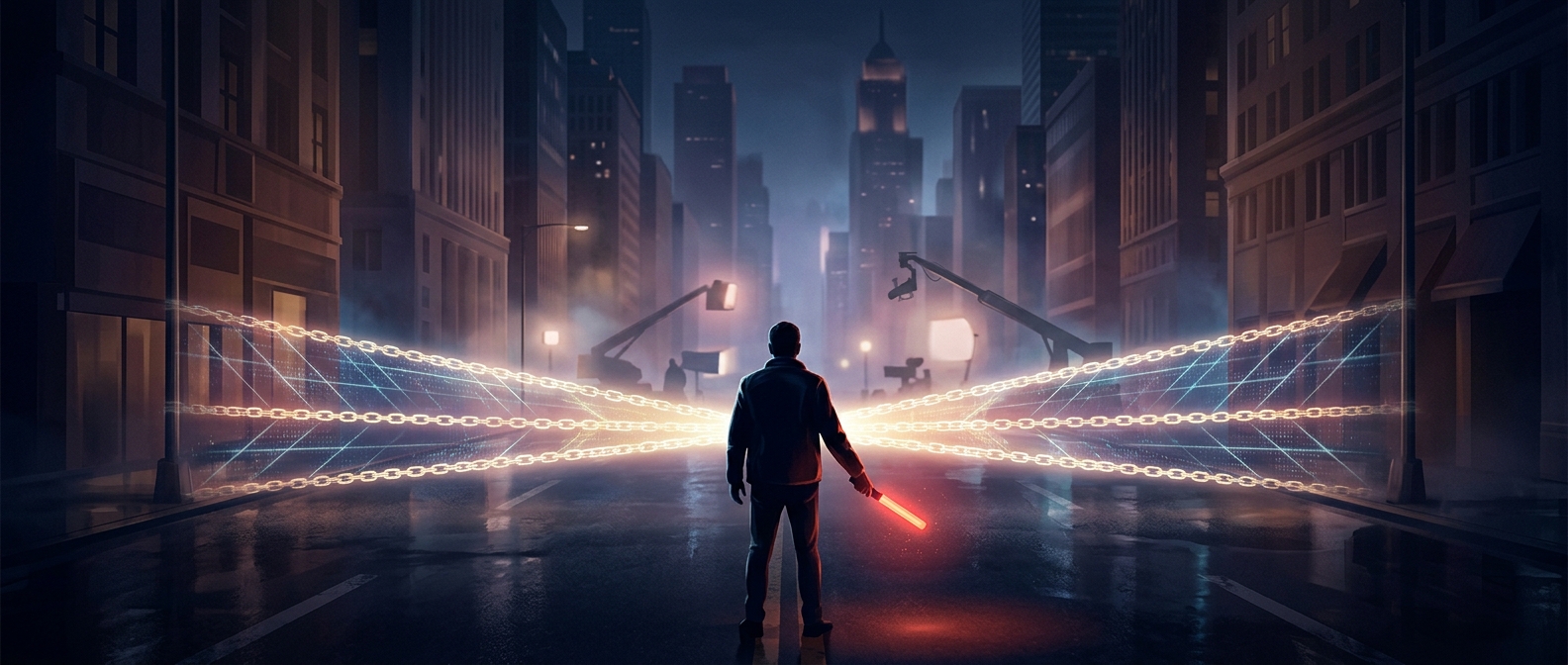
Why a Film Crew Needs a Quiet Street
A camera records more than the action in front of it. Nearby traffic can add engine noise to dialogue, while a passing car can cross the frame and spoil a shot meant to look continuous. Even if the picture is usable, unwanted sound may make a scene harder to edit smoothly.
A Short Hold, Then Another Take
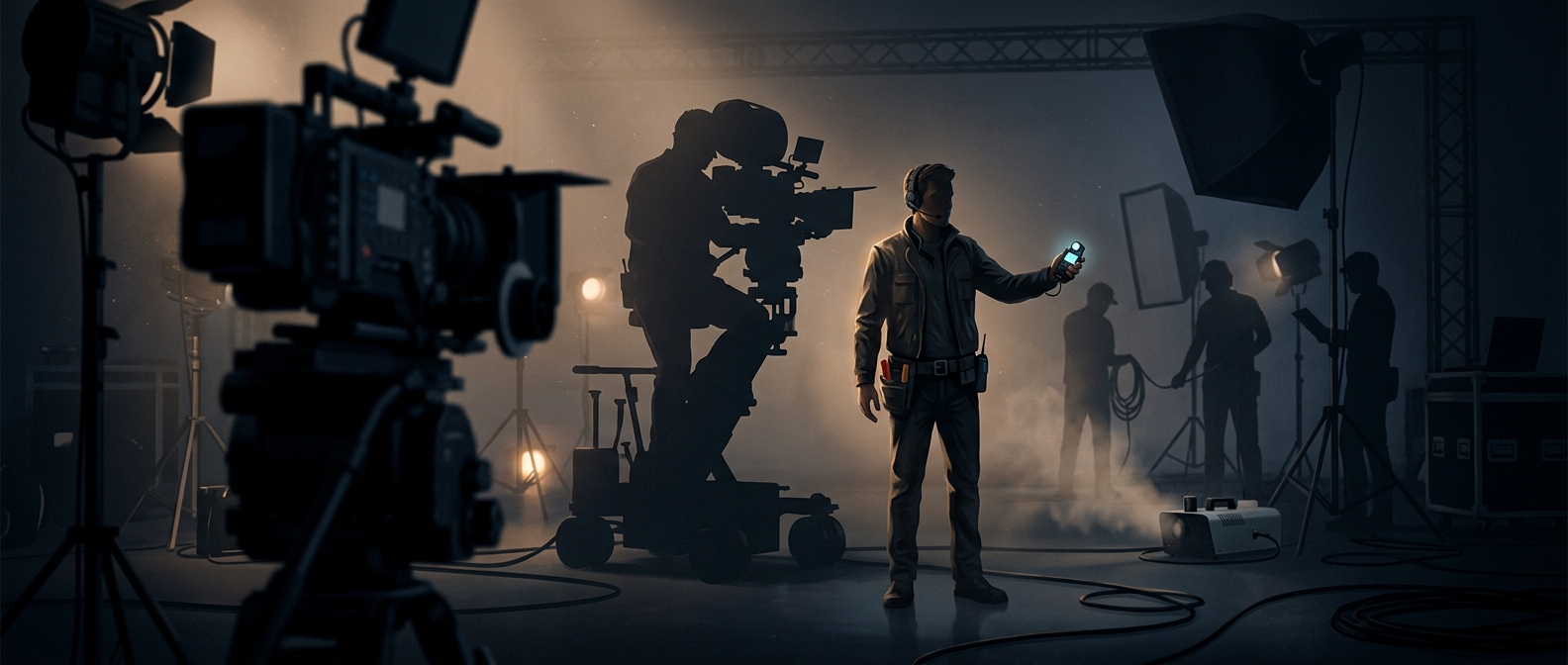
Street filming is usually built from repeated takes rather than one uninterrupted performance. The crew may reset actors, camera positions, and equipment between attempts. Production assistants help manage the space around that work, relaying when a take is about to begin and when traffic can move again. Walkie-talkies let people at different intersections coordinate those pauses without leaving their posts.
The timing matters: a vehicle released too early can enter the shot or drown out a line; a hold that lasts longer than needed unnecessarily delays people using the road. The crew is balancing a clean recording against the practical fact that the street is still part of a working city.
The Street Becomes Part of the Set
A blocked intersection is therefore not just a backdrop-control measure. It creates a brief, coordinated window in which actors, camera operators, and sound crew can repeat the same scene without a changing stream of traffic. Once the take is over, the ordinary city rhythm returns—often before the audience ever knows it was paused.