How a meteor might seem to sound on time
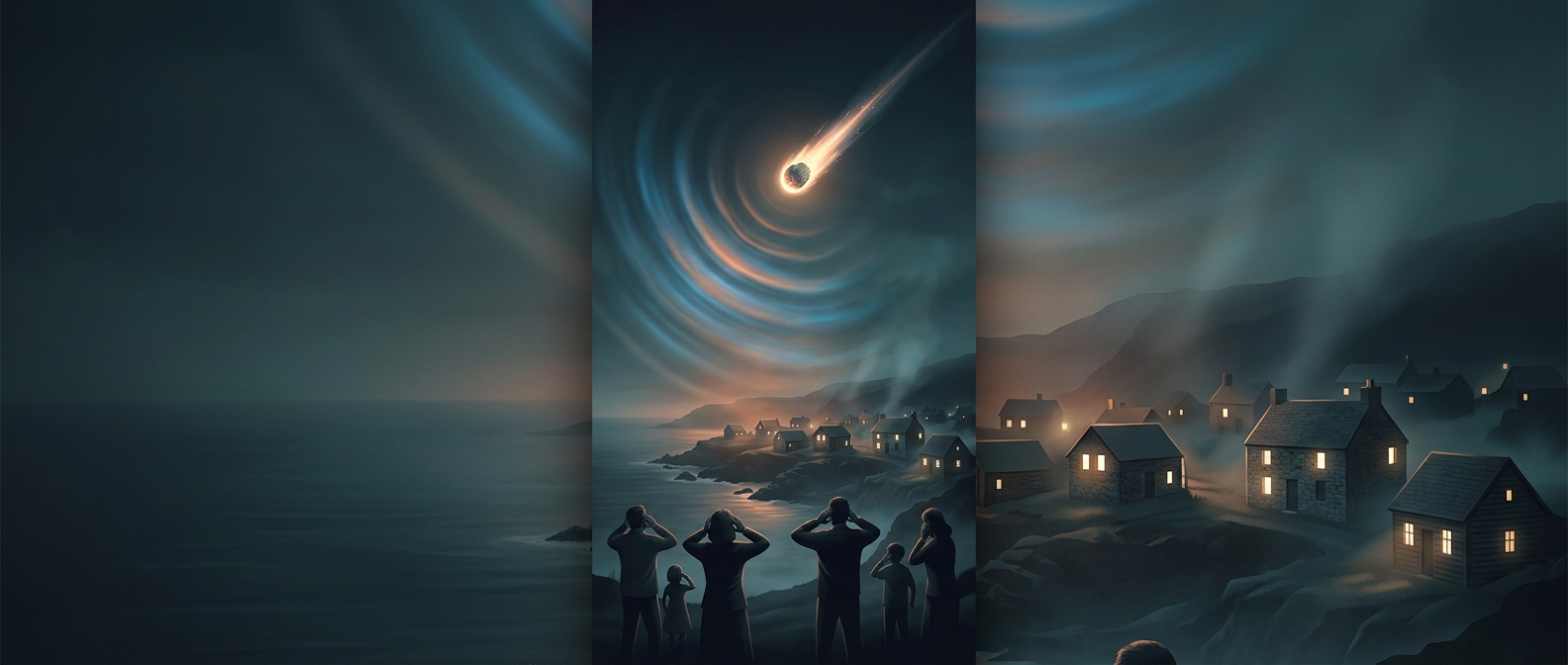
A meteor’s visible streak and an ordinary sound from its passage do not reach an observer together. Light crosses the distance almost instantly; sound travels through air much more slowly. A boom or rumble caused by the meteor’s flight should therefore arrive after the flash—sometimes long after, depending on how far away the meteor is.
Yet some observers have described faint hissing, crackling, or rustling at nearly the same moment they saw a bright meteor. One proposed explanation is that the sound is not traveling through the air from the meteor at all.
Turning a radio signal into a vibration
As a meteor tears through the upper atmosphere, it heats and ionizes gas, leaving a trail of electrically charged particles called plasma. That trail can produce radio waves, which travel at nearly the speed of light. If such a signal reaches the ground, it might cause nearby materials to vibrate and create sound close to the listener.
The distinction matters: radio waves are not sound waves, and a person cannot hear them directly. The proposed process would require something in the environment to act as a receiver and convert the electromagnetic energy into physical motion—rather like a rough, unintended speaker. The resulting vibration could be heard as a brief hiss or crackle, arriving with the light rather than with the delayed sonic boom.
A plausible route, not a settled answer
This idea offers a way to make sense of reports that seem to violate the usual sound-delay rule without claiming that sound itself outruns light. But the details of how a meteor’s radio emissions might produce audible vibrations remain uncertain, and the explanation is not established for every reported sound.
The useful takeaway is that “hearing a meteor” may describe two different events: a delayed sound wave from its flight, or a proposed near-instant conversion of radio energy into vibration nearby. The first follows ordinary acoustics; the second remains an intriguing possibility.