A Blocked Route Can Be the Whole Strategy
In a trading game built around a shared map, a route is more than a way to move pieces. It can be access to valuable spaces, a link between parts of a player’s network, or a step toward an objective. When another player occupies a narrow passage first, the loss may matter far more than the piece itself.
That is why a child’s move can feel like a rules problem. The board may look open until one placement turns a useful corridor into a bottleneck. If the rules permit the placement, though, the block is not a loophole: it is the game’s competition over limited space made visible.
Why the Move Can Surprise an Adult
Players often focus on expanding their own plans—building the next link, collecting the next resource—while overlooking how their choices shape everyone else’s options. A route that seems harmless can leave an opponent one step from a connection. A player who notices that dependency can disrupt the plan with a single well-timed move.
The skill is not necessarily knowing more rules. It is spotting what another player needs and recognizing when the board offers a chance to deny it. A seven-year-old may see the immediate pattern clearly even if an adult has been thinking several turns ahead in a different direction.
The Board Keeps the Score
Games with shared routes make interaction concrete: players can see where paths converge, where room is running out, and who stands to benefit from a connection. That creates a tension between building efficiently and protecting access. A strong move may advance your own network; a sharper one may also force opponents to change course.
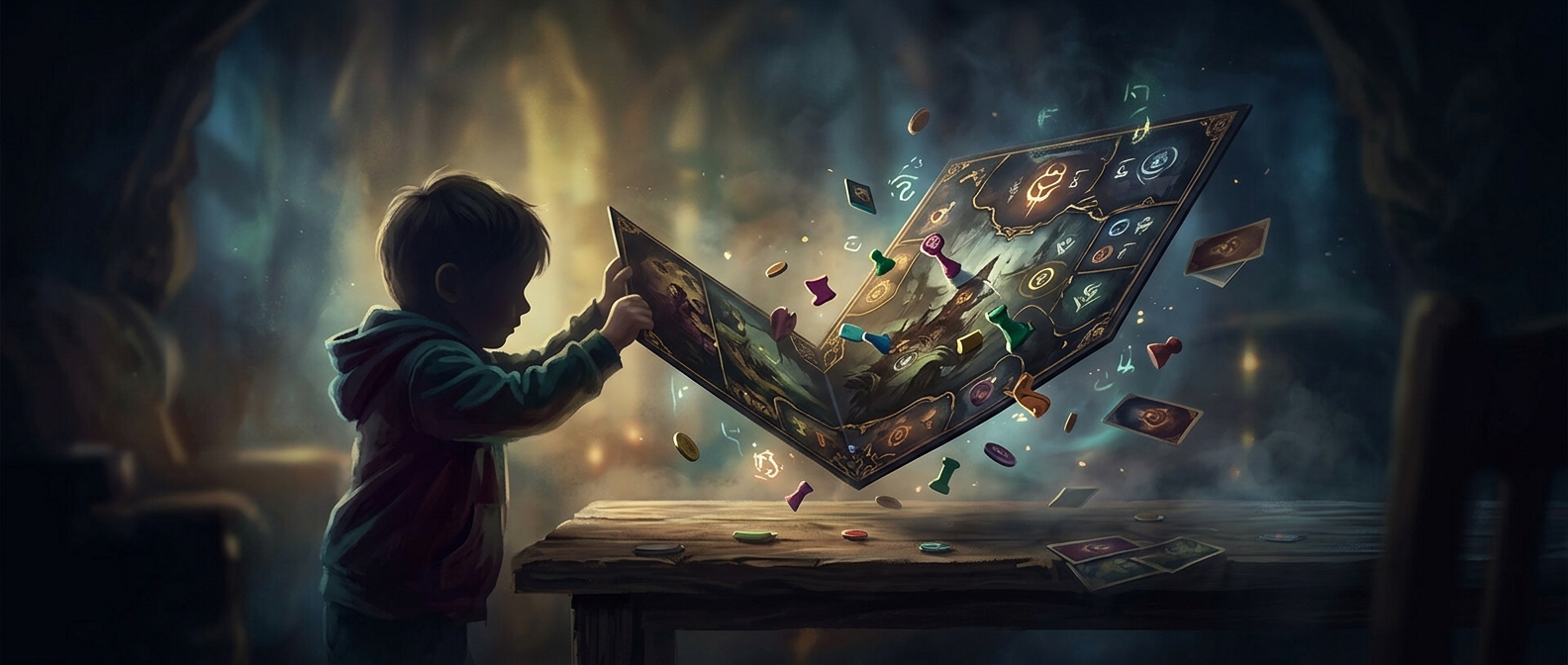
When a plan collapses at a chokepoint, flipping the cardboard board is emotionally satisfying—but it does not reopen the route. The more useful response is to look at the map again and ask which dependency the younger player spotted first.