Why a “lead” pencil contains no lead
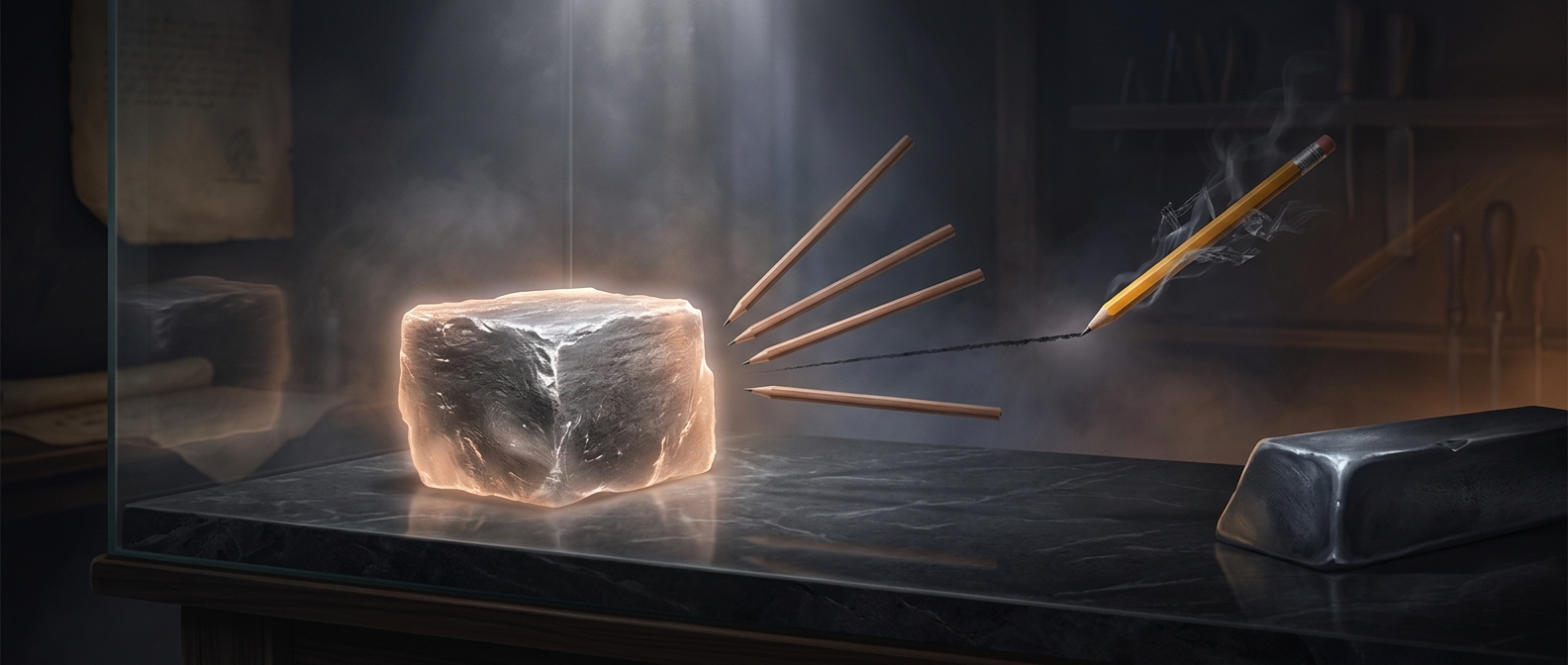
The dark core of an ordinary pencil is graphite, a form of carbon. It leaves a mark because tiny flakes shear off as the pencil moves across paper and cling to its rough surface. The wooden casing simply holds that soft material and makes it easier to control.
A mistaken name that lasted
In the 16th century, a large deposit of graphite was found in England. Its dark, metallic-looking surface made it seem like a kind of lead, so people called it “black lead” or “plumbago”—a name derived from the Latin word for lead. The material was later identified as a form of carbon, but the familiar association with lead had already taken hold.
The word “pencil” has its own older history: it comes from a term for a small brush. Early drawing tools used graphite wrapped in string or sheepskin; wood-cased pencils became a more practical way to shape and handle it.
What is inside the core
Modern pencil cores mix graphite with clay and binders. Manufacturers adjust the proportions to change how the pencil behaves: more graphite generally makes a darker, softer mark, while more clay tends to produce a harder, lighter one. That is why pencil grades can range from soft and dark to firm and pale.
So the name preserves an old visual guess, while the mark on the page comes from carbon—not lead.