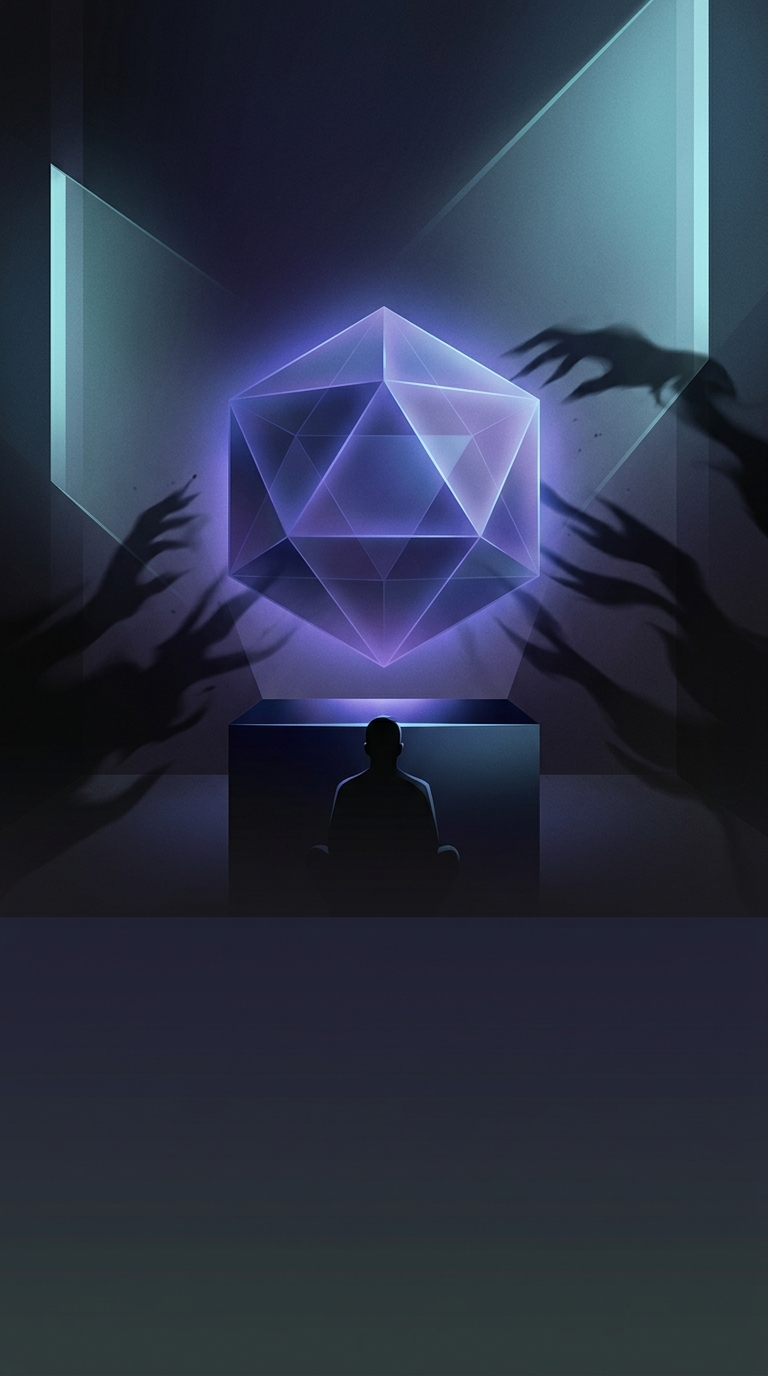
The 20-sided die at the center of the scare
The object was the icosahedral die, better known to Dungeons & Dragons players as a 20-sided die, or d20. Its many triangular faces made it look unfamiliar to people used to ordinary six-sided dice. But it was simply a tool for generating a random number: a player rolled it to see whether an attempted action succeeded.
How a game prop became a symbol
D&D asked players to imagine fantasy adventures, including magic, monsters, and fictional gods. During the 1980s, critics who feared the game’s influence on young people treated those invented elements as evidence of occult instruction. The strange-looking dice offered a physical, easily photographed emblem for a much larger argument about the game’s stories and themes.
The die did not, by itself, cause the nationwide controversy. Media attention and public anxiety about the game’s supposed effects helped turn isolated fears into a broader moral panic. Once the dice were associated with that dispute, an ordinary piece of game equipment could seem sinister to people who had never seen how it was used.
What the die actually does
In play, the d20 is no more supernatural than a coin toss. The game’s rules use its result to introduce uncertainty: a character’s skill and circumstances matter, but the roll helps decide what happens next. The apparent mystery was in the unfamiliar shape; the mechanism was just probability.