Why Shadow Buff Turns Recognition Into a Puzzle
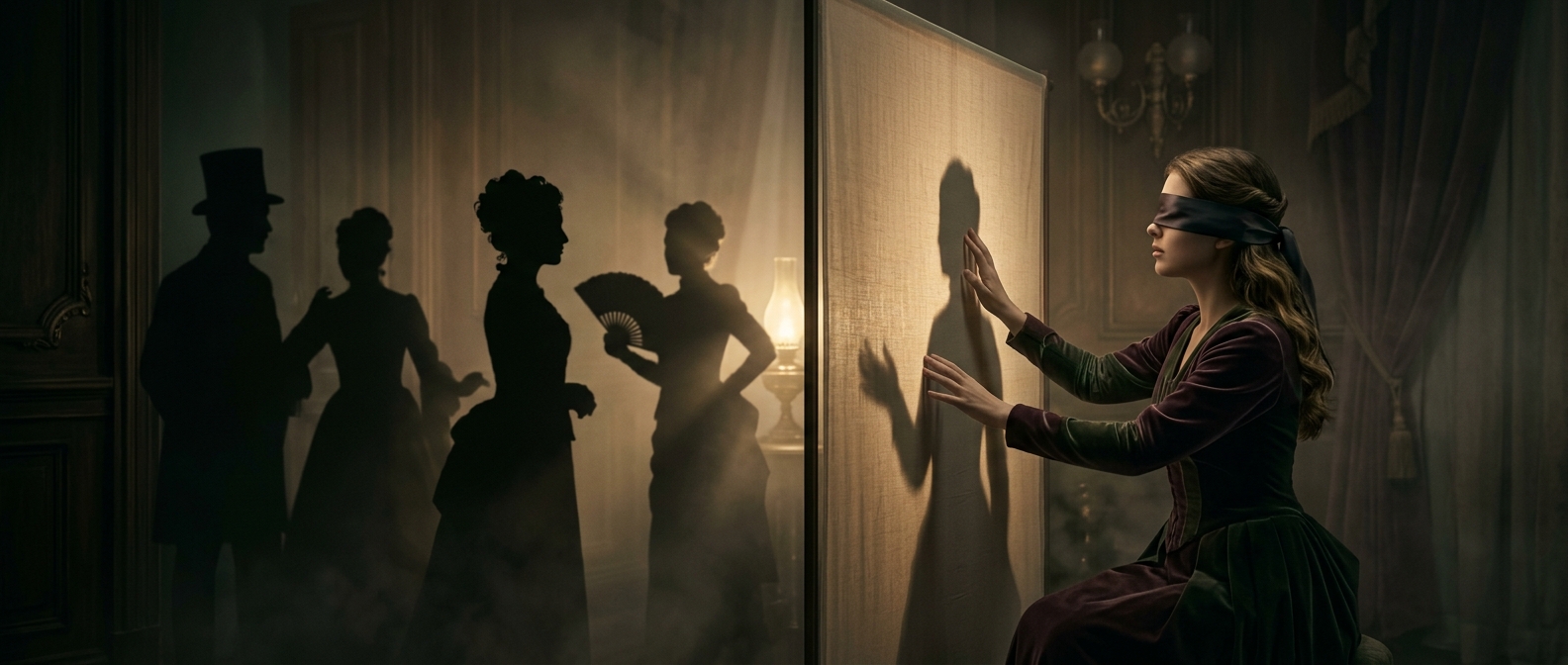
The game hides the details people usually rely on—faces, clothing colors, and expressions—and leaves a simplified outline instead. Players must identify someone from clues that survive the lighting: the shape of a nose, a familiar hairstyle, or the way a person stands.
That makes recognition less like reading a portrait and more like solving a small visual puzzle. A clue matters only if it distinguishes one guest from another. A distinctive profile may be useful; a common outline may not be. The guesser has to combine several imperfect hints rather than trust one obvious feature.
The Setup Changes the Evidence
A light behind a sheet projects the person’s outline onto the fabric. Moving closer to the light can enlarge the silhouette, while turning sideways changes which features stand out. The sheet softens detail, so even a familiar person can look unfamiliar when viewed from an unusual angle.
Those distortions are part of the challenge, not a flaw to correct. The person behind the sheet can shift posture or angle, changing the evidence without revealing a face. Meanwhile, the guesser has to decide whether a broad shoulder, a tilted head, or a recognizable profile is genuinely identifying—or merely a misleading resemblance.
A Social Game Built on Familiarity
Shadow buff works best when players know one another well enough to notice small differences. That familiarity supplies the clues, but the screen makes players reconsider them: the person who is easy to recognize in daylight may be harder to pick out as a moving outline. Each reveal tests not just eyesight, but how closely the group has learned to read one another’s habits.