Why a healing item can’t interrupt a cutscene
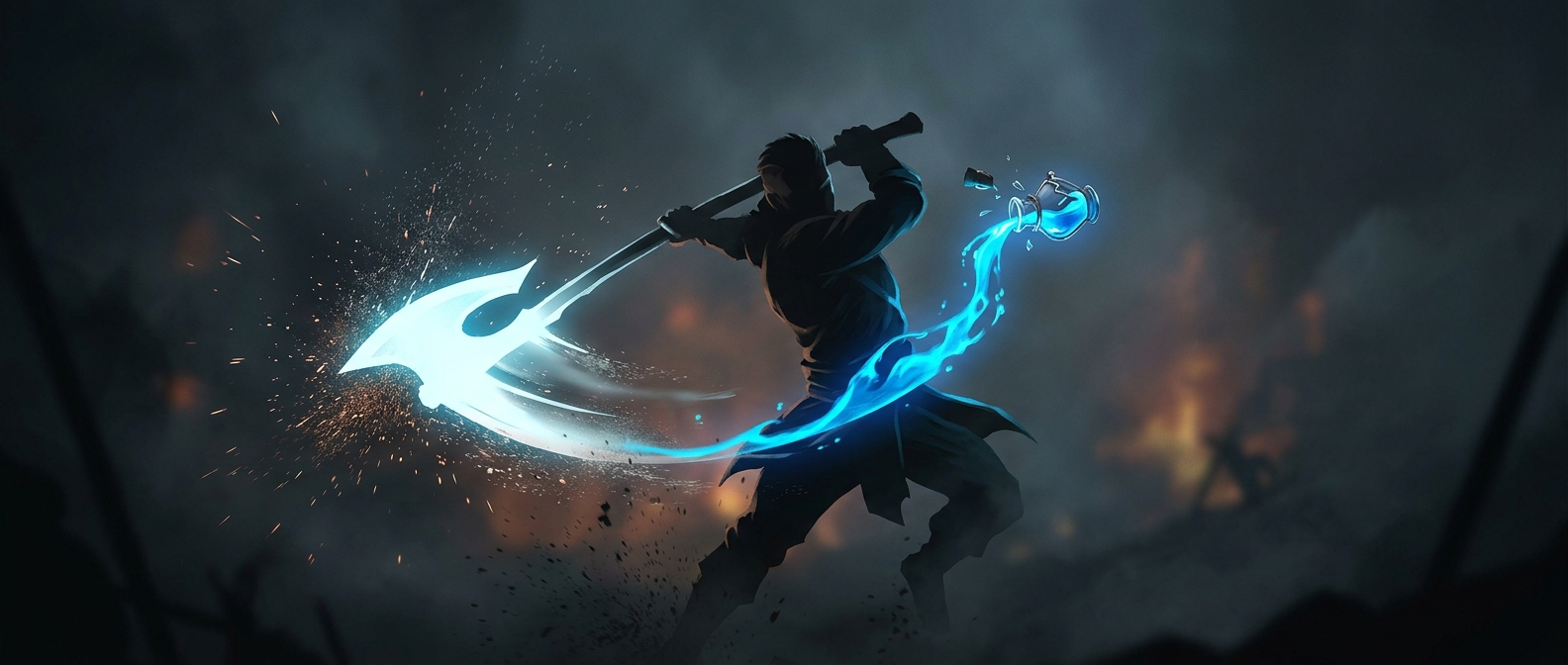
A healing potion usually works through the game’s ordinary play loop: the player chooses an item, the game applies its effect, and the character’s health changes. A cutscene may temporarily replace that loop with a sequence of authored events. The camera moves, characters follow timed actions, and a particular blow or collapse may be scheduled to happen at a specific moment.
If the scene is running that separate script, pressing the potion button may do nothing—not because healing is impossible, but because the game is not currently accepting that kind of input.
Scripted hits can be different from combat damage
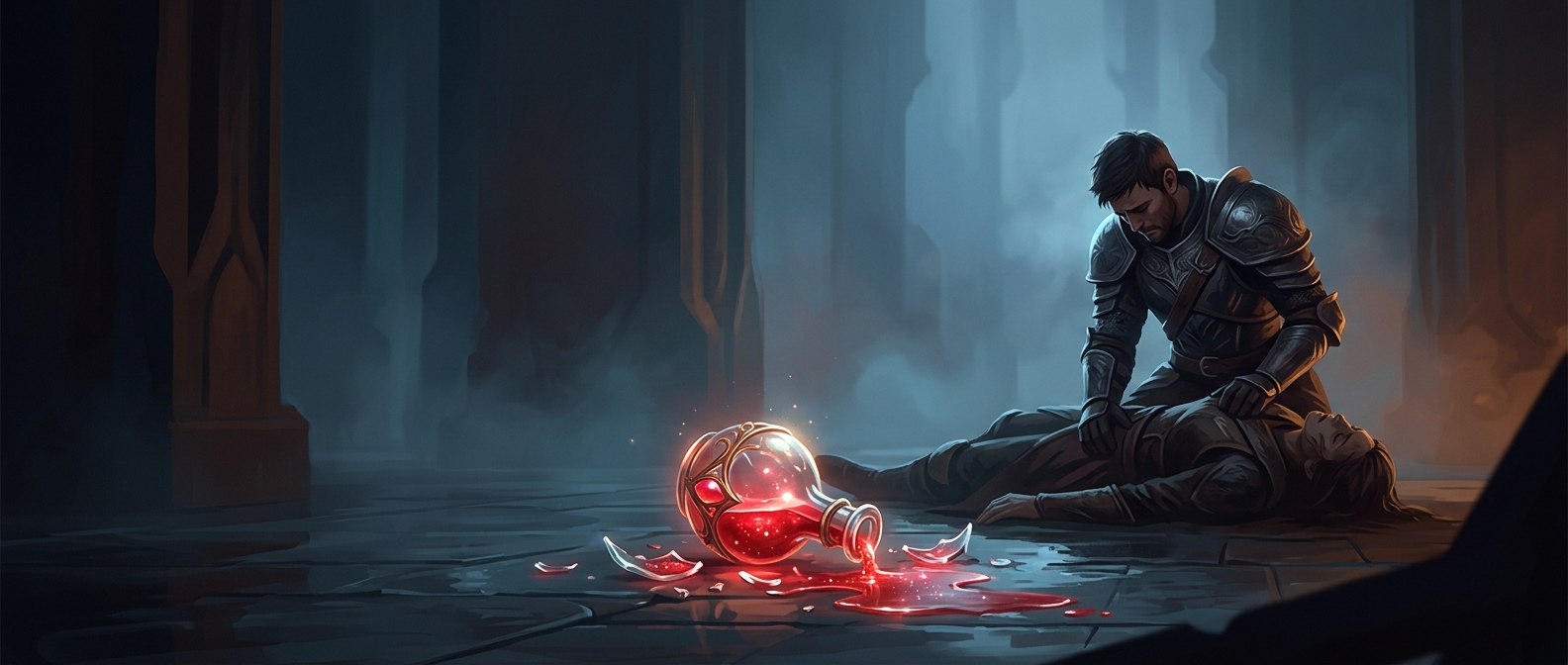
In normal combat, an enemy attack might subtract a set amount from a health bar. A cutscene hit can instead be part of a fixed sequence: an ally is struck, staggers, and falls because the scene needs that beat to happen. The moment may not use the same damage calculation as a regular attack, so a potion that restores health during gameplay cannot necessarily prevent it.
Games can also briefly lock controls to keep an animation, camera move, or transition from being interrupted. Allowing an item to alter the character’s condition mid-scene could require the developers to account for extra outcomes—such as the ally remaining standing when the next scene assumes they have fallen.
The tradeoff is control versus continuity
Letting players heal at all times offers more control, but it can make a carefully staged scene harder to keep coherent. Locking items during the sequence preserves the intended action, at the cost of making a familiar button seem unreliable.
That is why a potion may work immediately before or after a cutscene but fail during it: the item belongs to the gameplay system, while the scene is temporarily running on its own terms.