A tongue anchored for a different job
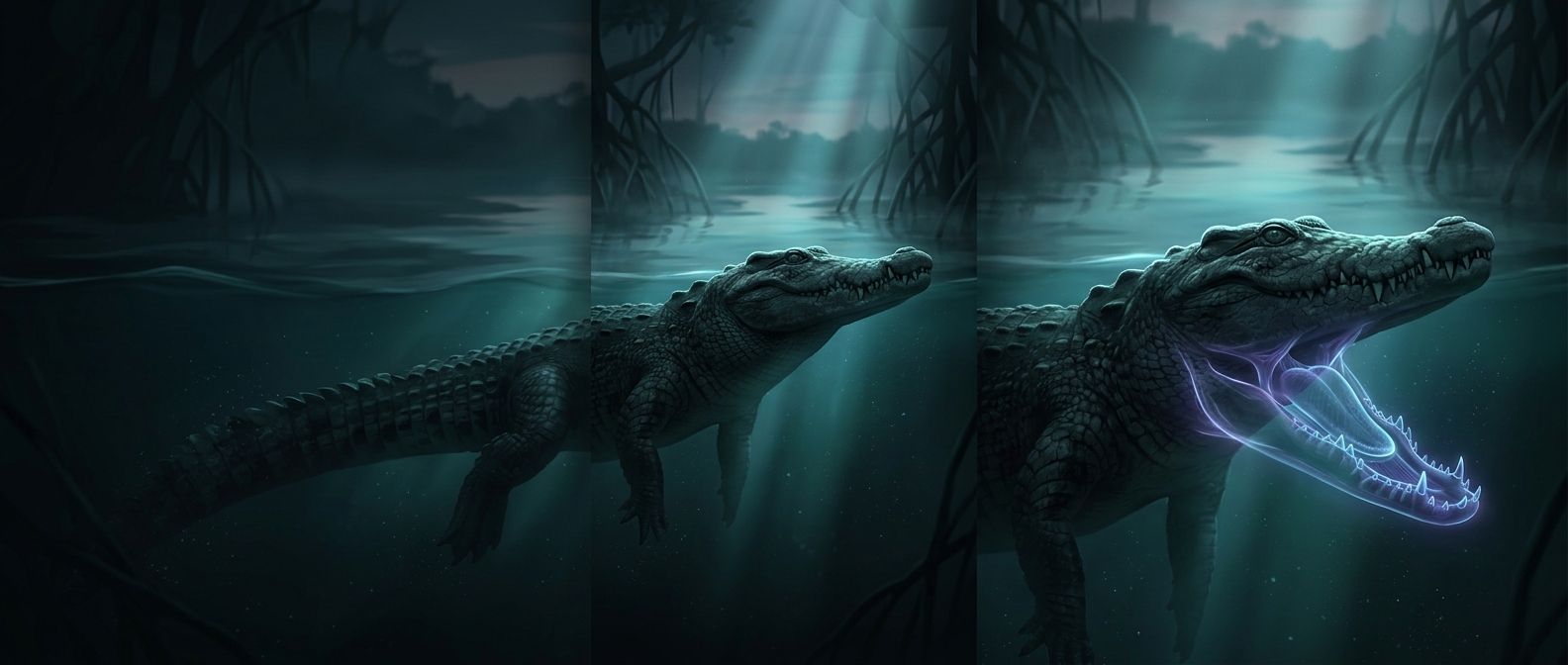
A crocodile’s tongue is not a loose, muscular tool for reaching out and handling things. A broad attachment on the floor of the mouth holds it in place, so it cannot extend past the jaws the way a dog’s tongue can. The restraint is part of the animal’s mouth anatomy, not a temporary position it can change at will.
That does not make the tongue useless. It remains inside the mouth, where it can help with swallowing and handling food. Crocodiles do much of their food-moving with their jaws and head: instead of using a tongue to carry a bite around, they can reposition it by shifting or tossing the head.
A separate seal for going underwater
The barrier that matters underwater is elsewhere. At the back of the mouth, a movable fold of tissue—the palatal valve—can close off the passage toward the throat. This helps keep water from entering the airway when the crocodile opens its jaws underwater. It is a separate structure from the membrane that anchors the tongue.
The distinction is easy to miss because both features are inside the mouth, but they solve different problems: one limits tongue movement; the other helps seal the throat. So an open-jawed crocodile underwater is not relying on its tongue to keep water out. The seal at the back of the mouth does that while the tongue stays anchored below.