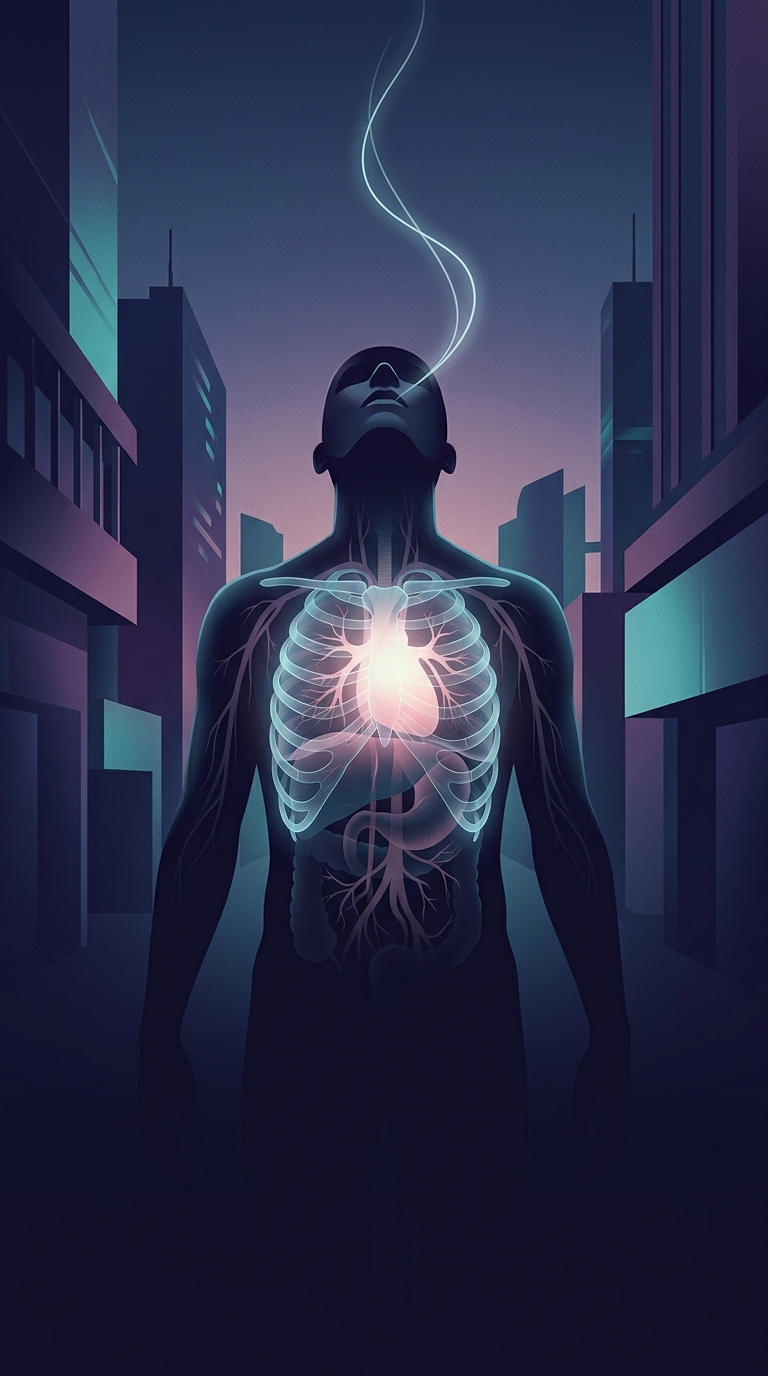
The brain adds an occasional oversized breath
Breathing is mostly automatic, controlled by networks in the brainstem that produce a steady rhythm of inhalations and exhalations. Those networks sometimes trigger a sigh: a breath larger than an ordinary one, often followed by a slow release of air. It may feel dramatic, but the extra breath is part of the body’s routine breathing pattern, not necessarily a response to sadness or stress.
A reset for the lungs
During normal, relatively shallow breathing, some tiny air spaces in the lungs can become less fully inflated. A sigh sends in more air, helping reopen them and keep the lungs working smoothly. This matters because the lungs are not simply empty bags: their small air spaces and delicate surfaces need to remain open and flexible for oxygen to pass into the blood.
The brainstem can produce sighs without a conscious decision, so a person may suddenly take one while sitting quietly. Emotions can also change breathing and make sighs more noticeable, but the basic reflex has a physical job. That conspicuous breath is a small maintenance maneuver: the lungs briefly expand beyond the ordinary rhythm, then return to it.