How a pigeon’s crop becomes a nursery
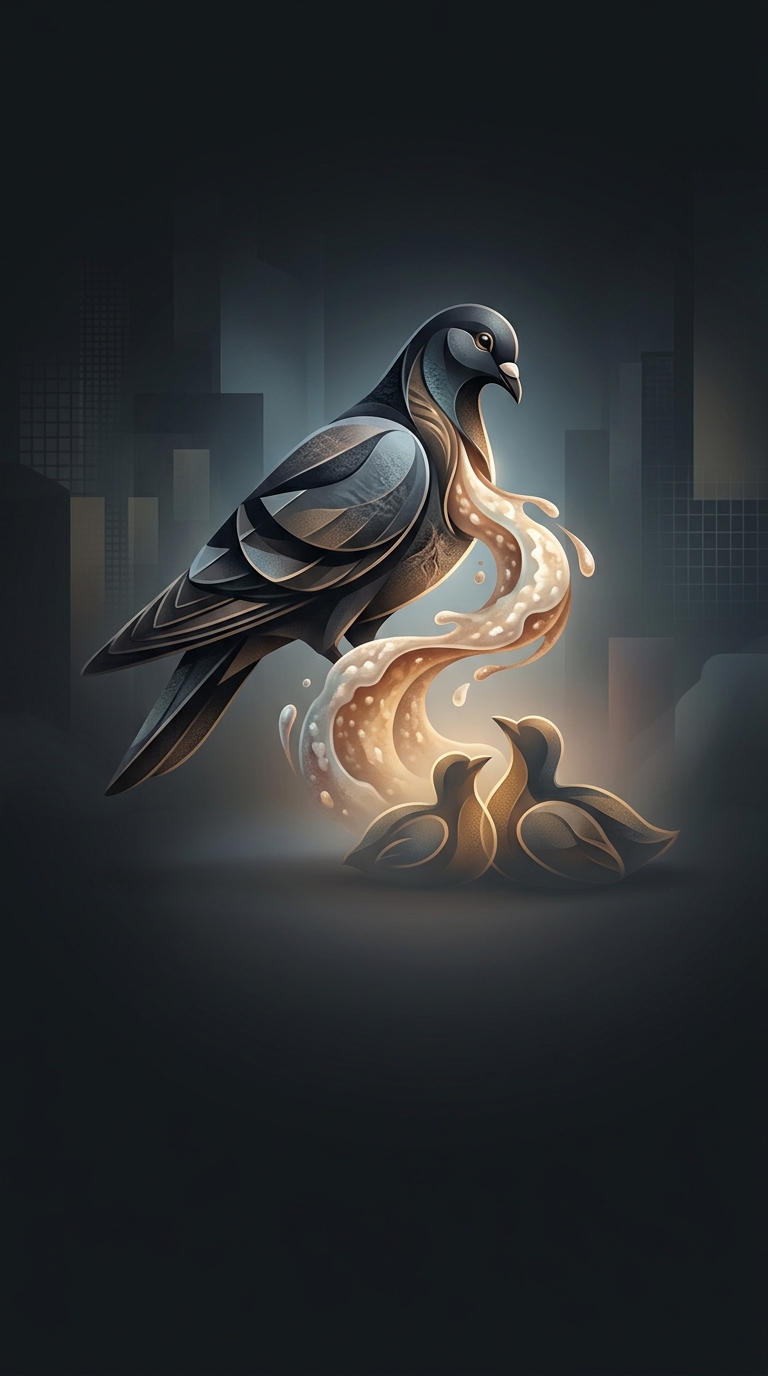
A pigeon’s crop is an expandable pouch at the base of the throat where food can be held before digestion. When adults are raising chicks, cells in the crop lining multiply and shed, forming a soft, nutrient-rich material called crop milk. It is not milk made by mammary glands: it is produced inside the digestive tract and then brought up to feed the young.
Both parents can produce it. A chick reaches into an adult’s open beak, and the parent regurgitates the food directly into its mouth. This close contact lets even newly hatched pigeons receive nourishment before they are ready to eat seeds on their own.
A temporary food, made by both parents
Crop milk is especially rich in protein and fat, supplying concentrated nourishment during the chicks’ rapid early growth. Its texture is more like soft curds than a pourable liquid. Although pigeons are famous examples, crop milk also occurs in a small number of other bird species, including flamingos and emperor penguins; it is an unusual feeding strategy, not a mammal-like nursing system.
As the chicks grow, their parents gradually introduce more solid food, including seeds. The crop’s milk-producing role is therefore temporary: the same pouch that normally stores food becomes, for a short stretch of parenthood, a source of the chicks’ first meals.