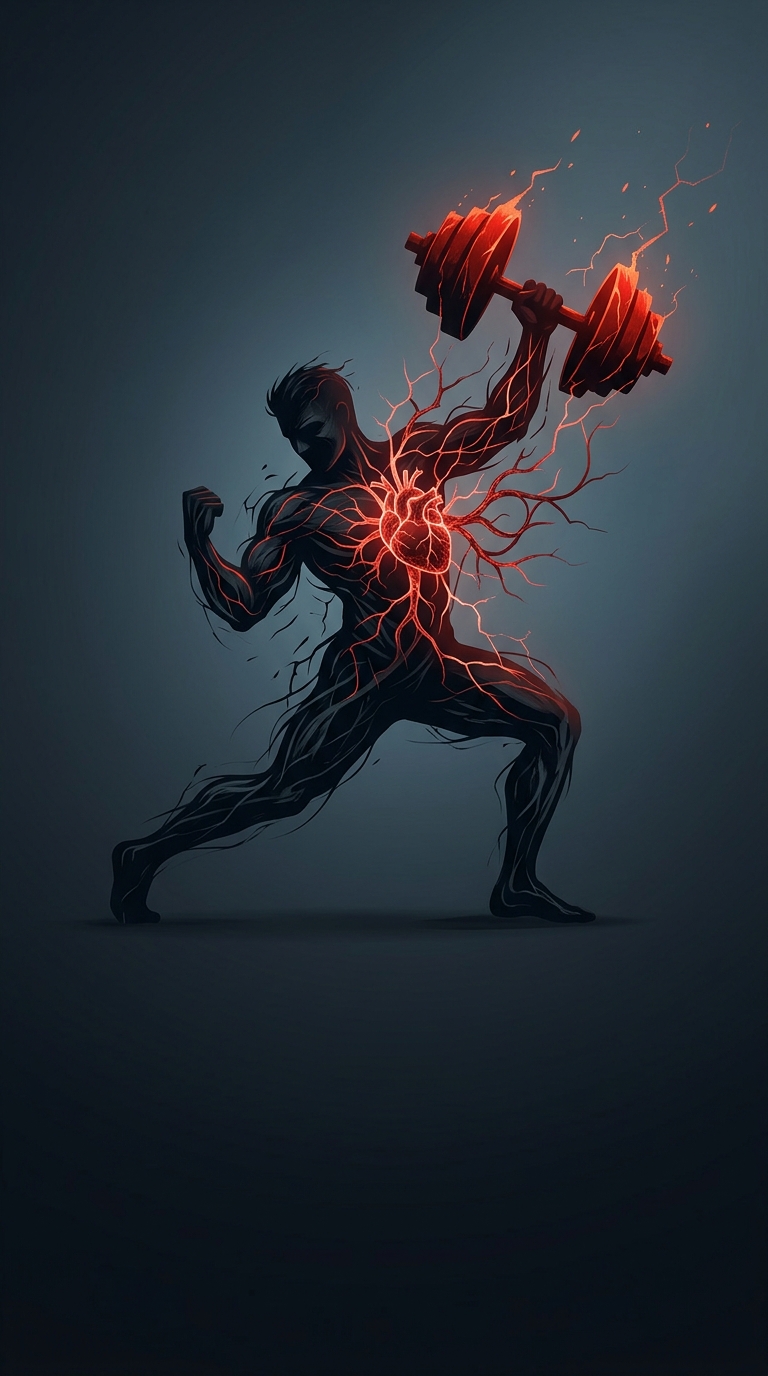
Why anger and hard lifting can strain the heart
Anger switches on the body’s fight-or-flight response. Stress hormones such as adrenaline make the heart beat faster and more forcefully, and blood pressure can rise. At the same time, a heavy lift demands extra work from the heart to supply the muscles.
The strain can become sharper when someone holds their breath while lifting—a common instinct during a difficult repetition. That briefly changes pressure inside the chest and can cause blood pressure to surge. The exact response varies, but intense emotion and strenuous effort can stack demands on the cardiovascular system.
When a temporary strain can trigger a heart attack
A heart attack usually involves a sudden loss of blood flow to part of the heart, often after a fatty deposit in a coronary artery breaks open and a clot forms. Anger or exertion does not create that underlying artery disease in a moment. Instead, either can act as a short-term trigger in someone already vulnerable, by increasing the heart’s workload and stressing diseased arteries.
That distinction matters: the same workout may be tolerated by one person and hazardous for another, depending on factors such as existing heart disease and overall health. The risk is not a reason to treat exercise as inherently dangerous; regular activity is generally beneficial. It is a reason not to mistake an all-out, emotionally charged lifting session for a harmless way to discharge anger.
Why the warning signs matter
If chest pressure, unusual shortness of breath, faintness, or pain spreading to the arm, jaw, back, or shoulder appears during or after exertion, stop and seek emergency help. A workout can be paused; a possible heart attack cannot be safely judged by waiting to see whether the feeling passes.