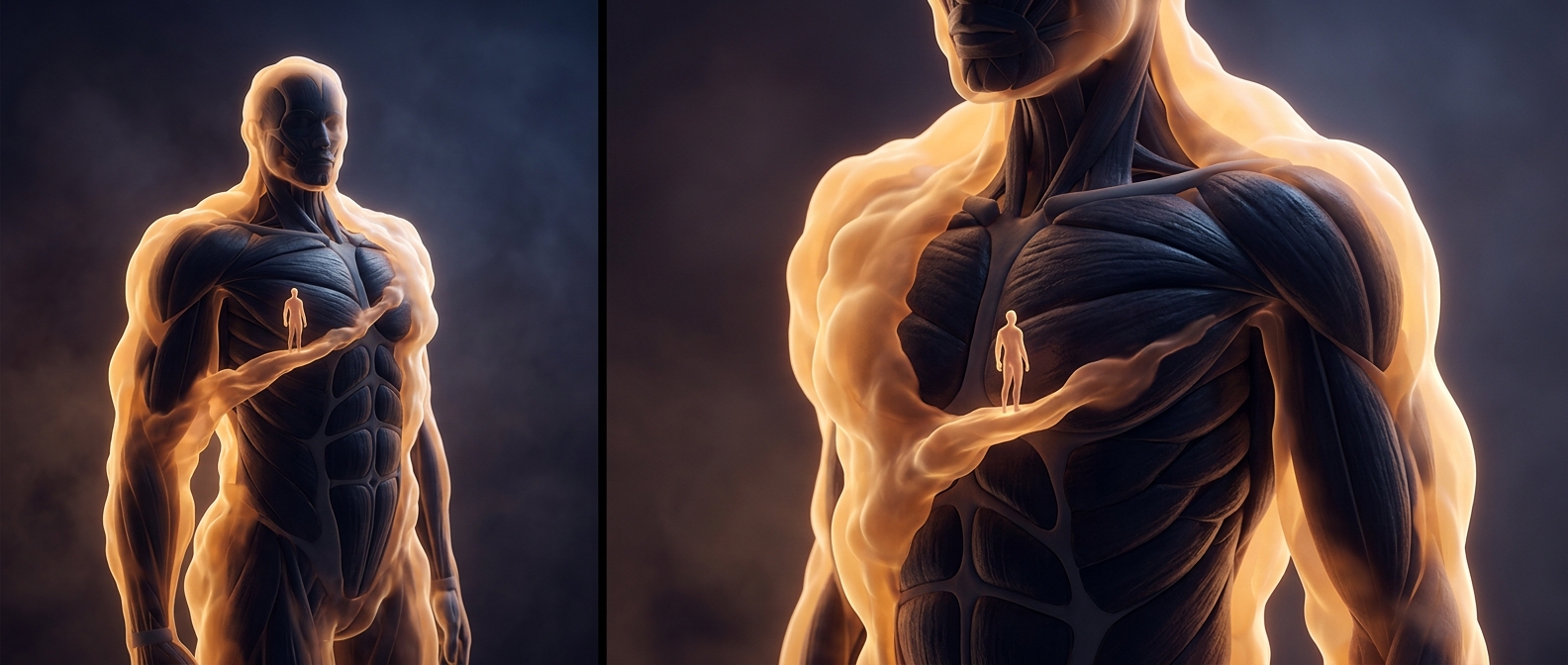
How the Body’s Soft Layer Works
Subcutaneous fat is the layer of fat beneath the skin. It is made mostly of fat-storing cells, or adipocytes, held in a network of connective tissue. Small blood vessels and nerves also run through this tissue, linking the skin with deeper parts of the body.
Its cushioning comes from the tissue’s compressible structure: under pressure, fat and connective tissue deform, helping soften impacts on the structures below. The layer also slows heat transfer from the body to the surroundings. It does not seal in warmth completely, but it adds resistance to heat loss.
A Boundary That Varies Across the Body
The layer is superficial to the deep fascia, a sheet of connective tissue that covers and separates muscles. That boundary is not identical everywhere: subcutaneous tissue can vary in thickness and structure, and its connections to the fascia differ by body region. So “outside the muscles” describes its general position, not a uniform sheet with the same thickness from head to toe.
Subcutaneous fat is also distinct from visceral fat, which lies deeper in the abdomen around internal organs. The two occupy different anatomical spaces and do not perform exactly the same role. Subcutaneous fat is the padding a hand can pinch; visceral fat cannot be pinched from the surface because the abdominal wall lies between it and the skin.