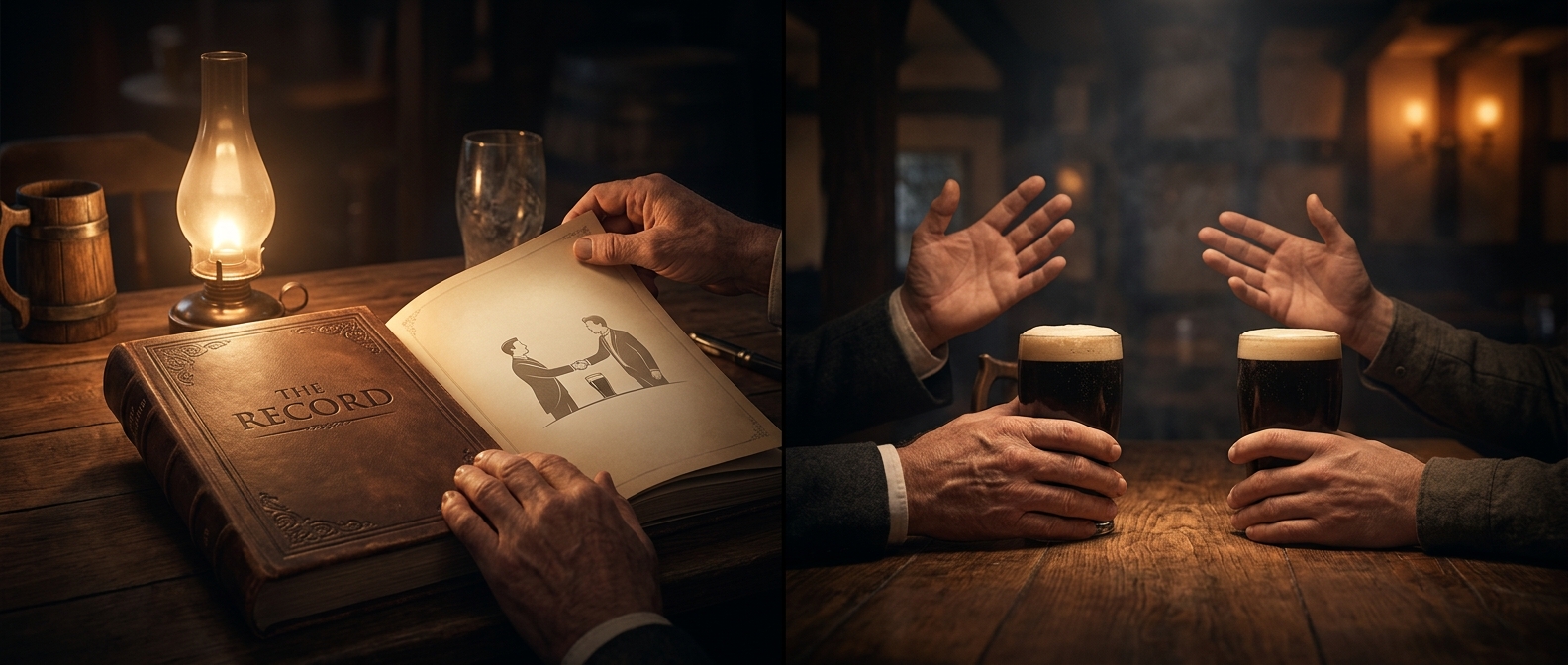
From pub debate to a book of checkable answers
A pub argument can keep going because the answer depends on what someone means by “fastest,” “largest,” or “first.” Guinness’s solution was to turn disputed trivia into questions with rules: define what is being measured, decide what evidence would count, and identify a result that could be checked.
That approach shaped the guide compiled by fact researchers Norris and Ross McWhirter. Rather than offer a collection of loose curiosities, it organized claims around measurable records. A record needed a clear category and evidence strong enough for someone else to assess it; otherwise, it was not a dependable way to settle a dispute.
Why records worked better than opinions
The format made the answer portable. People in different pubs could consult the same printed reference instead of relying on memory or local lore. And because records could be challenged or surpassed, the book had a reason to be updated: a new claim could replace an old answer if it met the same standard of proof.
That also imposed a useful limit. Not every argument has a factual winner—some hinge on taste or on definitions that cannot be agreed upon. Guinness could settle a question only when it could be turned into a consistent test. Its lasting trick was to make “Who says?” part of the answer: a record counted not just because it sounded remarkable, but because someone could show how it was established.