Eight years at one table
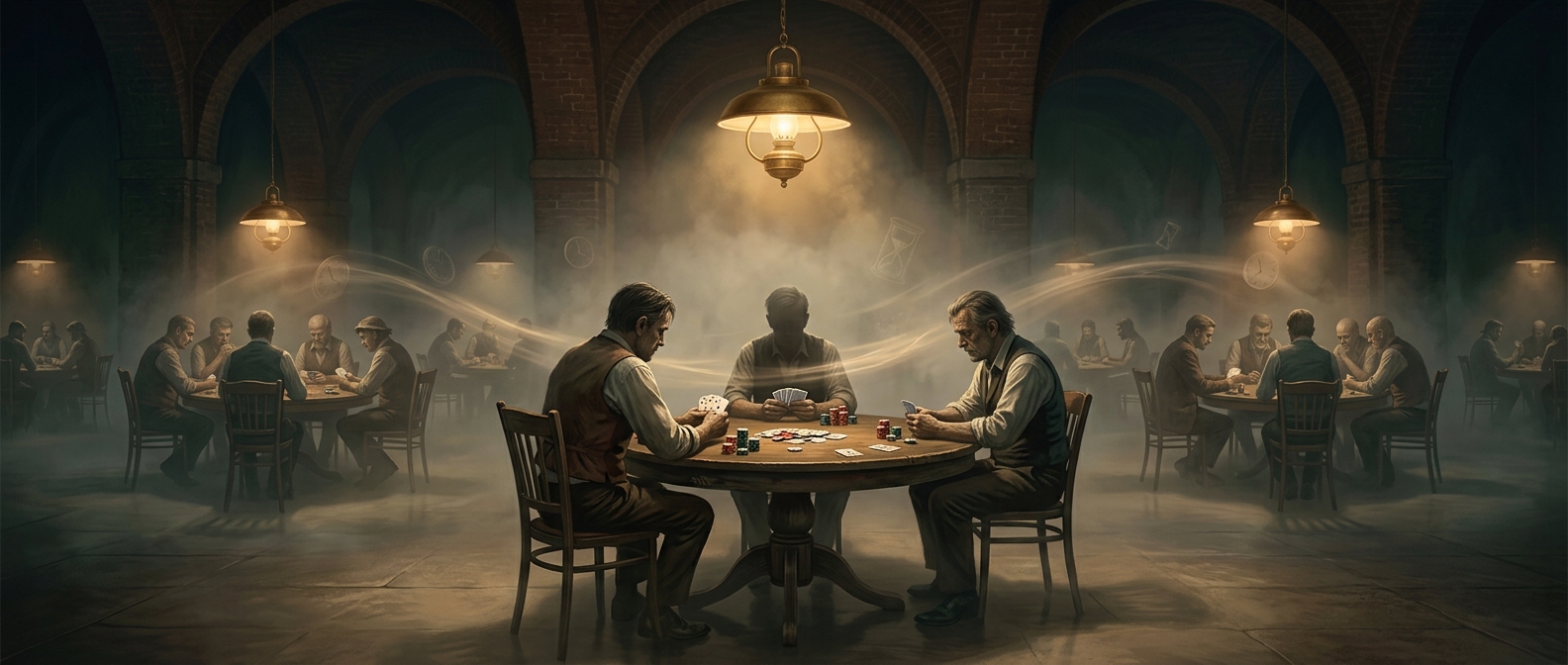
The remarkable part of the Arizona theater’s reported poker marathon was not that the same players stayed awake for eight years. They did not. Players rotated in and out, while others reportedly slept in corners so they could return to the game. The continuity belonged to the table, not to any one person.
That distinction turns an impossible feat of endurance into a feat of organization. For a game to keep going, someone had to be ready to take a seat when another player left, and the room had to remain a place where people could stay, rest and resume play. The theater became the setting for a relay measured in hands rather than shifts.
A marathon made of interruptions
Poker depends on players being present, but it does not require a fixed cast. A departing player can be replaced; a sleeping player can come back later. That flexibility let the game persist through ordinary human limits—fatigue, hunger and the need to leave—without requiring the play itself to stop.
So the “eight-year game” is best understood as a reported stretch of continuous activity, sustained by changing participants. Its striking image is not a single player refusing to quit, but a poker table kept alive as people took turns occupying it—and resting nearby until it was their turn again.