A game whose beginnings are older than its records
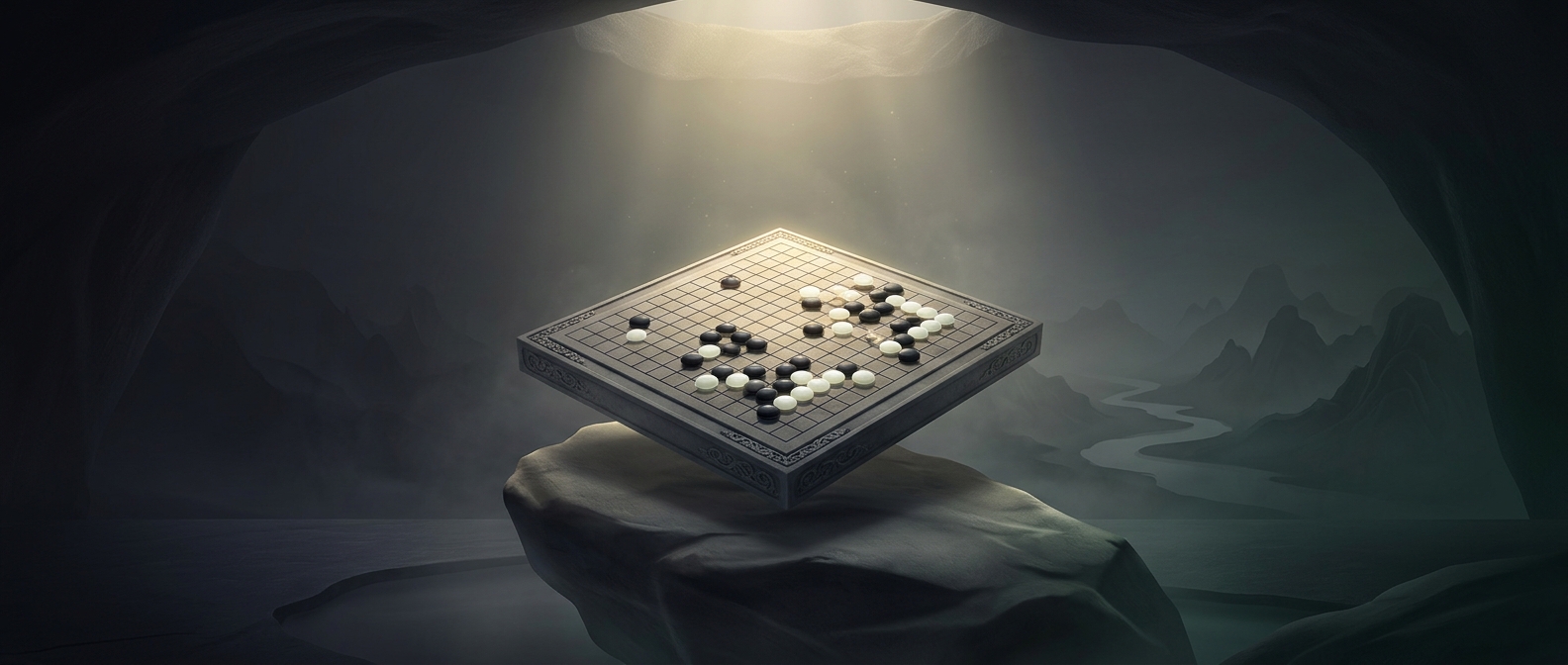
Go—known in China as weiqi—is widely regarded as originating in ancient China, but its precise beginnings are lost to history. The game is much easier to describe than to date: its rules can be taught quickly, while mastery depends on judging how positions will develop across the whole board. That gap between simple rules and demanding decisions helped make Go durable across generations.
Why territory matters more than winning fights
A player does not need to capture every opposing stone. The central task is to secure more territory: open space surrounded by one’s own stones. Captures matter because they can remove threats or open room, but chasing them everywhere can leave other parts of the board undefended. A locally successful attack may therefore cost more than it gains elsewhere.
This creates a distinctive strategic balance. Players build groups that can survive, contest valuable areas, and decide when to yield a small region rather than risk a larger position. The board rewards both immediate calculation and long-range judgment; a move’s value can depend on what it makes possible many turns later.
From China into a wider tradition
Go became part of Chinese intellectual and cultural life, and the game later took root in Korea and Japan through regional contact. Each setting developed its own institutions and traditions around play, helping preserve and refine a game that needed little equipment and no spoken language once its rules were known.
Its long history is tied not just to the board’s simplicity, but to the kind of problem it poses: every stone changes the balance between securing ground and keeping options open. That tension is still visible in a single move—one that may look modest now but reshape the contest much later.