An 8-by-8 board before the familiar chess pattern
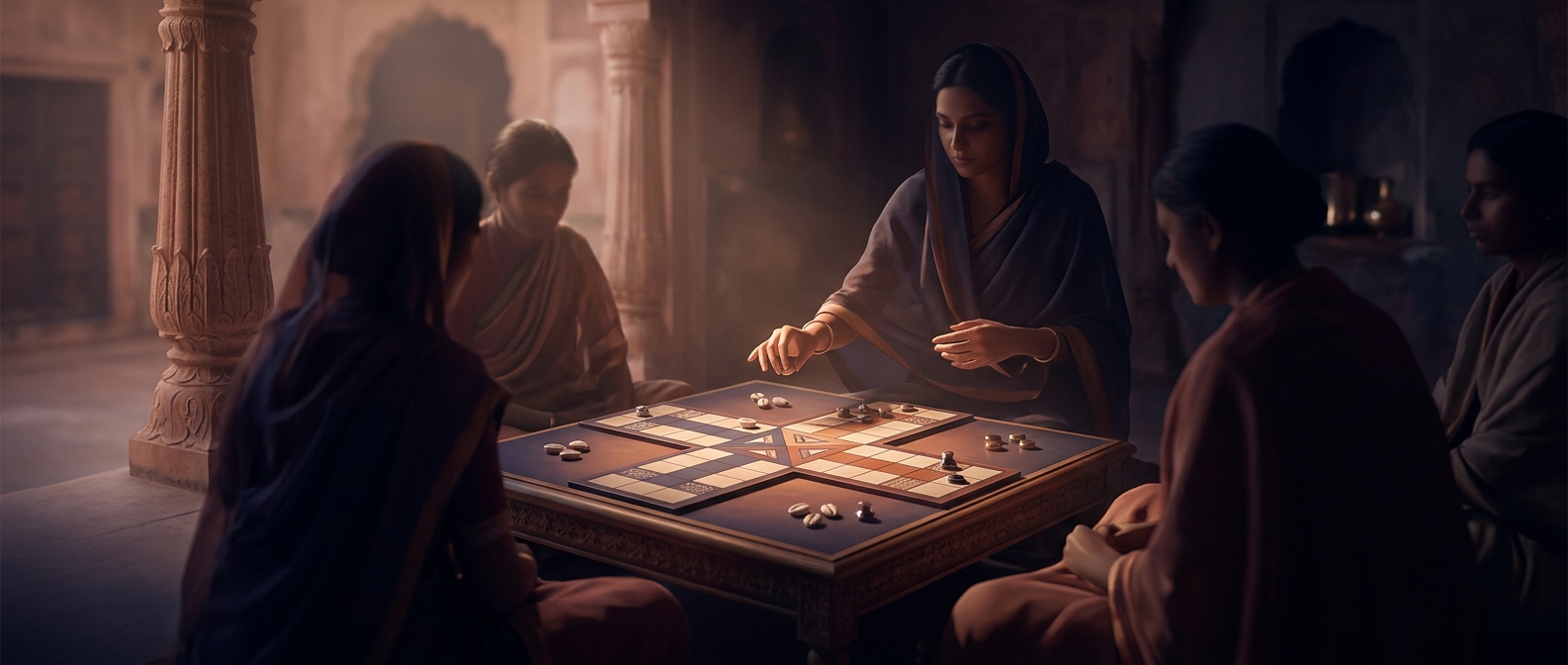
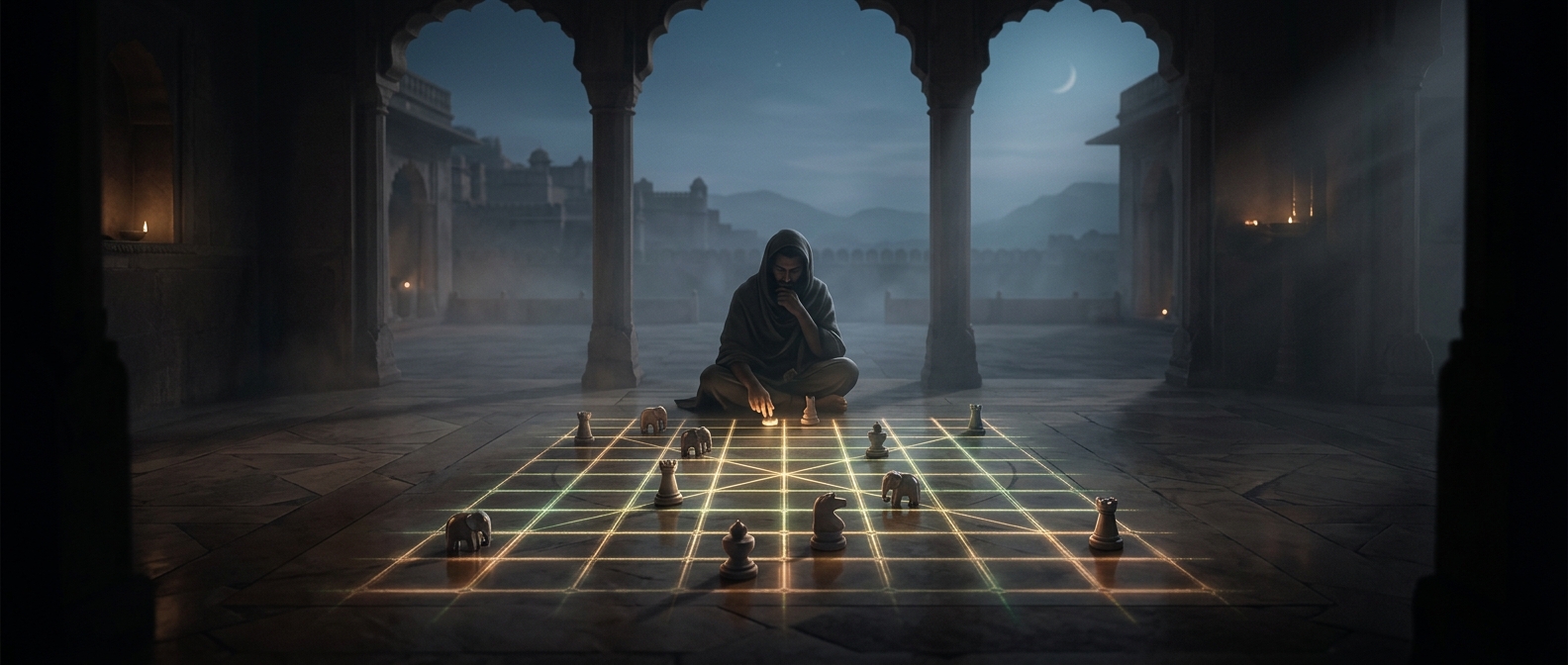
Ashtapada was an early Indian board game played on a square grid of 64 spaces. Its board did not use the alternating light and dark squares now associated with chess. That contrast is useful in modern chess, where it helps players read diagonals and track piece movement, but it is not what makes a board an 8-by-8 grid.
The distinction matters because a board’s geometry and its appearance are separate design choices. A grid can organize play without assigning two colors to neighboring spaces. Ashtapada shows that the 64-square layout existed in an Indian game setting without the chessboard pattern being essential to it.
A shared shape does not make the games identical
Ashtapada is associated with play involving dice and moving pieces around the board, rather than with the familiar chess contest of capturing an opposing king. The same broad materials—a marked grid and movable pieces—can support very different rules. Dice introduce chance; rules about movement and destinations determine what players try to accomplish.
That makes the board’s later association with chess easy to overread. An 8-by-8 layout is a format, not a complete game: it does not by itself establish that two games had the same pieces, rules, or purpose. Ashtapada’s uncolored grid is a reminder that the chessboard’s alternating squares are a feature of one later design, not a requirement built into every 64-space board.