A board that made movement matter
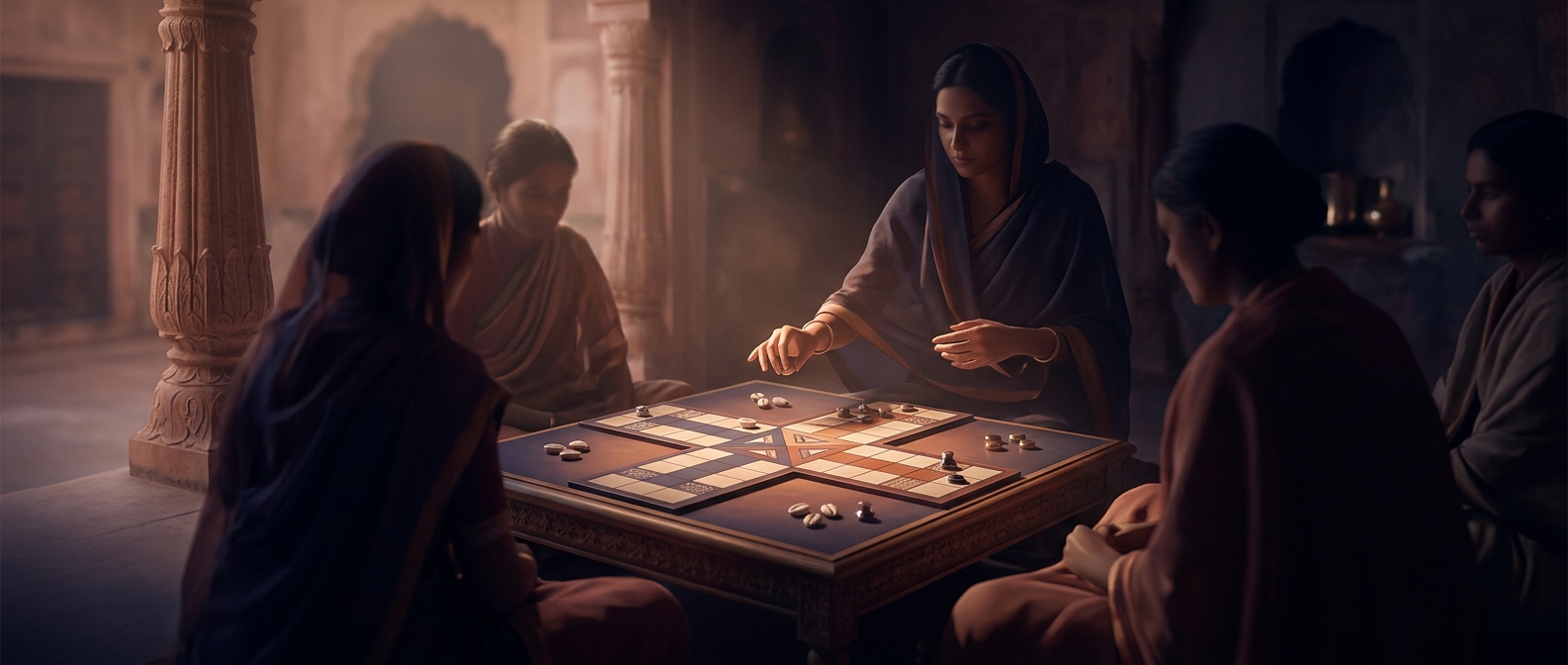
Chaupar’s cross-shaped cloth board turned a small playing area into four routes leading toward a shared center. Players moved their pieces along the marked paths, with each toss of the game’s specialized dice determining how far a piece could travel. The toss introduced chance, but it did not make every move automatic: players still had to choose which piece to advance and how to respond to rivals on the same track.
Blocking was part of the contest
Because opposing pieces traveled through connected routes, a move could do more than bring a player closer to the center. It could obstruct an opponent or put a piece in danger. That made the game a contest of timing: a player weighing a promising advance also had to consider whether it would leave another piece exposed. The dice shaped the available options; decisions shaped what those options were worth.
Play suited to a shared room
A cloth board could be spread out for a game and folded away afterward, making the playing surface portable rather than a permanent piece of furniture. With several players watching the same routes and reacting to one another’s moves, chaupar could turn a simple toss into a lively social contest. Its appeal lay in that combination: chance set the pace, while the shared board gave players ways to interfere with one another.