Why a Savior Laughs at the Cross
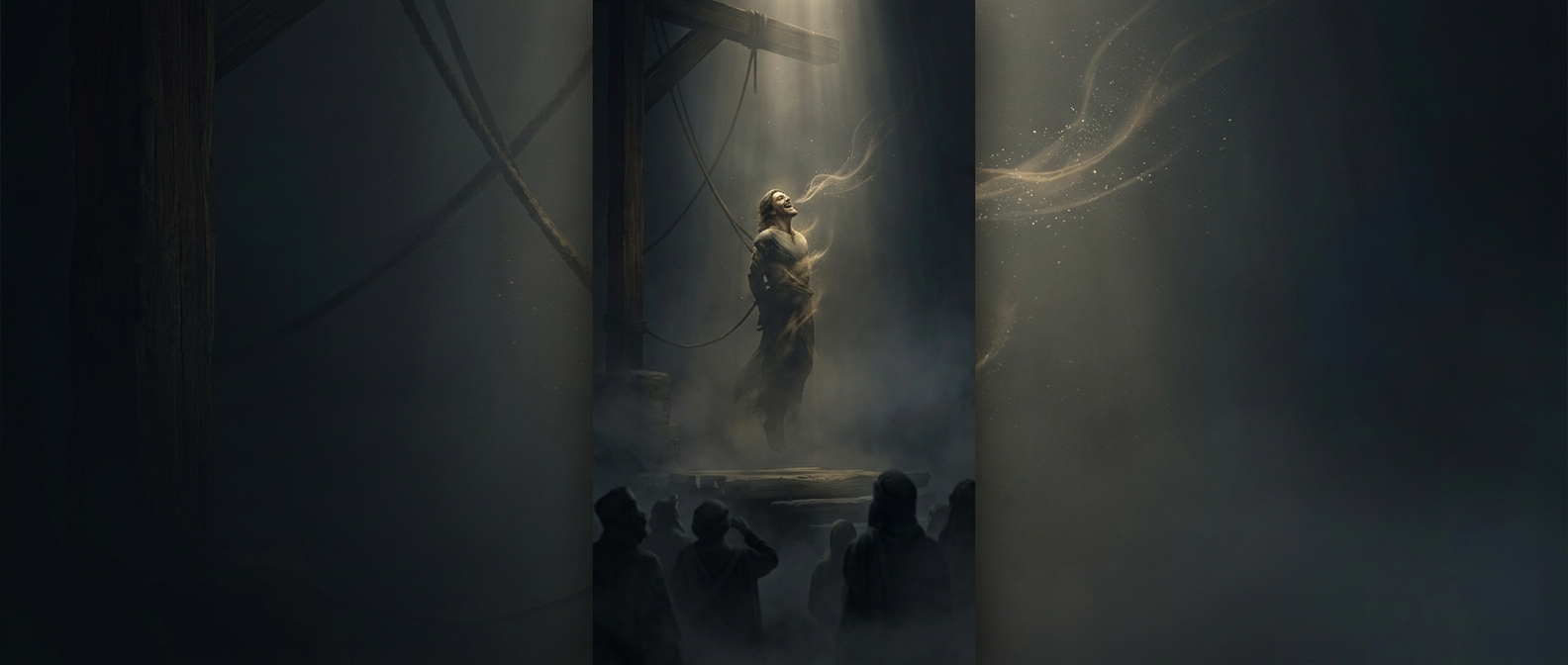
In a few ancient Christian writings now classified as Gnostic, the crucifixion is not presented as the straightforward death of a savior whose body is also his divine self. The Second Treatise of the Great Seth, for example, has Jesus say that his opponents crucified Simon of Cyrene in his place while Jesus himself stood apart, laughing at their mistake. In the Acts of John, the apostle describes a vision of Christ above the cross, cheerful rather than suffering in the ordinary sense.
These texts differ in their details, but both use the startling image to separate the visible event from the spiritual reality behind it.
Laughter as a Sign of Misunderstanding
For many Gnostic thinkers, the material world was inferior to the spiritual realm, and the body could not fully capture or control divine life. That did not mean every Gnostic text taught exactly the same thing, or simply that bodies were unreal. The sharper point in these scenes is that the people carrying out the execution mistake what they can see for the whole truth.
The laughter marks that mismatch. The authorities may believe they have defeated Jesus by killing a body; the spiritual savior remains beyond their grasp. In the Great Seth, the substitution of Simon makes the error literal. In the Acts of John, the vision places the laughing Christ above the cross, distinguishing him from the suffering figure below.
A Different Kind of Crucifixion Story
The image does not make the cross unimportant. It changes what the scene means: instead of focusing only on bodily pain and death, these writers use it to dramatize the limits of material power and human perception. Their laughing savior turns an apparent defeat into a revelation—those watching the execution see a body, but the story asks whether that is all there is.