A private bond in Tesla’s later years
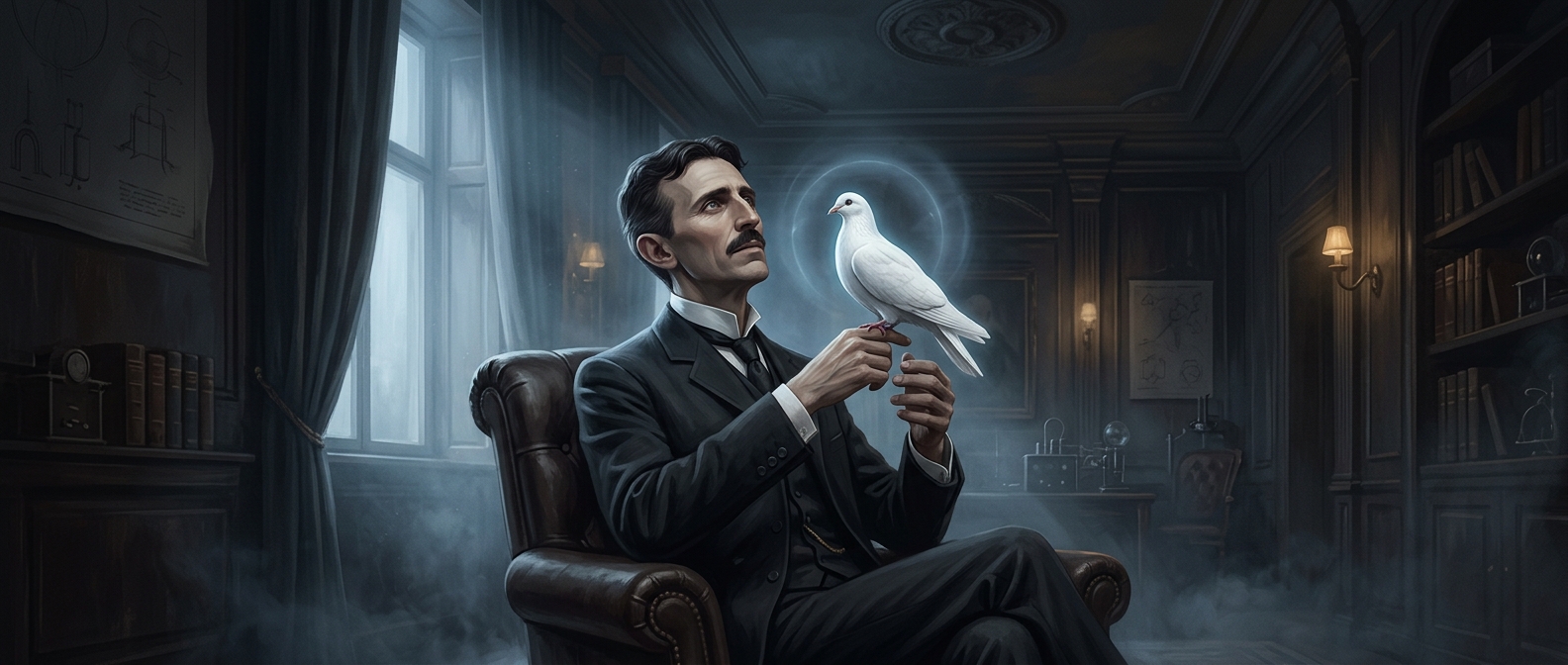
By the time Nikola Tesla was an older man living in New York, caring for pigeons had become part of his daily life. He fed them and recognized individual birds, turning a familiar city routine into a personal attachment. The white pigeon stood apart from the flock: Tesla described his feelings for her in unusually intimate terms.
That devotion offers a glimpse of a side of Tesla often obscured by stories about inventions and electrical systems. His attention was not directed only toward machines or grand projects; he also formed a powerful bond with a vulnerable creature he encountered day after day.
Why her death mattered to him
Tesla treated the pigeon’s death as more than the loss of a favored bird. He believed it signaled that his work was over. That conviction links an intensely private grief to the identity he had built around a lifetime of invention: if the bird represented something precious and sustaining to him, her death could feel like the closing of a chapter in his own life.
The episode is revealing not because it explains Tesla’s inventions, but because it shows how personally he experienced their end. In his telling, the finish of a life’s work was marked not by a final machine or public announcement, but by the disappearance of one bird he had come to love.