How a proton’s lifetime can be tested
A proton is a particle in the nucleus of every ordinary hydrogen atom and in the larger nuclei that make up familiar matter. If protons can decay, the change would be extraordinarily rare: a proton might persist for far longer than the universe has existed. But researchers can still look for the event by observing a vast number of protons together.
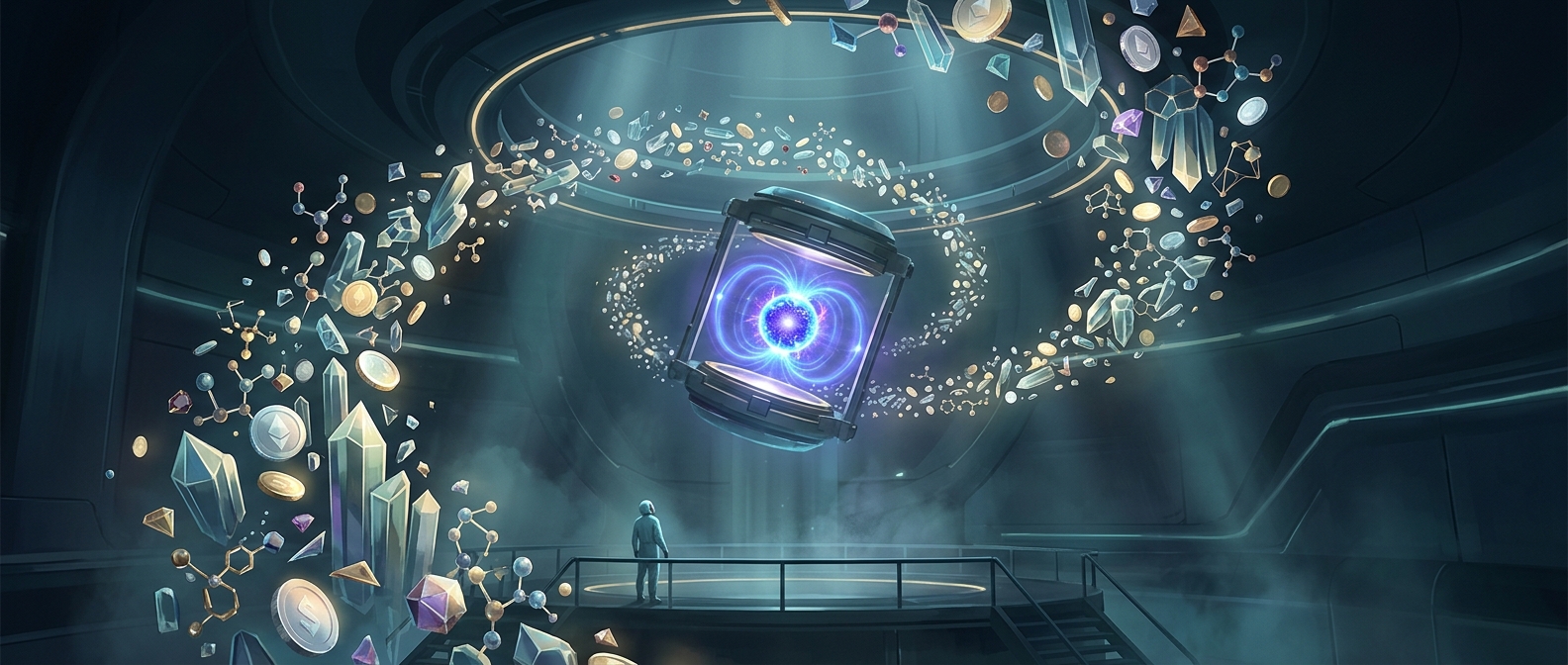
Large detectors contain materials rich in protons, often water. They are placed deep underground, where rock screens out many particles from space that could otherwise imitate a decay signal. Sensitive instruments around the detector record flashes of light made when charged particles pass through the water.
Turning a non-event into a limit
A decaying proton would be expected to produce a distinctive set of particles and light patterns. Researchers compare those patterns with the detector’s background—the signals caused by other, more common processes. If a candidate event stands out, it can be investigated; if none does, the search still has a result.
The key is the detector’s exposure: how many protons it watched, and for how long. Seeing no decays in a large sample makes it increasingly unlikely that protons decay on a short timescale. Scientists can therefore set a lower limit on the proton’s lifetime: it must be longer than a certain threshold, within the assumptions of the search. That is not a measurement of how long a particular proton will last, and it does not establish that decay is impossible.
Why the search matters
The familiar theory describing many particle interactions does not predict ordinary proton decay, but some proposed extensions do. Detecting a decay would reveal that matter can change in a way not included in that familiar account. Not detecting one helps rule out versions of those proposals that predict decay too often.
So far, no proton decay has been confirmed. The result is striking in a precise way: a proton may outlast the universe, but the evidence supports only that it has survived every search so far—not that it lasts forever.