“Flavor” means quark type, not taste
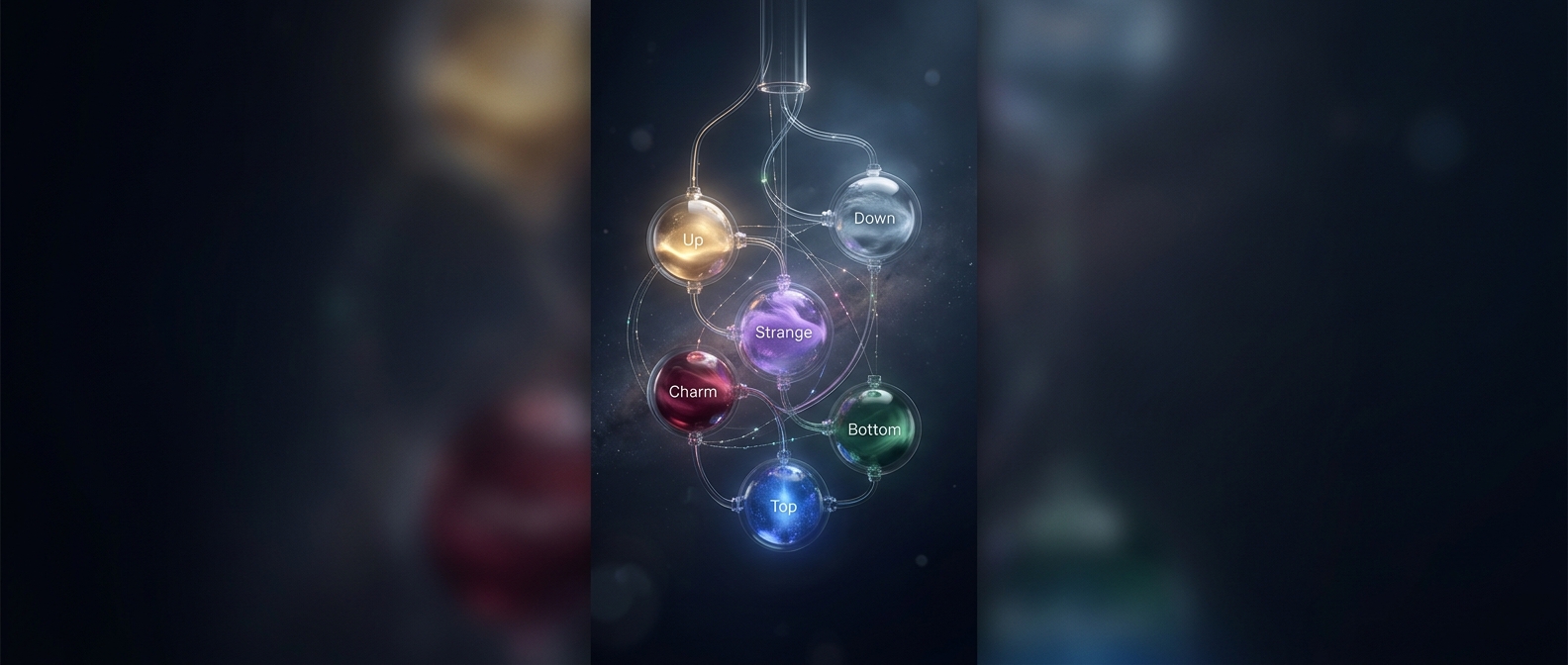
Physicists use flavor as a collective name for the six kinds of quark: up, down, strange, charm, top, and bottom. The labels distinguish particles with different properties, especially their electric charges and masses. “Up” and “down” quarks are relatively light; the others are heavier. A proton’s two up quarks and one down quark make it a proton rather than another kind of particle.
The names are historical labels, not descriptions of what the particles look or taste like. They stuck because physicists needed a compact way to talk about newly discovered varieties—and some of the varieties arrived with puzzles attached.
Why “strange” and “charm”?
Strange quarks got their name from the behavior of particles containing them. These particles could be produced readily in collisions through the strong nuclear force, yet they often survived much longer than expected before decaying. Their creation and disappearance seemed oddly mismatched, so physicists described the behavior as strange.
Charm came later. Physicists proposed a fourth quark partly to make the patterns of particle interactions more orderly and to explain why certain transformations were uncommon. The name “charm” gave the new type a memorable label; it was not a claim that the particle had any special attractive quality. Experiments subsequently found particles containing charm quarks.
A family of labels with physical consequences
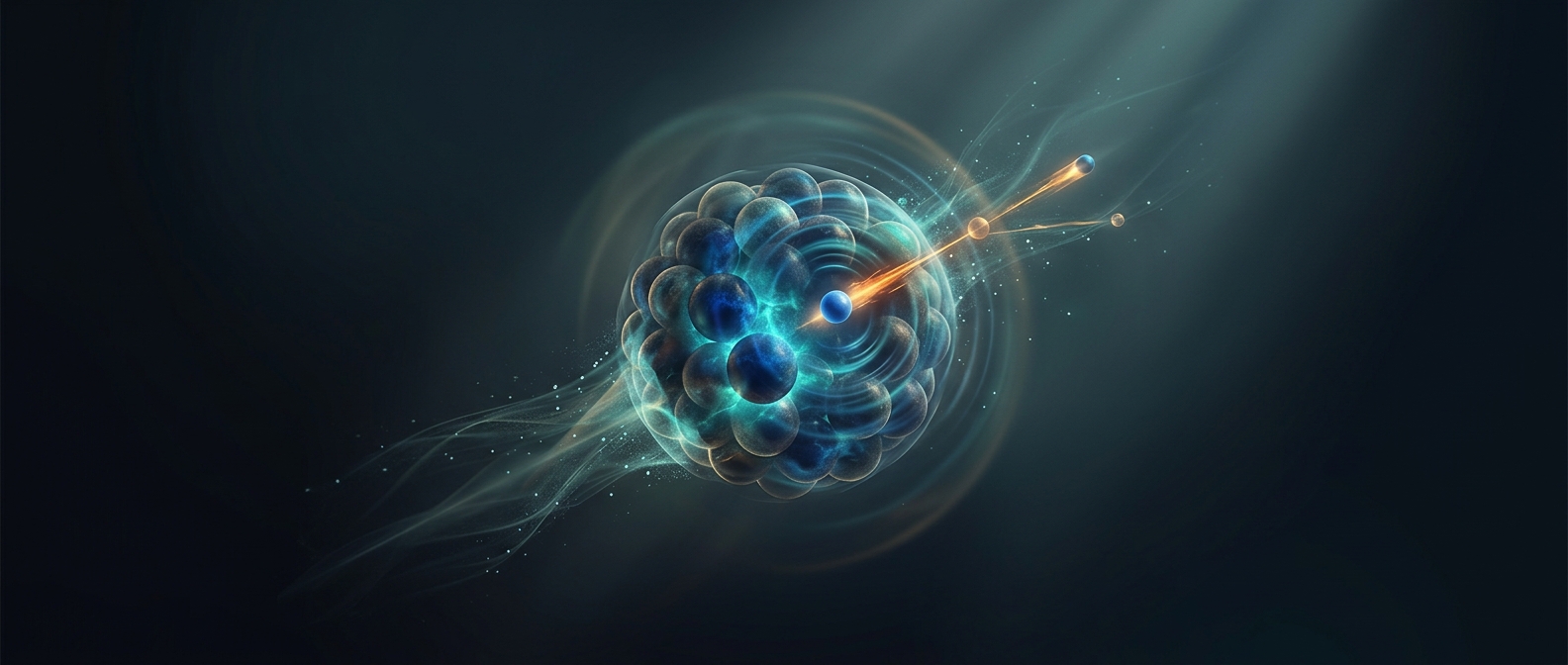
Quark flavor is more than a naming convention. Different flavors combine to form different particles, and the weak nuclear force—the interaction responsible for some kinds of radioactive decay—can change one quark flavor into another. Heavy quarks are unstable: particles containing them can decay into particles with lighter quarks.
That is why strange and charm are useful names to know. They mark real differences in how particles behave, while also preserving a bit of the history of how physicists first encountered those differences.