The Curtain Edge That Marked a Paid Performance
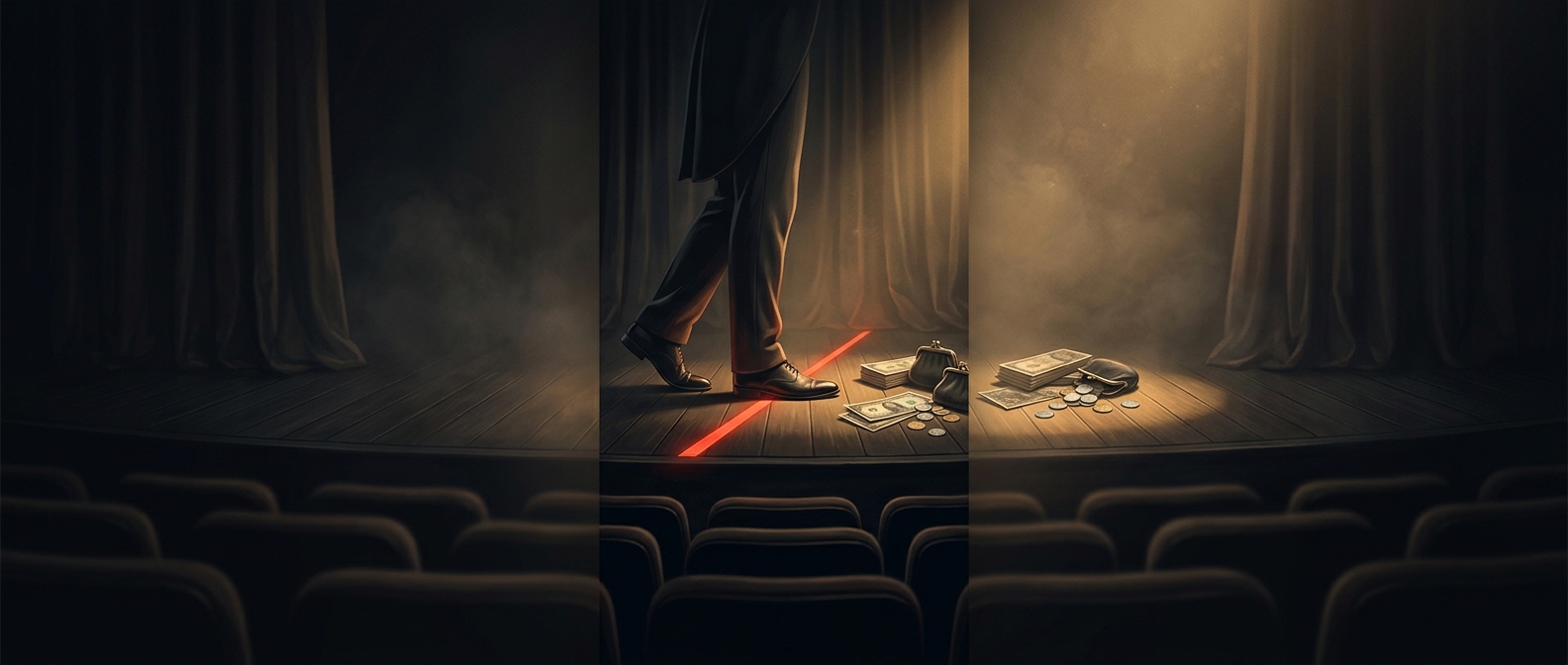
A theater’s legs are the tall curtains hanging at the sides of the stage. They hide the wings—the backstage space where performers wait and crews work—while leaving the acting area open to the audience. The “leg line” was the boundary those curtains created between backstage and the stage.
For performers paid by the appearance, crossing that boundary made the difference between being present at the theater and having performed. Once an act had gone on, the performer could claim that night’s pay. The line offered a simple, visible marker in a workplace where backstage activity was constant but not itself part of the show.
A Small Boundary With a Practical Purpose
That distinction mattered in live entertainment, where performers might wait in the wings, prepare for an entrance, or be ready to go on without actually appearing. The leg line turned an otherwise fuzzy question—whether someone had done the job—into a physical threshold: had the performer crossed onto the stage?
It was not merely a theatrical bit of vocabulary. The curtains that concealed backstage movement also marked the point at which a performer’s work became public—and, by that convention, payable.