A Disappearing Act With a Landing Plan
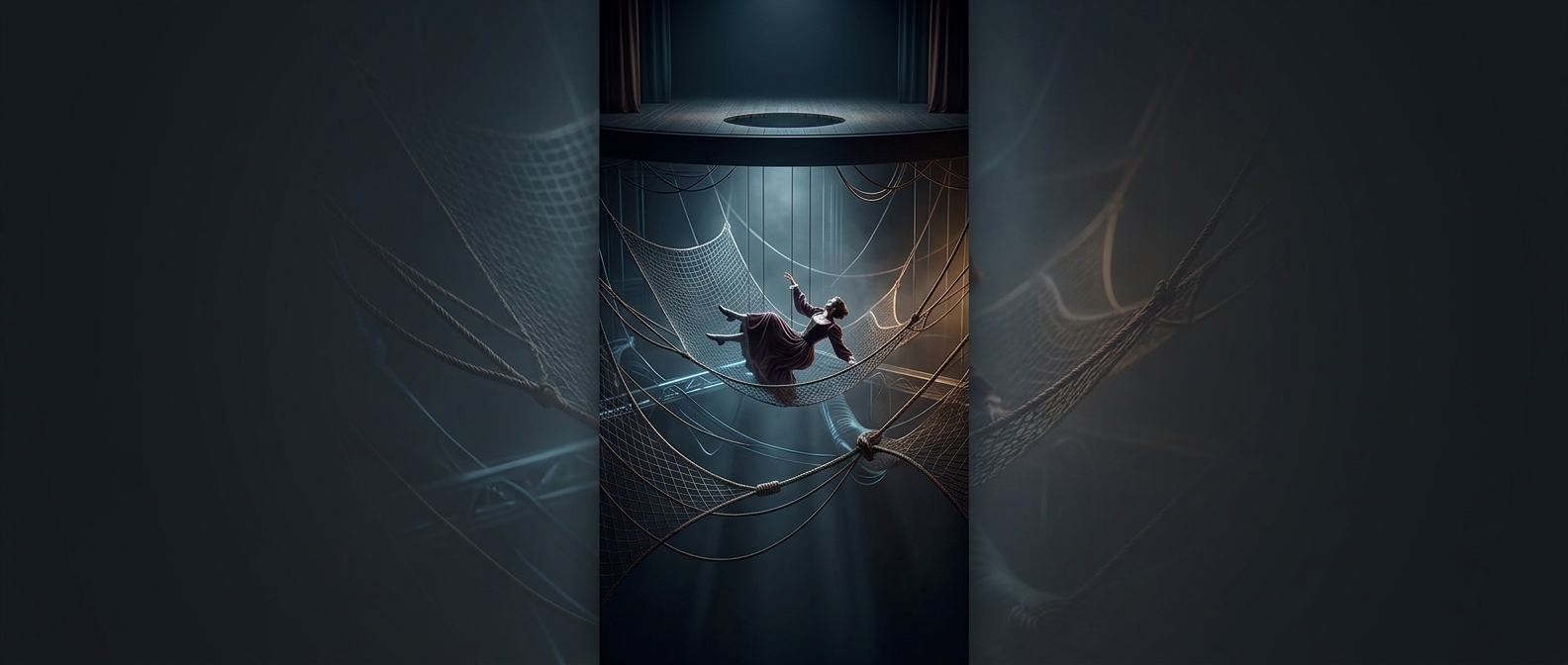
When a performer seems to drop through the stage, the trick depends on a moving section of floor—not an open hole that the actor simply falls into. The platform is built into a stage trap, an opening that gives access to the space below the stage. A hydraulic system moves the platform down in a controlled way, carrying the performer with it.
Padding softens the landing and helps protect the actor, but it is only one part of the setup. The platform has to meet the stage cleanly, and the performer must reach the right spot at the right moment. A missed cue or mistimed step could turn a smooth disappearance into a collision with the platform’s edge.
Why the Descent Must Be Controlled
Hydraulics use pressurized fluid to move machinery. In a stage lift, that power lets the platform travel steadily rather than behave like a trapdoor snapping open. The controlled motion matters both for the performer’s safety and for the illusion: the audience should see a vanishing act, not a visible fall or a delayed lift.
The effect therefore depends on coordination among the performer, the moving platform, and the stage cue. Each disappearance has to be rehearsed so the actor’s movement and the platform’s travel line up. The hidden space below the stage is not merely somewhere to fall; it is part of the machinery and the choreography that make the exit look effortless.