A one-sided relationship can still feel emotionally real
Reality-TV viewers spend hours watching contestants react under pressure: celebrating, arguing, worrying, and explaining what they hope to do next. That repeated exposure creates familiarity. The audience may recognize a person’s habits and vulnerabilities even though the contestant knows nothing about them.
Psychologists use parasocial relationship for this kind of one-sided sense of connection with a media figure. It is not the same as believing the person is a close friend. Rather, the viewer has gathered enough social cues—expressions, voice, personal stories—to respond as if someone familiar is in trouble or making a frustrating choice.
Editing turns a choice into a moment of suspense
A challenge gives viewers a clear goal to follow, while interviews and reaction shots make the contestants’ reasoning legible. Editors can build suspense by showing a risky decision, the reactions around it, and the outcome in sequence. Viewers have time to form a prediction—and to feel exasperated when a contestant ignores what seems obvious from the couch.
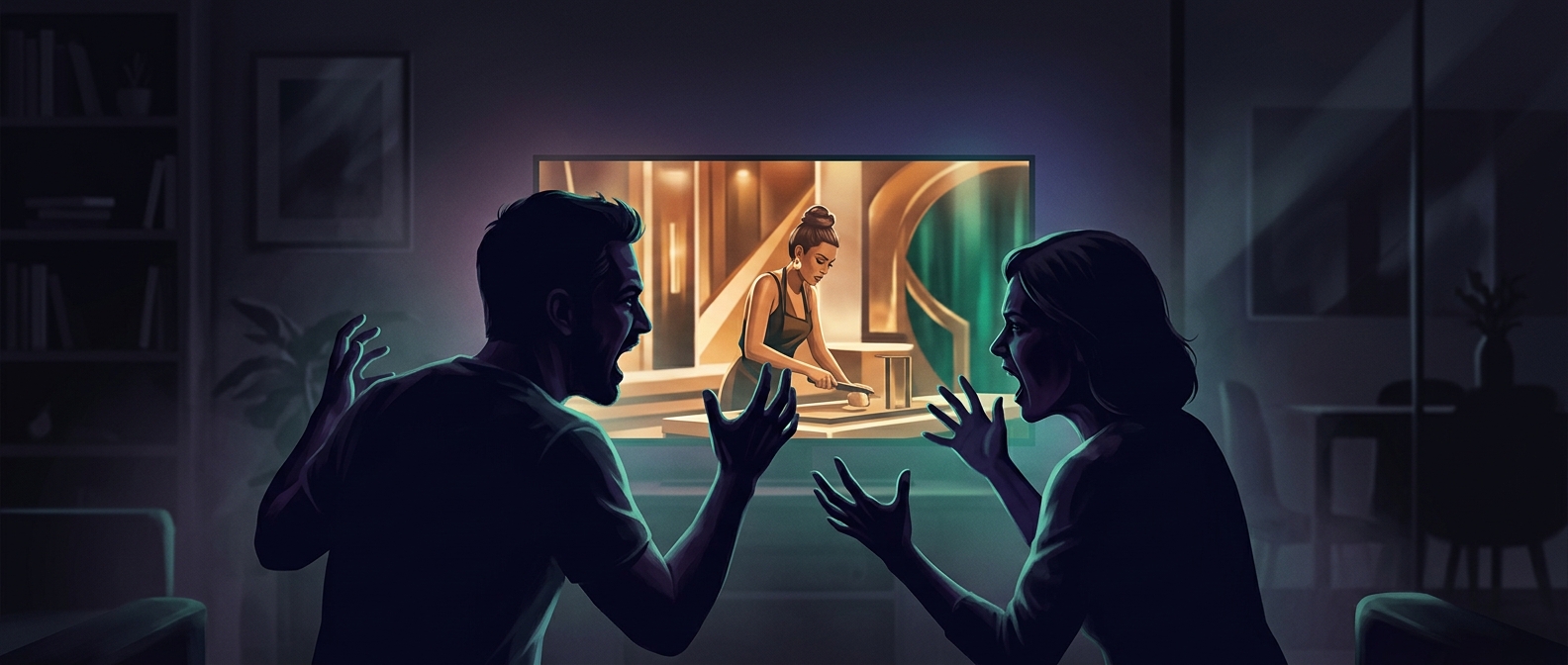
The audience also has an advantage the contestant may not: it can see several people’s reactions and may know details revealed in earlier scenes. That gap makes viewers feel they can spot a mistake before the person on screen can. Shouting becomes an attempt to intervene in a situation that is emotionally involving but physically out of reach.
The screen invites participation without influence
Calling out advice or protesting a bad move does not mean viewers have mistaken television for real life. It is a low-stakes way to express investment, much like urging a player during a game. The contestant cannot hear it, but the viewer’s familiarity and anticipation make the decision feel consequential in the moment. The peculiar pleasure of reality TV is that you can care intensely while having no power to change what happens next.