How producers turn footage into a story
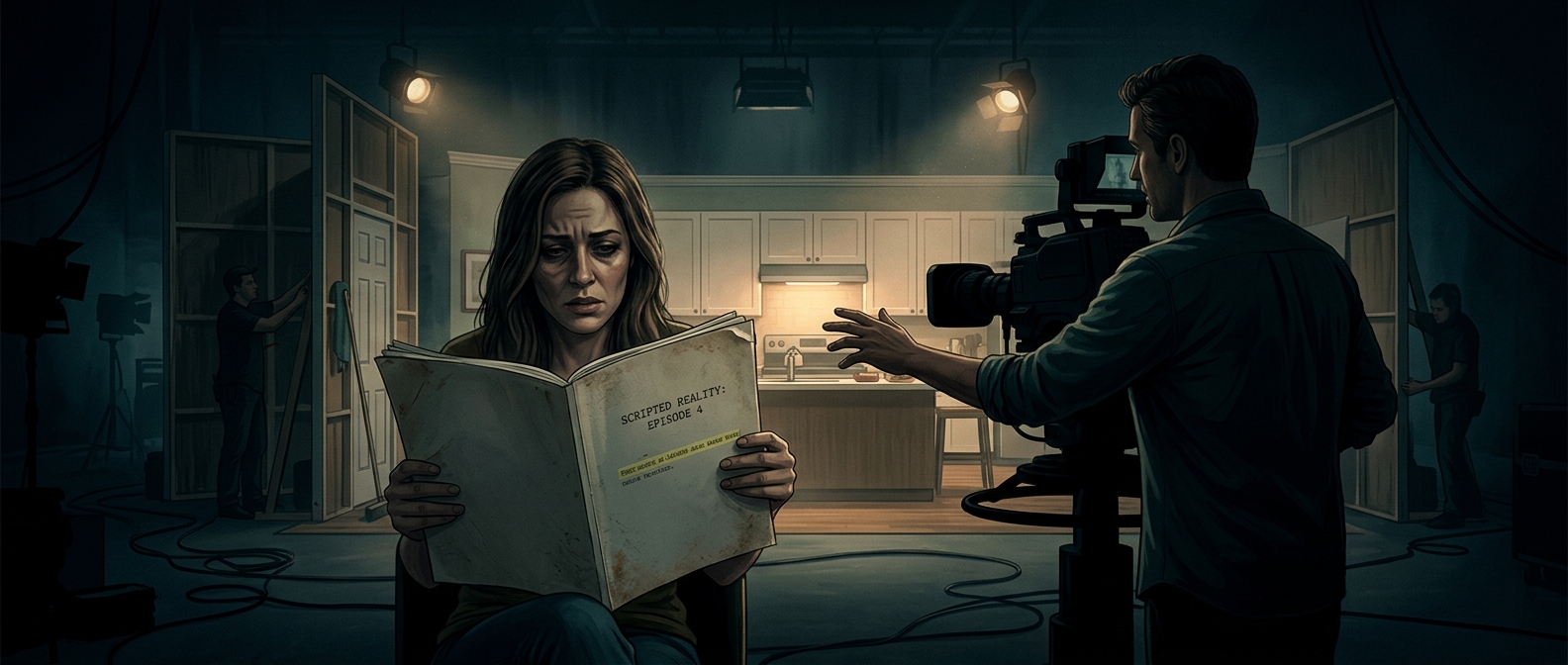
Reality shows may capture far more conversation and activity than can fit into an episode. Story producers help decide which moments form a clear arc: a conflict begins, intensifies, and reaches some kind of payoff. They work with the material gathered by production and editing, looking for reactions, decisions, and recurring tensions that can connect separate scenes.
That does not require writing contestants’ lines. Instead, producers can shape what happens around the cameras—for example, by asking questions that invite someone to explain a disagreement or by prompting participants to revisit a consequential moment. The answers are still theirs, but the prompts can steer attention toward certain feelings or conflicts.
Editing changes the meaning of a moment
Once footage is recorded, editors choose what to include, what to leave out, and how to arrange the selected scenes. A pause, a reaction, or a cut to another person can make an exchange feel more tense; removing the surrounding conversation can make a complicated relationship look simpler. The sequence viewers see is therefore a crafted account, not a complete record of everything that happened.
These choices can give a season recognizable characters and rising stakes, but they also affect how participants are understood. A person may become “the rival” or “the peacemaker” because the episode repeatedly selects moments that support that role. The drama is not necessarily invented from nothing: it is shaped by deciding which real moments receive context, emphasis, and a place in the story.