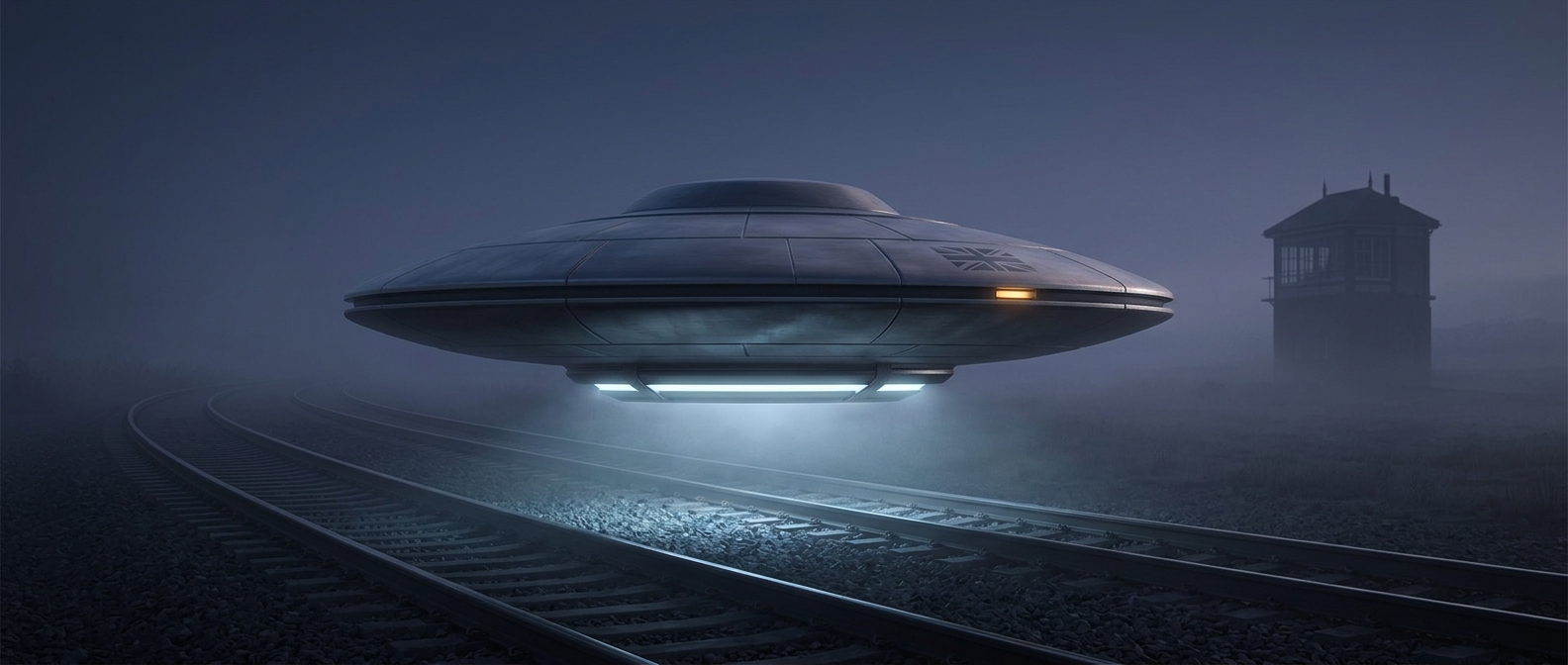
A saucer design built around fusion
The striking part of the patent is not just the craft’s shape: it proposes nuclear fusion as the source of propulsion. Fusion releases energy when light atomic nuclei combine. That energy is familiar from the Sun, but producing it in a controlled device—and then using it to move a vehicle—is a separate engineering challenge.
A power source does not automatically make an engine. To accelerate, a spacecraft must push something backward, such as expelled propellant, or direct energy outward in a way that creates thrust. Fusion could, in principle, supply enormous energy for such a system. The patent’s proposal therefore belongs to a real engineering question: how might fusion power be turned into motion?
The gap between a patent and a flying machine
A patent describes an invention in enough detail to claim a design; it does not demonstrate that the design can be built or made to work. A nuclear-powered craft would need a fusion system that produces usable energy, equipment to control and direct that energy, and a workable way to generate thrust. Those pieces must function together, not merely appear in a proposed layout.
That distinction makes the patent more revealing as a record of technological ambition than as evidence of a hidden aircraft. It captures the leap from “fusion can release energy” to “fusion can propel a vehicle”—a leap that requires an engine, not just a power source. The saucer’s enduring role is on paper, where the difficult engineering can be drawn without first being solved.