Why a risky stunt can hold an audience
A livestream turns danger into a real-time test: viewers watch events unfold without knowing exactly how they will end. That uncertainty can keep people watching, while comments and other visible reactions give the creator immediate feedback. If a risky moment draws more attention than an ordinary stream, the creator may feel pressure to repeat it—or make the next stunt more dramatic.
The format can also blur the line between performance and decision. A creator who has announced a long endurance challenge, for example, may feel compelled to continue because viewers are still watching. In a sleep-deprivation marathon, fatigue can impair judgment and coordination, making it harder to recognize when continuing is unsafe. The audience’s presence does not make the physical risk easier to control.
When the setting becomes part of the danger
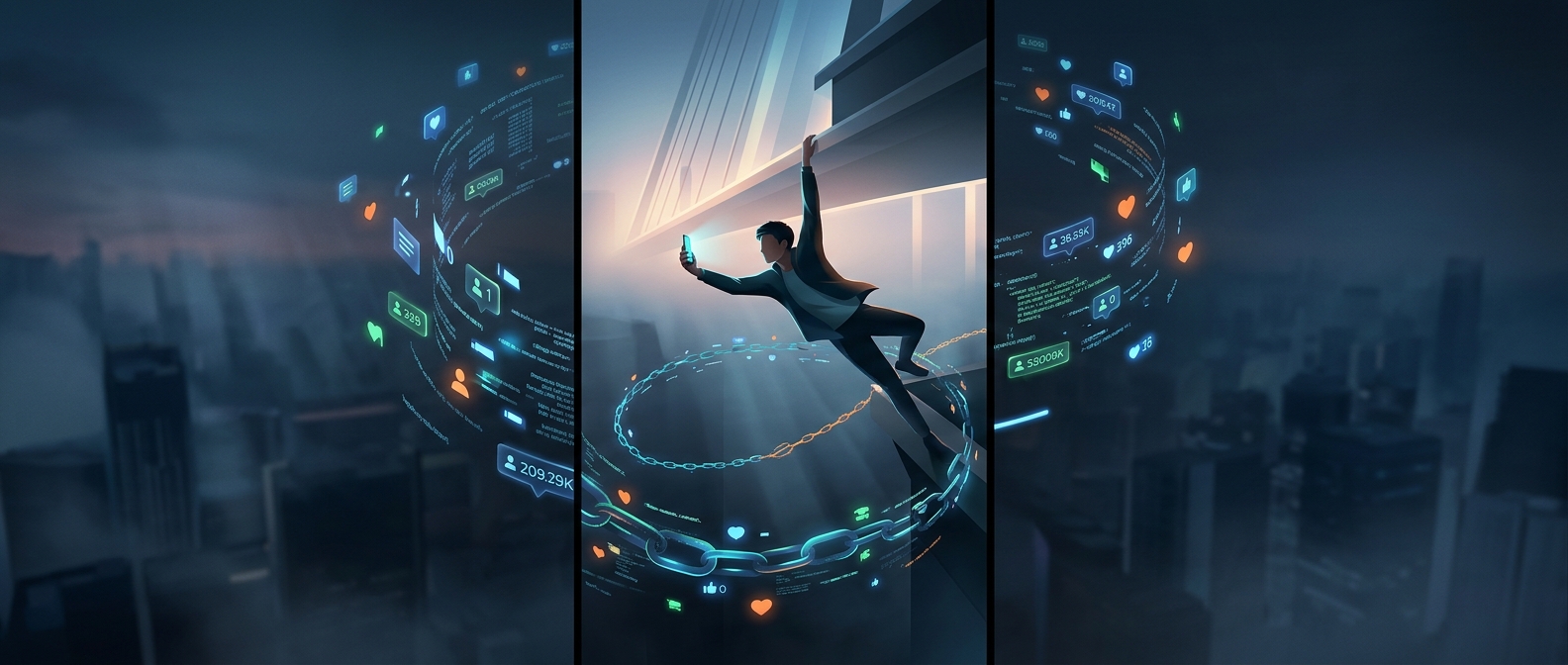
Urban climbing adds hazards that are difficult to manage for the sake of a broadcast: a slip can have severe consequences, and a public structure may not be designed or authorized for climbing. Framing the climb as entertainment can make the route look like a sequence of exciting shots, even though the climber must make each movement under real physical conditions.
Live feedback can intensify the pressure. Viewers may urge a creator onward, but they cannot reliably assess the climber’s footing or a sleep-deprived streamer’s condition through a screen. The central risk is a mismatch: the audience experiences a spectacle, while the creator bears the consequences if the stunt goes wrong.