The Camera Turns Distance Into Danger
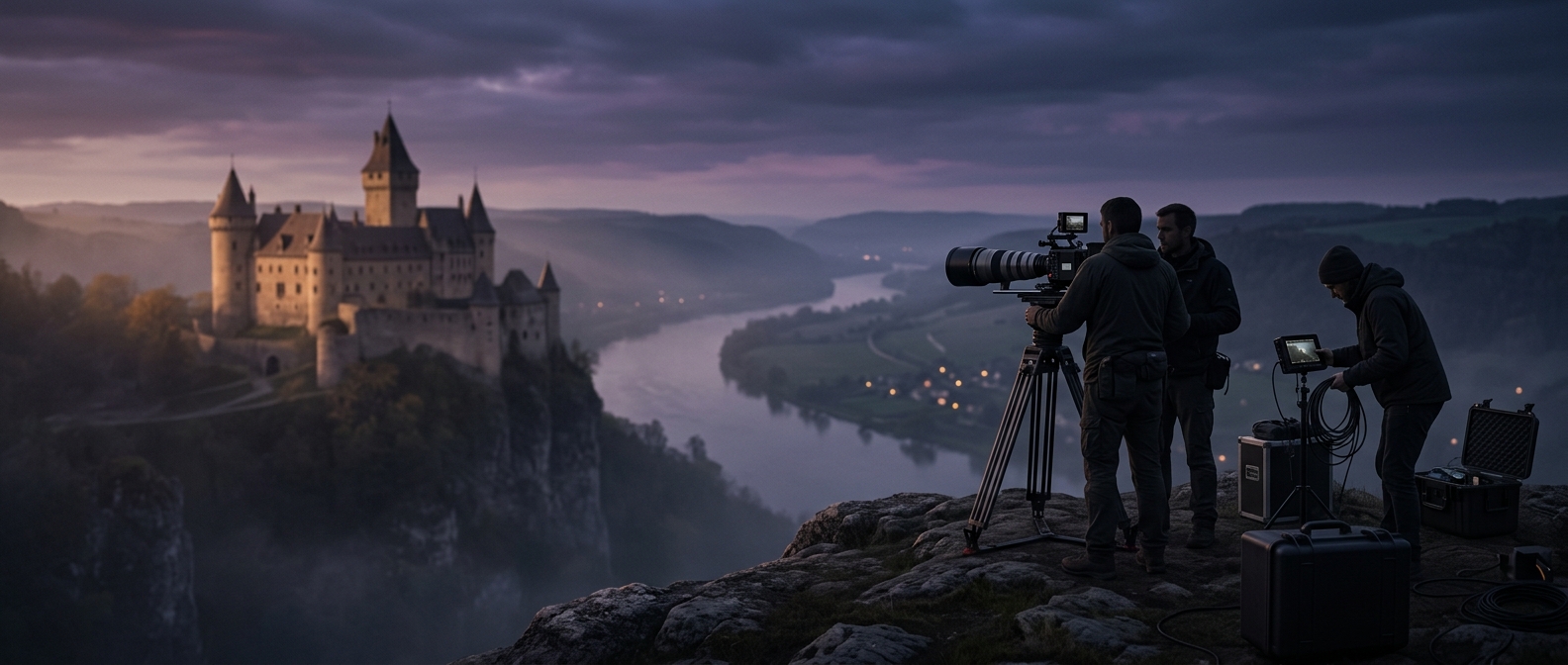
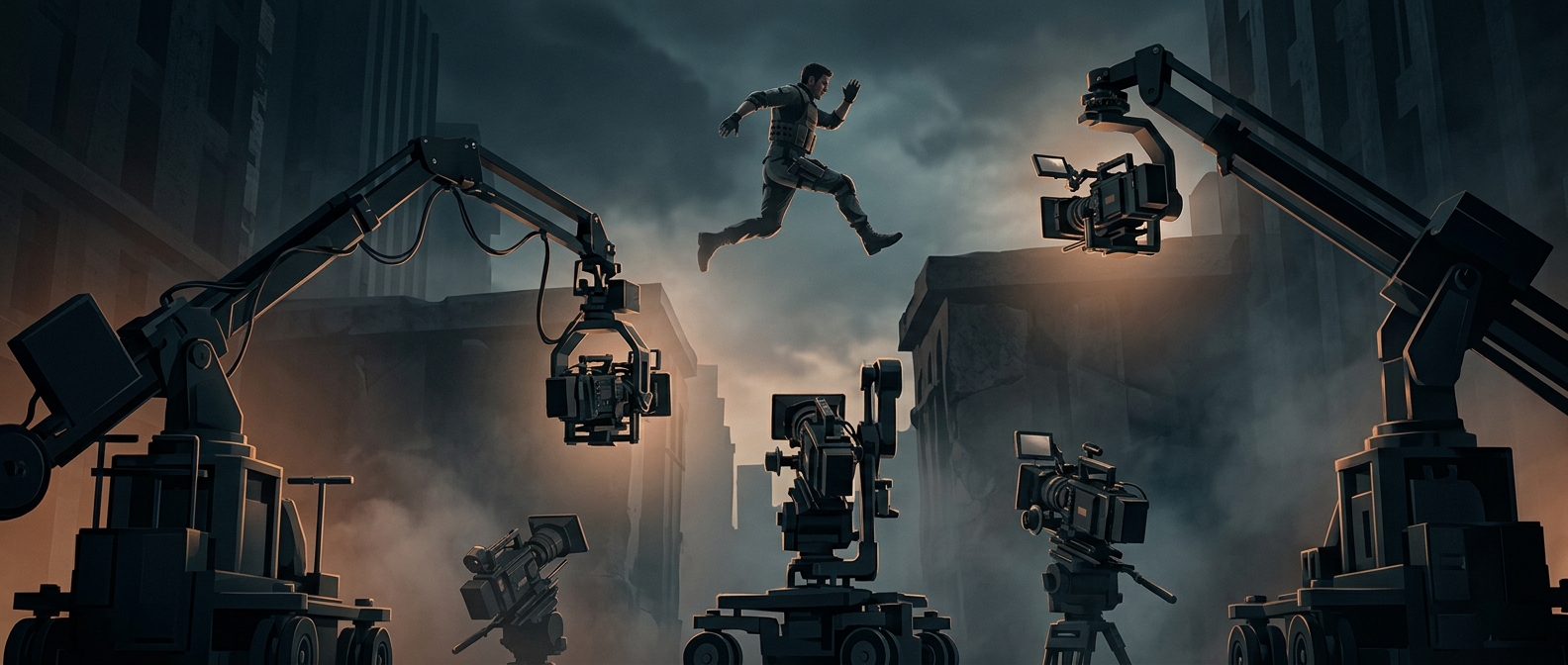
A stunt can look like a near miss even when the performer and the moving object are separated by a substantial gap. The trick is perspective: when the camera, performer, and object line up from the audience’s viewpoint, depth becomes hard to judge. A beam passing several feet in front of or behind an actor can appear to skim right past them.
Why the Angle Matters
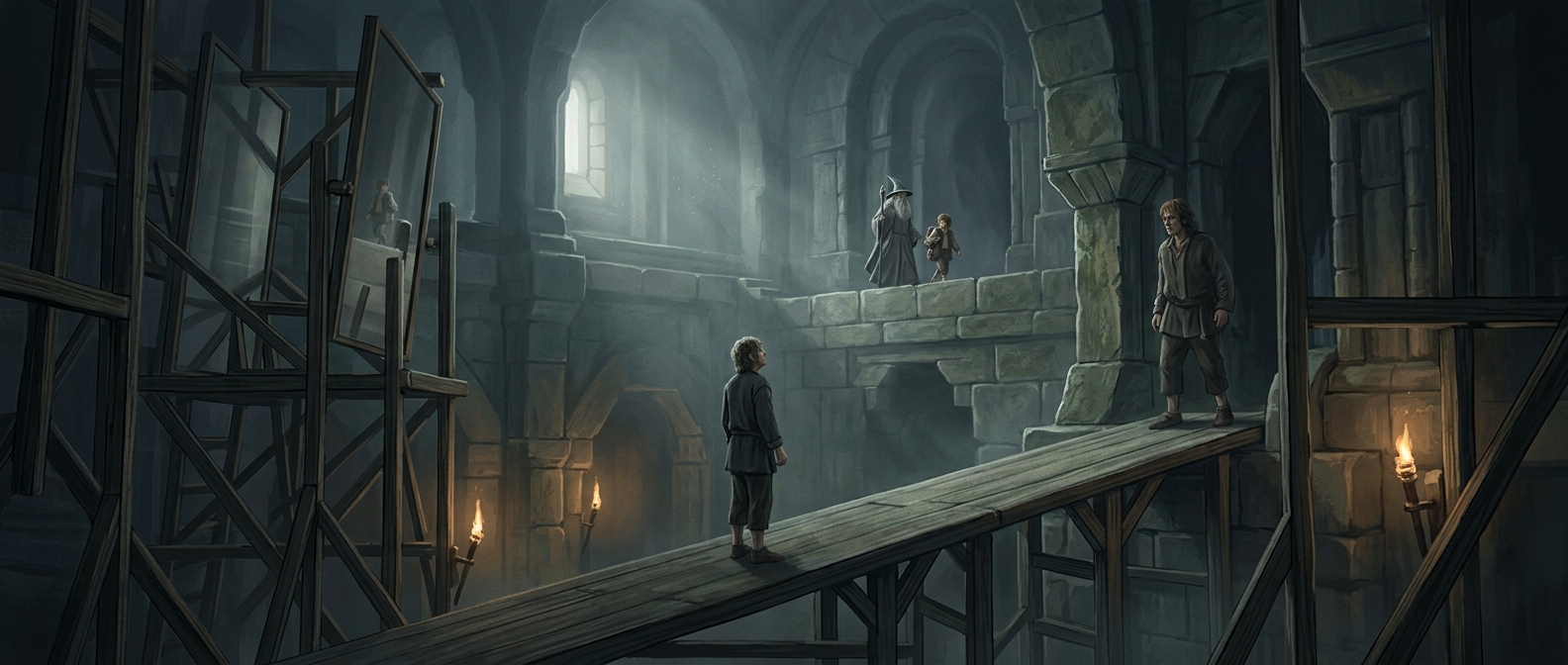
The camera records a flat image, collapsing the real scene’s depth into two dimensions. If the shot is framed carefully, the beam’s path overlaps the performer’s body on screen, even though they occupy different positions on set. Move the camera to the side, and the gap that was hidden by alignment may suddenly become obvious.
This is called forced perspective: arranging people and objects so their apparent size or distance differs from what it is in the real space. It can make a nearby object seem enormous, or make a safe separation look dangerously small. The effect depends on where the camera is placed and what the viewer can see around the action.
A Safer Scene, a Sharper Illusion
That separation gives stunt teams room to control the action while the audience sees the intended threat. The performer can follow a rehearsed mark while the beam travels along a planned path; the camera hides the space between them. The danger is real as a picture, not necessarily as a collision.
The setup still requires coordination: timing, movement, and camera position must match. But the apparent near miss is often created less by bringing danger closer than by choosing exactly where the audience is allowed to look.