A broadcast link with a weak point
In 1987, Chicago television stations sent programs to their transmitters over microwave links: directional radio signals that carried a live feed from one site to another. That arrangement made it possible to broadcast from a studio without running a cable all the way to the transmitter, but it also created a point where a signal could be intercepted or overwhelmed.
The reported method was blunt rather than mysterious: transmit a stronger signal toward the receiving equipment than the station’s own microwave feed. If the receiver accepted the intruding signal, viewers saw the pirate transmission instead of the program. The attacker needed suitable radio equipment and a position from which to reach the link—not access to the station’s computers.
Why the interruption became a mystery
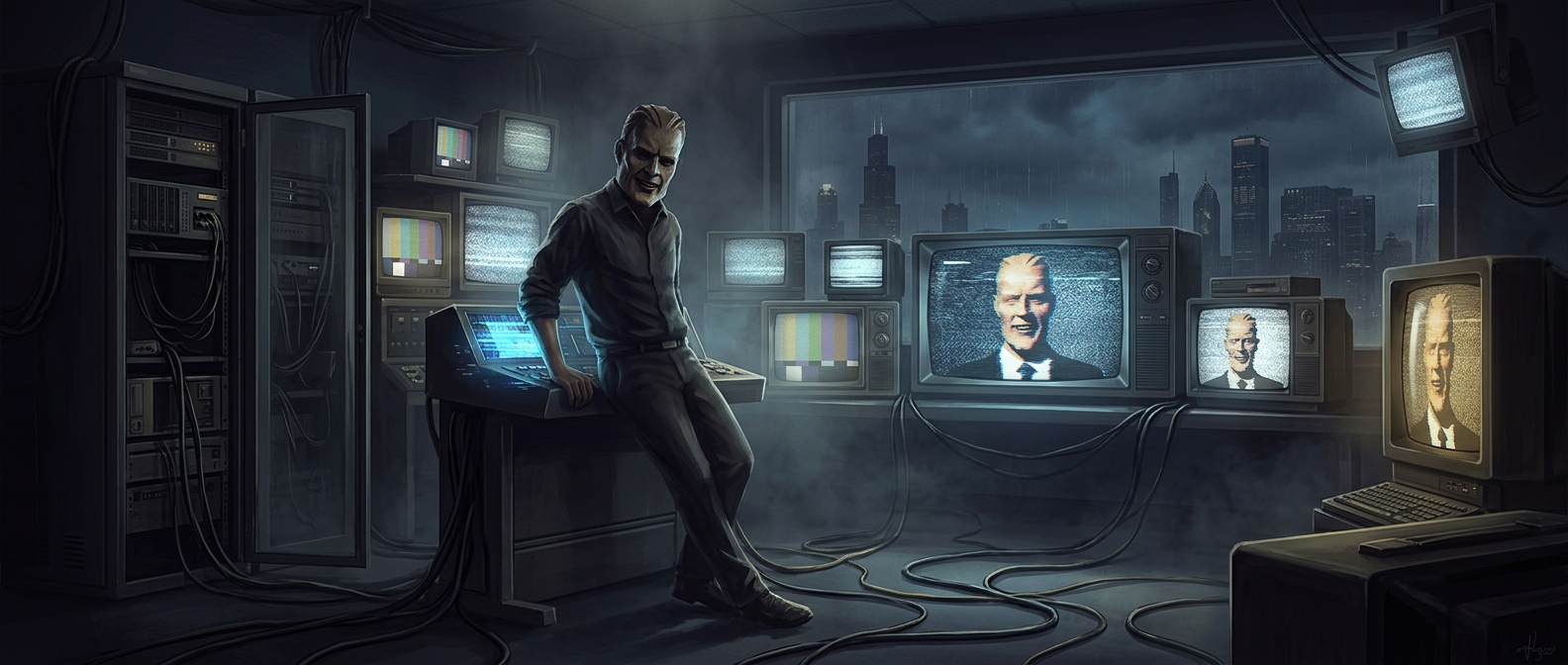
The intruder appeared in a Max Headroom mask, borrowing the look of a television character associated with a jittery, artificial broadcast image. The mask made the interruption instantly recognizable, but it did not reveal who was behind it or what the person wanted. The brief appearance on one station was followed by a more conspicuous hijacking of another Chicago broadcast; the transmissions offered no clear explanation of their purpose.
Station staff restored their programming, and the incident drew investigation, but the person responsible was never identified. The mask supplied an image; the radio transmission supplied a route into viewers’ homes. Neither supplied a name.
The vulnerability was in the signal path
The episode exposed a consequence of broadcasting through the air: a station could control its studio and transmitter yet still depend on a link that someone nearby might target. In the analog era, overpowering that link could replace the picture for viewers without breaking into the station itself. The striking part is how little the intruder needed to leave behind: a stronger signal, a few minutes on television, and an identity that remains unknown.