A workstation pedigree, scaled for a console
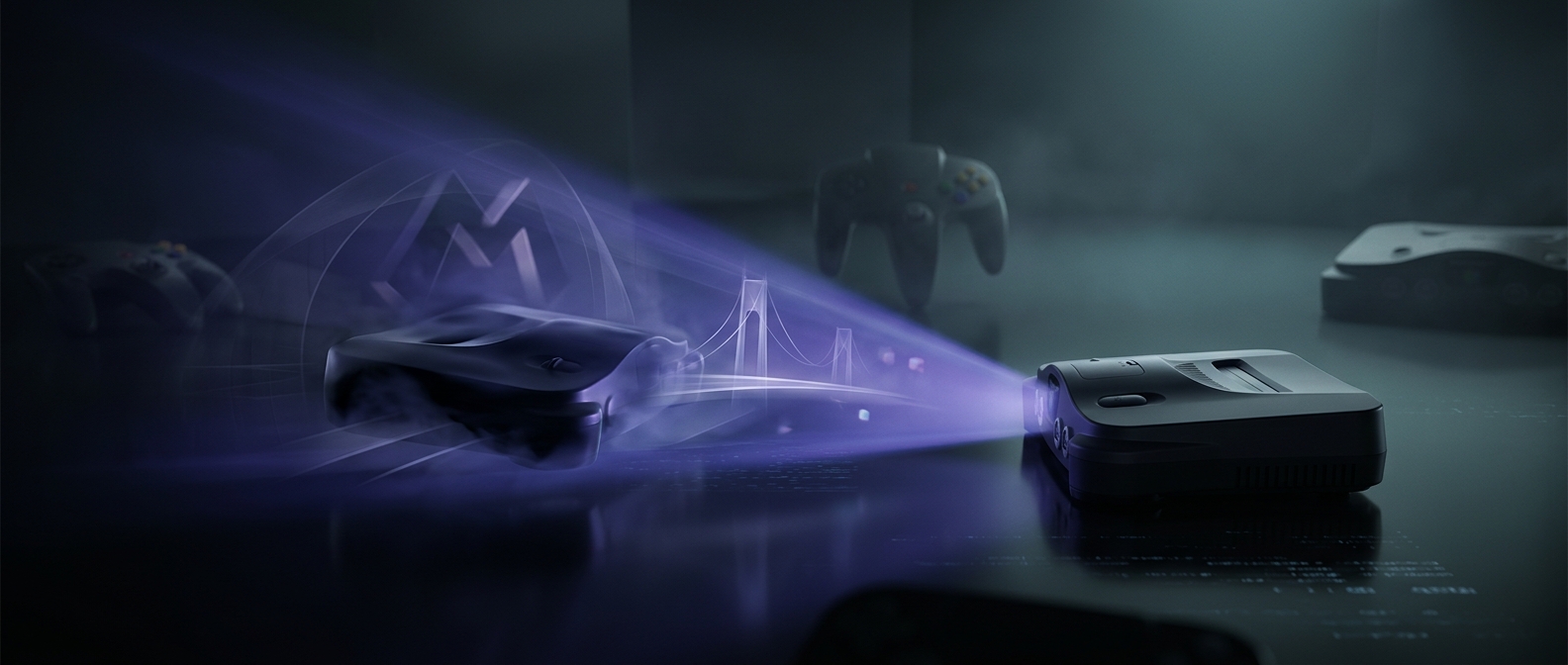
Nintendo’s N64 grew out of a collaboration with Silicon Graphics, a company known for computers used in demanding 3D graphics work. That association gave the console’s promise of lifelike worlds credibility: the same broad approach to generating three-dimensional images could, in principle, bring detailed scenes into a home.
But a console had to draw those scenes continuously, in real time, on fixed hardware built to fit a consumer budget. A workstation could devote far more resources to a single image or rely on more powerful equipment. The N64’s design therefore had to turn impressive graphics techniques into a system that could keep up with a game.
Every frame forced a tradeoff
The console assembled scenes from polygons—flat surfaces joined to form characters and objects—and covered them with textures, the images that give those surfaces color and detail. More polygons could make shapes smoother, while larger or sharper textures could make faces and environments more recognizable. Both demanded resources, and the machine had to process a new view repeatedly as the player moved.
The visible compromises followed from that pressure. Characters could look angular because their models used relatively few surfaces; faces could look soft because texture detail was limited or blurred during rendering. The N64 also used filtering to smooth textures as they were mapped onto moving, angled surfaces. That helped avoid harsh visual artifacts, but could make images look muddy rather than crisp.
The promise changed shape
The result was not a workstation image shrunk intact for a television. It was a different kind of achievement: interactive 3D worlds that responded immediately to players, built within the limits of a living-room console. Developers could emphasize motion, scale, or atmosphere, but they could not maximize every kind of detail at once.
That is why the gap between the pitch and the picture was so noticeable. The N64 made three-dimensional play feel newly expansive, yet its characters still showed the cost of rendering a moving world frame by frame: the future arrived as polygons, softened textures, and compromises you could see.